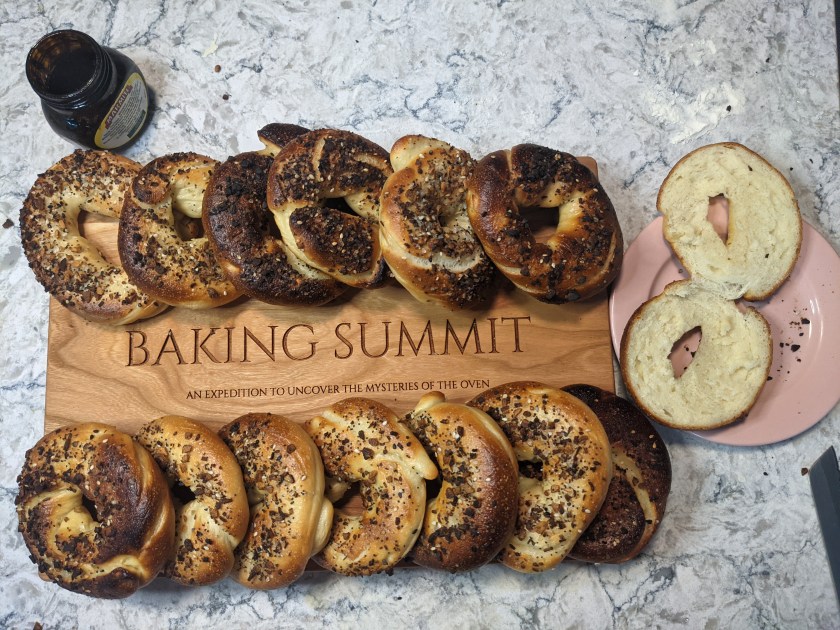
Well, well, well, here we are, we have ARRIVED! Bagels! We haven’t looked at a Canadian food here at Baking Summit since I made those asshole Maple Sandwich cookies all the way back 15 weeks ago! Now, before my American readers get their New York knickers in a twist: there are two types of bagels. New York and Montréal, and they are different! Both are highly sought after and beloved regional foods and in any case, once you have had the real deal, nothing else compares.
Montréal Bagels (recipe here) were featured on Season 1, Bread Weed of GCBS. Here is a cool compare/contrast on the difference between Montréal and New York style bagels, but basically Montréal style is wood fired, enriched dough, boiled in honey water, and smaller. New york style are made using plain water, un-enriched dough, traditional oven, and are larger and chewier.
Making bagels has always been on my low-priority to-do list [aside: please tell me I am not the only one who has subsets of to-do lists going on in their mind at all times?]. I am a bit of a bread nerd (if you haven’t noticed or are new here lol) so there are a number of breads that I have never done but plan to, eventually. So I had a great old time making these bagels, and it was mostly passive time spent which I also like once in a while so I can get other tasks done (like playing Portal with my sister lmao).
I am pleased with my execution of these. They were really, really good. Of course nothing compares to the real deal, but they made for some tasty breakfast sandwiches and I look forward to making them again. The CBC recipe for this was excellent for a change (but they had me turn on the oven about two hours sooner than necessary, so still I say WTF CBC). My bake went very smoothly so I don’t have any hilarious mishaps to share. Instead I thought I would outline the various little departures and diversions I took from the recipe, or from the show, or from authenticity to round out this post.
The first hurdle keeping me from achieving a true copycat of a Montréal bagel is the simple fact that I am not physically in Montréal. As with any regionally significant bread, the ultimate factor tying it to the geographic location is the water inside the dough. Regional variance in mineral profiles of water impacts the flavour and chemistry of bread dough from one place to another if all other factors are equal. This is why people will actually bring their own water to bread baking competitions. The water source is the beating heart of a great bread and it carries the culinary story of the surrounding region through to the final taste. It is the same reason why people miss their parents’ cooking when they are away from home and why you can never find a take out meal as quite as good as remembered from other countries. It’s in the water!
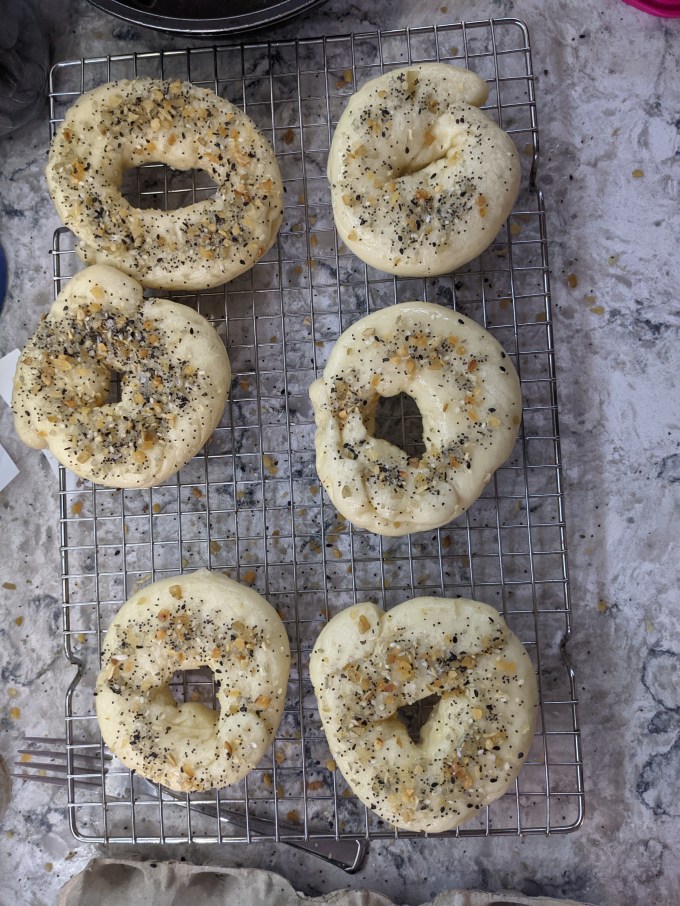
Up next: bagel flavours and toppings. Bagel purists in Montréal will say the only appropriate garnish for bagels is either poppyseeds or sesame seeds. I have no such allegiance, so I put everything bagel seasoning on mine because it’s my favourite. Am I disgracing the bagel with my topping choice? In a world where tie die rainbow coloured bagels once had a moment on instagram for some reason, I don’t think my penchant for salt and onions is hurting anyone. In general, I try to inhabit the middle ground between staunch traditionalism and jumping into crazy uncharted territory as a baker. It is important to have sound methodology and theoretical knowledge before getting too creative. In developing that skill set and knowledge base, the baker learns what the limitations of the medium are. Also some things just can’t be improved upon. To change them is to take something from the beauty of the original.
On the other hand, if we didn’t push the limits of different methods/concepts/sciences/flavours, we wouldn’t have bread in the first place, let alone bagels! Someone, somewhere had to sit down and try whipping egg whites for hours to make meringue. Imagine how off the wall that idea sounded before they figured out how to do it. My point is, if we dig our heels in too much with culinary purism, we miss out on some of the most captivating new ideas in food. And so I say to all of the food snobs out there, get off your high horse and stuff that everything bagel seasoning in your face already.
My next obvious departure from authenticity (and a slight difference from how they did it on the show) is I don’t have a wood oven. I am not exactly sure how they baked these on the show. My best guess is they put them on small baking stones, but they might have been some type of wood? It wasn’t clear. The recipe just had me preheat the baking sheet (FOR TWO HOURS AS I MENTIONED), which worked, but I think I might invest in a couple of baking stones and then try these again just to see the difference.
My only other comment on my own execution of these was I probably could have taken them out maybe 2 minutes sooner. They were just a shade darker than is ideal, but they weren’t dried out or burned. Not the end of the world! Let’s get into it!
Step 1: Dough
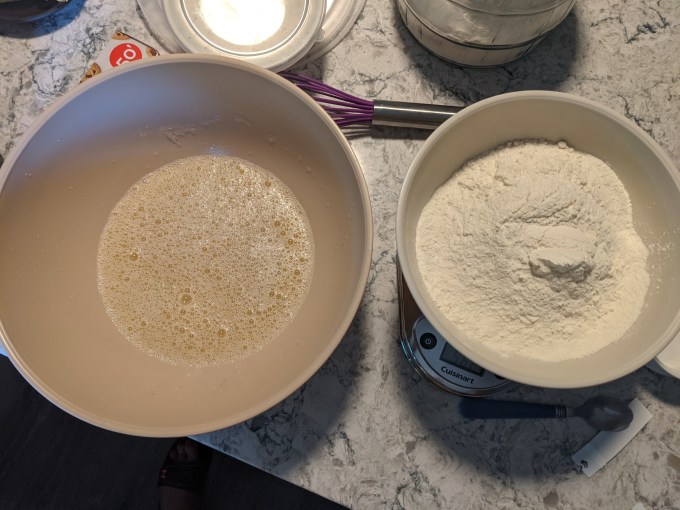
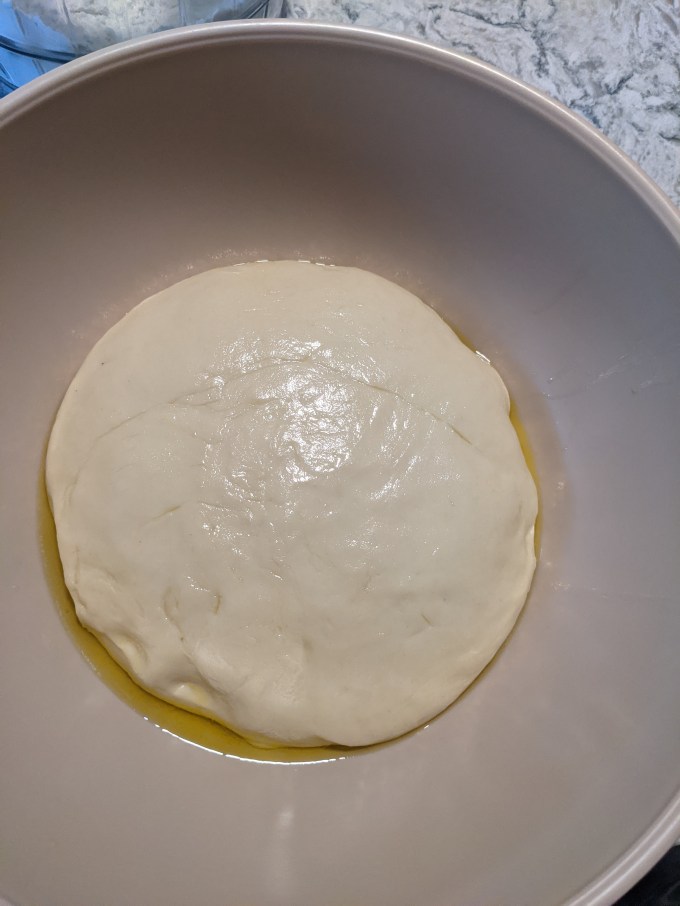
As I mentioned, one of the differences between New York and Montréal bagels is the Canadian version is enriched with egg. This is your basic enriched dough direct method with hand kneading. Yeast and wet ingredients are combined, then added to the dry ingredients. 10 minute knead and we are off to the races with first proof.
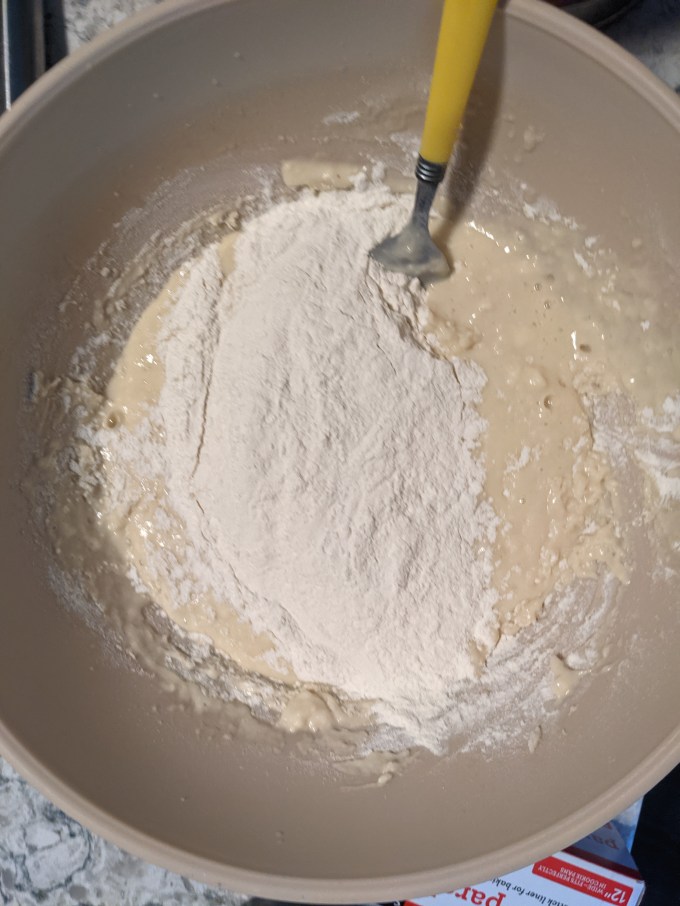
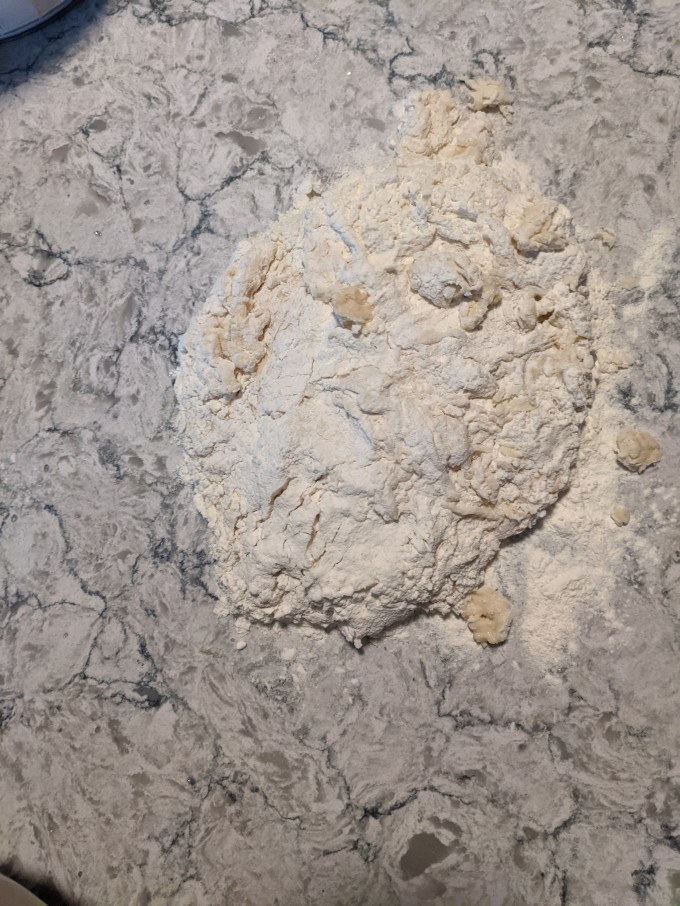
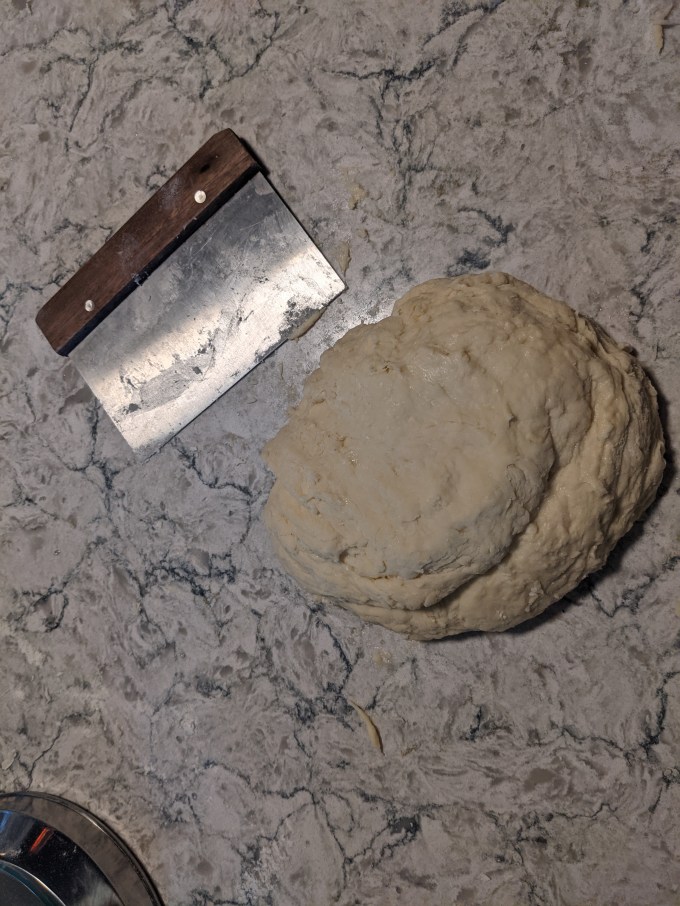
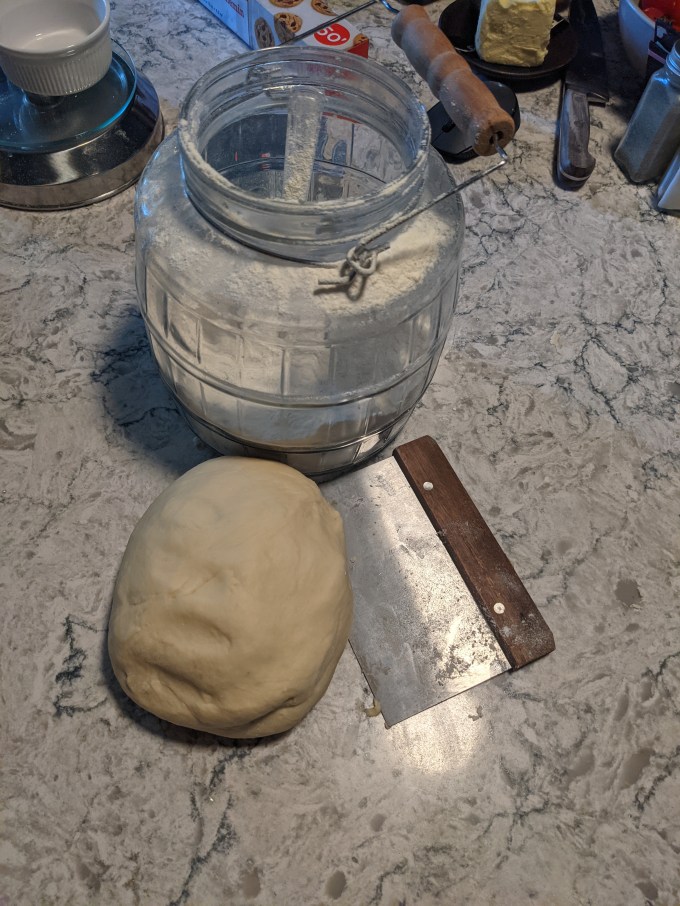
Step 2: Shaping
Up next is shaping. This was the softest and easiest dough to work with out of all the ones I have made so far for this project. The shaping is fun and simple: the dough is rolled into ropes, wrapped around the hand and then rolled again under the palm to close the circle. The shaped dough is left for second proof.
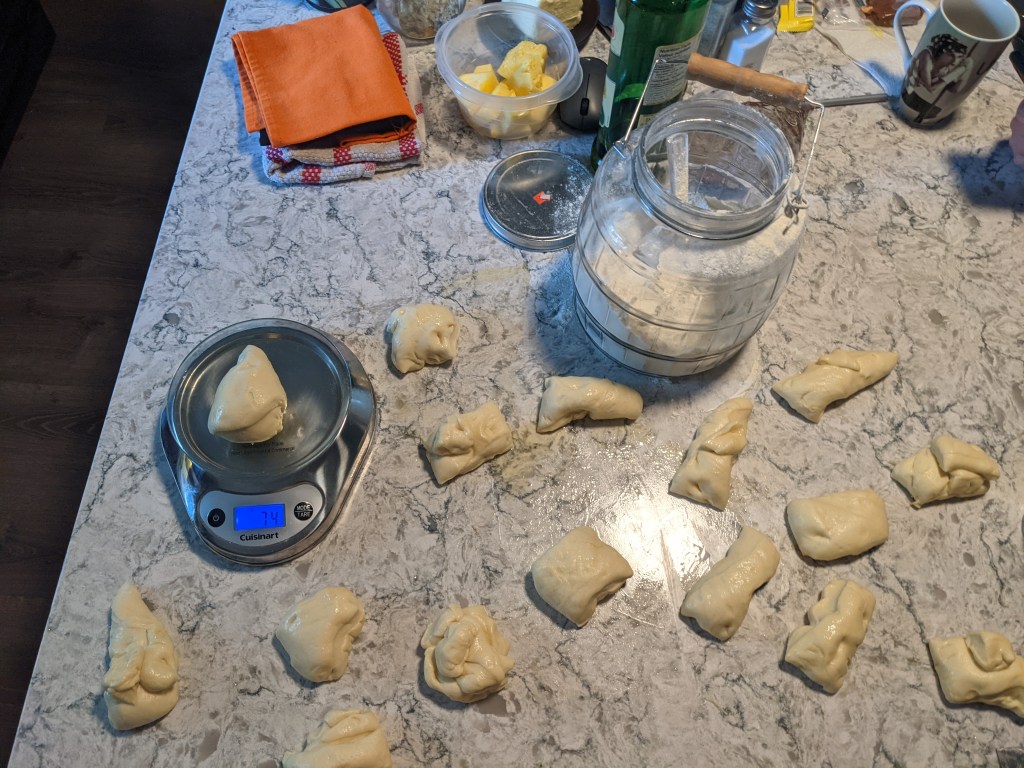
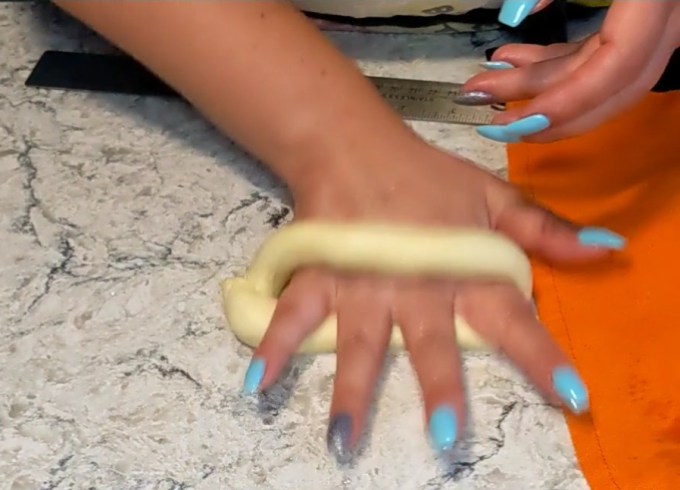
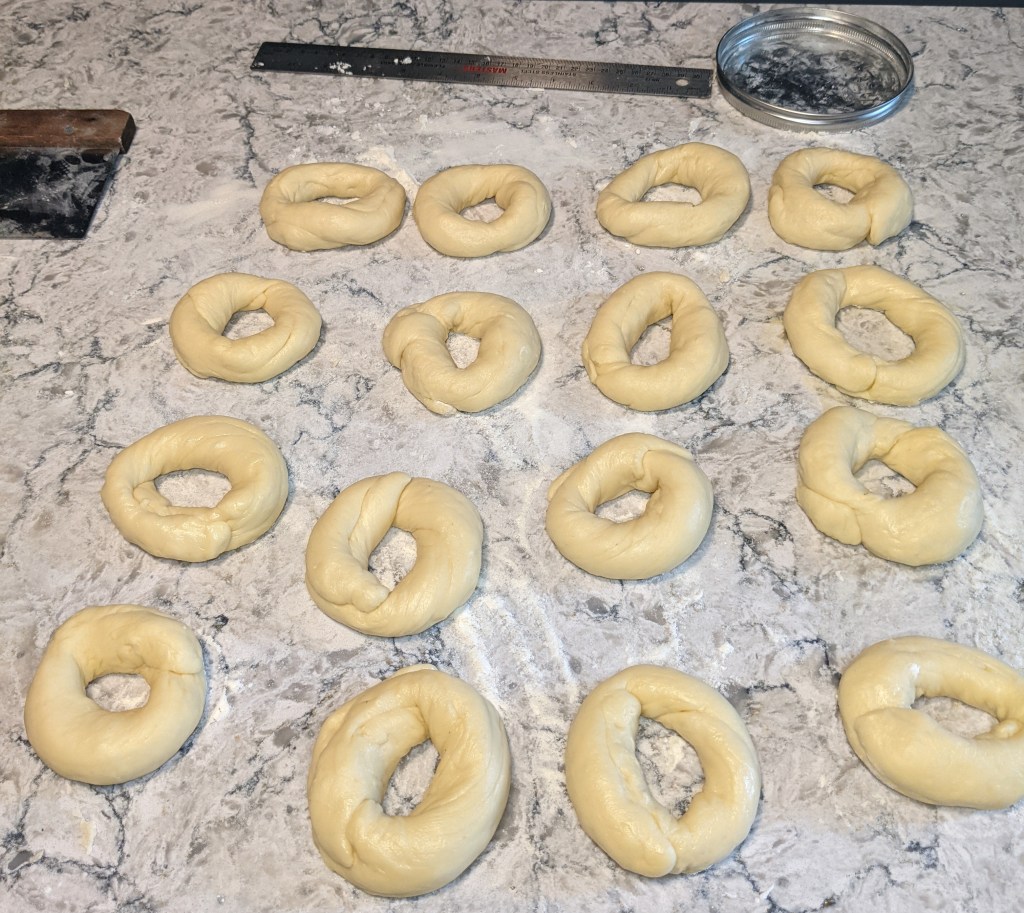
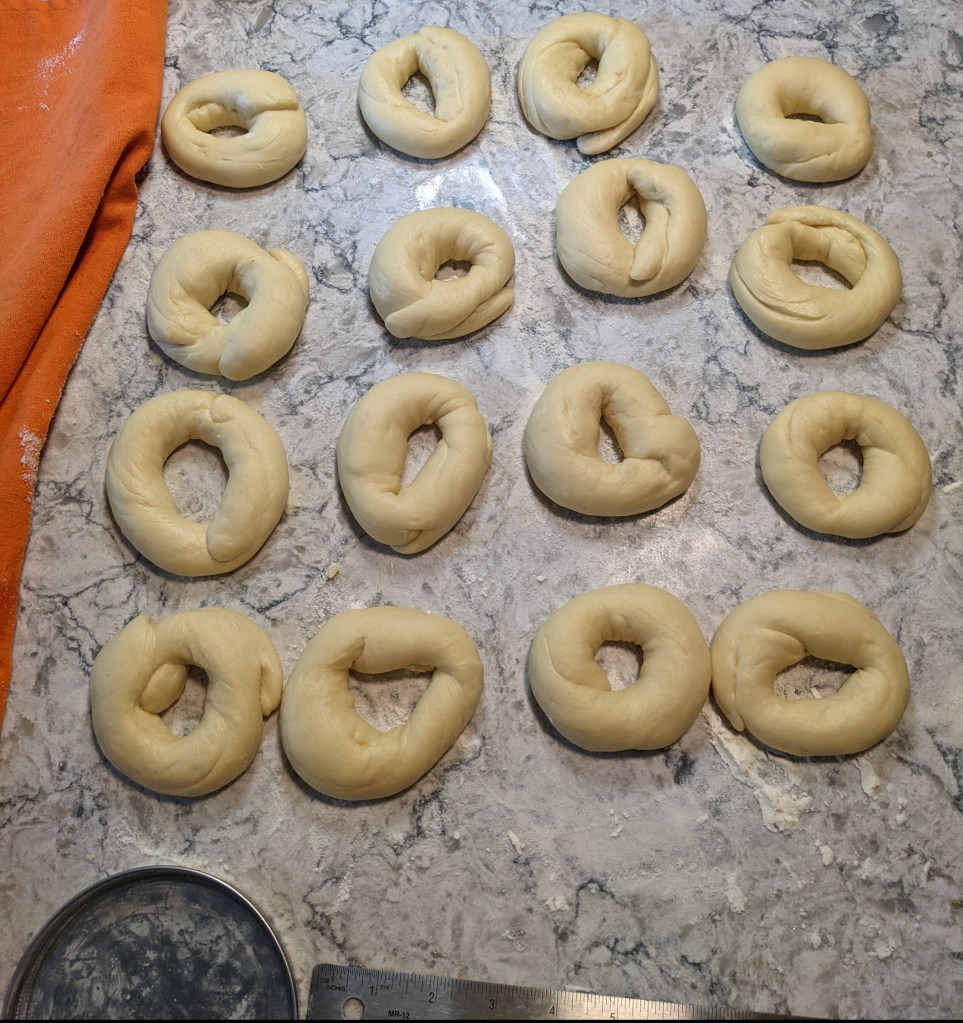
Step 3: Boiling and Garnish
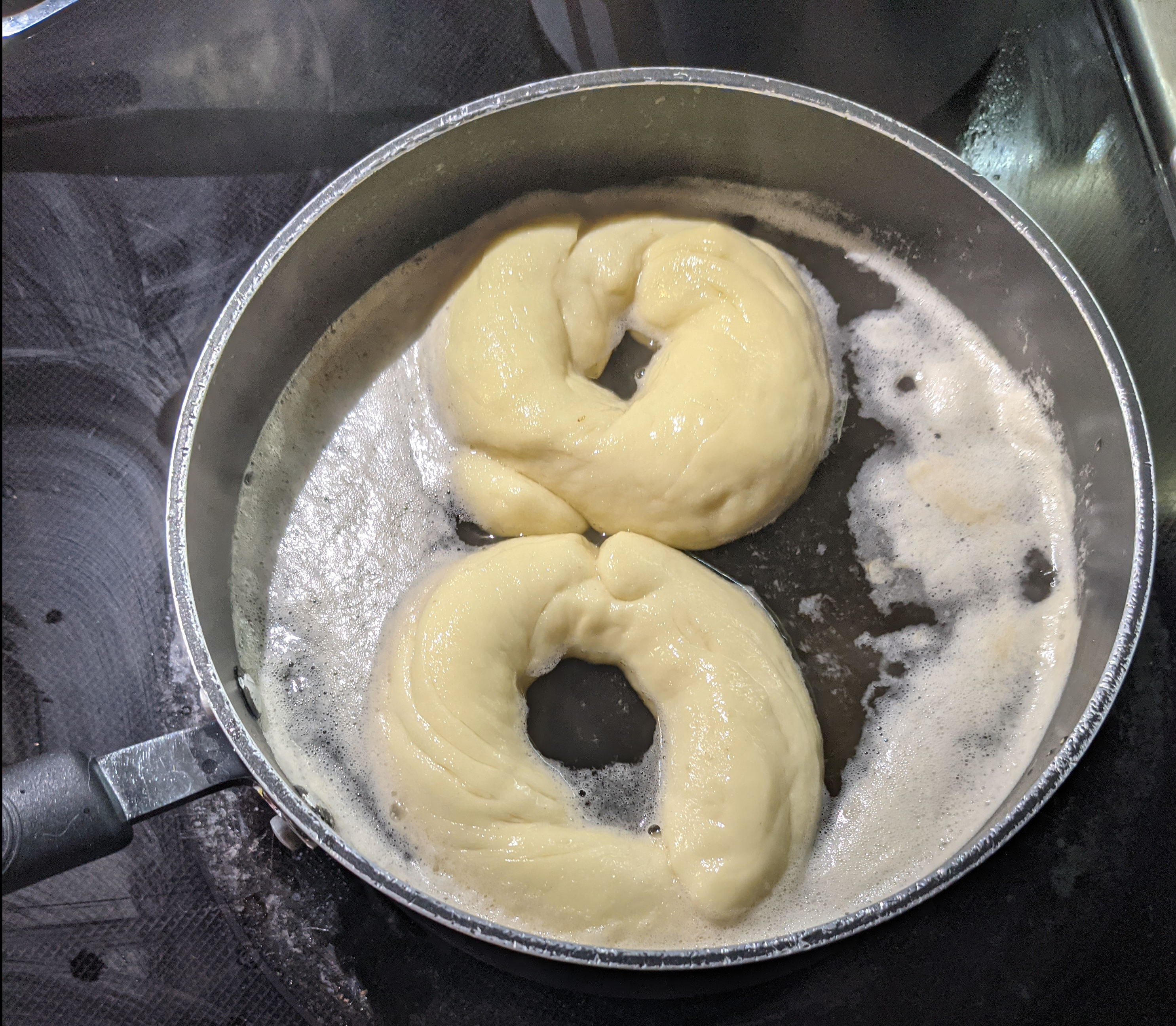
Once the bagels are finished second proof, it’s time to boil in honey water. Boiling the dough is what gives bagels their characteristic chew and the honey lends Montréal bagels a sweetness and darker exterior once baked. Water and honey are brought to boil then the raw bagels are gently dropped in and cooked on each side for a minute or two. Once the dough has puffed and tightened up a bit, they are put on a rack to cool and dry a bit and then the bagels are finished with garnish of choice. Then it’s into the oven and voila! Bagels!

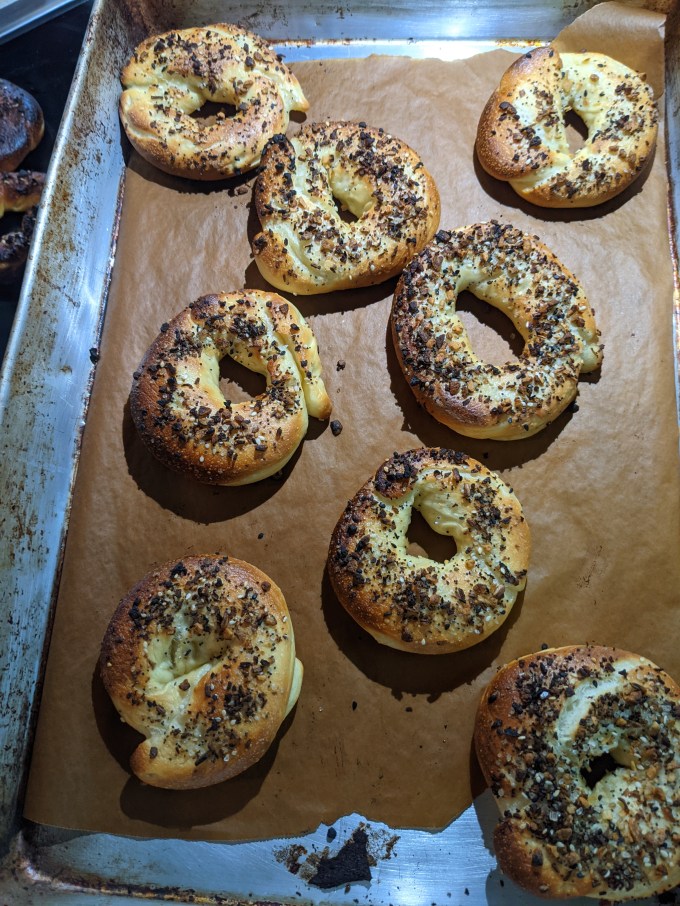
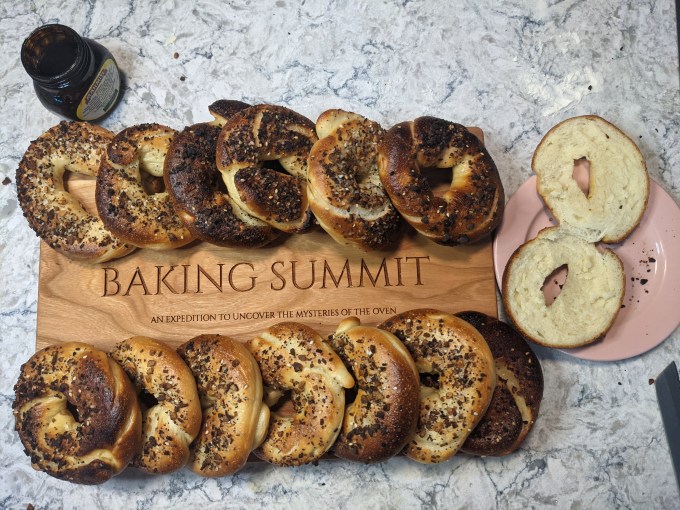
All in all, I felt right at home with this bake. Good food, good music, good times had all around. I will definitely make these again. As always with the bread challenges, I am now planning on trying the BBA version of this to see how it stacks up. The BBA formula is preceded by a 3 page (probably about 2000 words?) discourse about bagels and how he came to this final version for the book, so I am curious to see where Peter Reinhart (author of BBA) fits in to the bagelsphere.
Gallery
So there we have it! We are creeping up on the halfway mark on this little expedition. I recently did a full review of the remaining bakes on the list to see if there were any that I wanted to save for specific occasions, and I forgot how intesnely complex a couple of them are. So, looking forward to that in the coming weeks.
Hey, bakers! Check out my BAKER’S PANTRY index if you want to deep dive on specific ingredients when attempting this bake for yourself
 Baking Summit