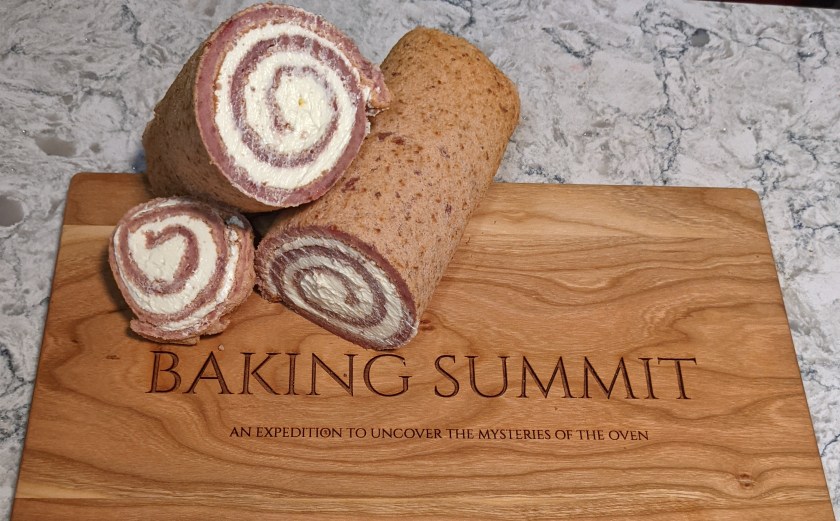
Here we are again, Friends and Fellow Bakers! After the last couple of easy bakes, we have arrived at one that was downright intimidating. Strawberry Roulade (recipe here) was featured as the technical bake on the Season 3 premier of GCBS. Side note: starting the season with cake week was some next level psychological torture from the CBC once again. Well played, you whacky posse of Eurocentric sociopaths sadistic public servants. A reality TV ratings grab rears its ugly head once again, to the horror and delight of all. Come for the baking, stay for the mind games as the saying goes.
Roulade is a general culinary term referring to filled foods rolled into a spiral and served in slices. The most common types are meringue roulade, where the base is, you guessed it, meringue; cake rolls and jelly rolls (like the one I am about to tell you about) which are usually sponge cake based; and meat roulade (here is a recipe for a meat roulade if that sounds a little bizarre). This version uses fresh strawberries to flavour a white sponge cake and is filled with Italian buttercream.
Don’t be fooled by the infantile appearance of this cake. I actually hauled myself out of a relaxing bath while I was trying to watch this episode because I needed to take notes on this bake. It was intense. Even though there are only two elements to this cake, they are both highly advanced baking methods. Italian buttercream requires both of the biggest guns in baking: sugar work and meringue. If it is overcooked, it will become grainy and if it is undercooked, it will be slimy. Cool beans! That’s not terrifying at all!!!!!!!! *sobs*
The roulade itself, in addition to having command of the basics of sponge cake, requires rolling and unrolling and re-rolling of fully cooked cake without breaking it. This means the bake and timing after taking it out of the oven has to be bingity bangity on or there is no recovery. There is no redemption and nowhere to hide in this godforsaken cake and it was HARROWING to watch the episode. It’s actually kind of depressing how much this looks like a 1-dollar gas station snack cake, because this takes some top shelf baking expertise. If you ever see one of these at a party, go find the baker and tell them you appreciate the work because no one else will.
This recipe also included a wild card which was the addition of fresh strawberries. Even though I had the complete recipe, adding fresh produce directly to cake batter is risky business. There can be a lot of variance in the water and sugar content of fruits and vegetables. For a cake that needs to have an exact final crumb in order to roll properly and hold its structure, it was quite the added little twist to throw raw strawberries into this. Either it was an intentional, added level of difficulty and stress, or the CBC recipe developers are just insane? Six of one, half dozen of the other, I suppose. #luvucbc
The bakers on the show generally executed this bake well. They had to make decisions about how much food colouring to add and not everyone had a nice tight spiral but I don’t remember any major flops (although it has been a few weeks since I watched the episode). A few of them added fresh strawberry slices to the filling in some way and they all got ROASTED. The judges *did not* like that idea at all. I have no idea why… I think the fresh strawberries would have cut through the richness of the Italian buttercream, but I excluded them from mine. Far be it for me to argue with Kyla and Bruno.
I have made Italian buttercream unsuccessfully one previous time before. I was feeling a bit more confident going into it this time now that I have improved my sugar work and my meringue since starting this project (woo! Personal growth! huzzah!). This time it went quite smoothly. There was a brief moment where I thought I had wrecked it but I left the room for a few seconds and came back and it had resolved itself. #science
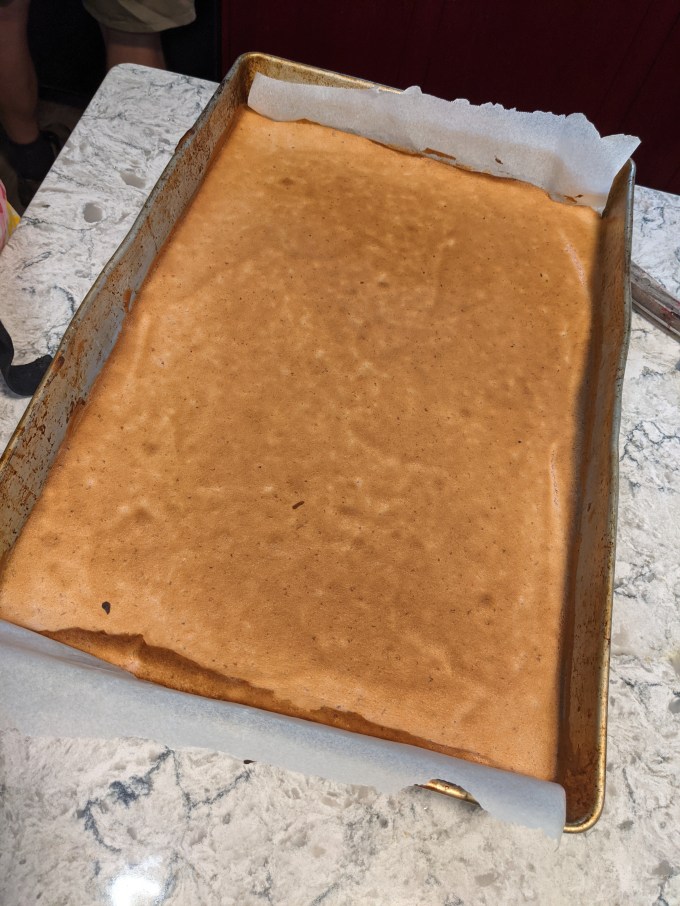
Rolling the cake went better than I expected, and I had the right crumb on the sponge. I was a bit light-touch with the food colouring so mine isn’t quite as bright as it could be. I wasn’t really sure which one of the cakes presented on the show had the right colour, because the cake that won was probably the least pink (or so it appeared on camera), while other cakes got compliments on having nice colouring. Also my parchment paper didn’t lift up the crust like I expected, so the whole thing looked a little brownish on the outside. I think that was a bit of a timing error. I probably needed to leave it in the pan a few seconds longer before inverting it, but I was nervous about missing my opportunity to get the rolling temperature correct. That was more important to me than the shade of pink at the end of the day. I felt like the cake had way too much icing, but I compared my ratio to the photo from the show and I think I executed it properly. I just don’t care much for icing. NOT MY JAM! I did really like the cake part though. It was light and the strawberry flavour was just right. So without further ado, let’s get into it!
Step 1: Strawberry sponge
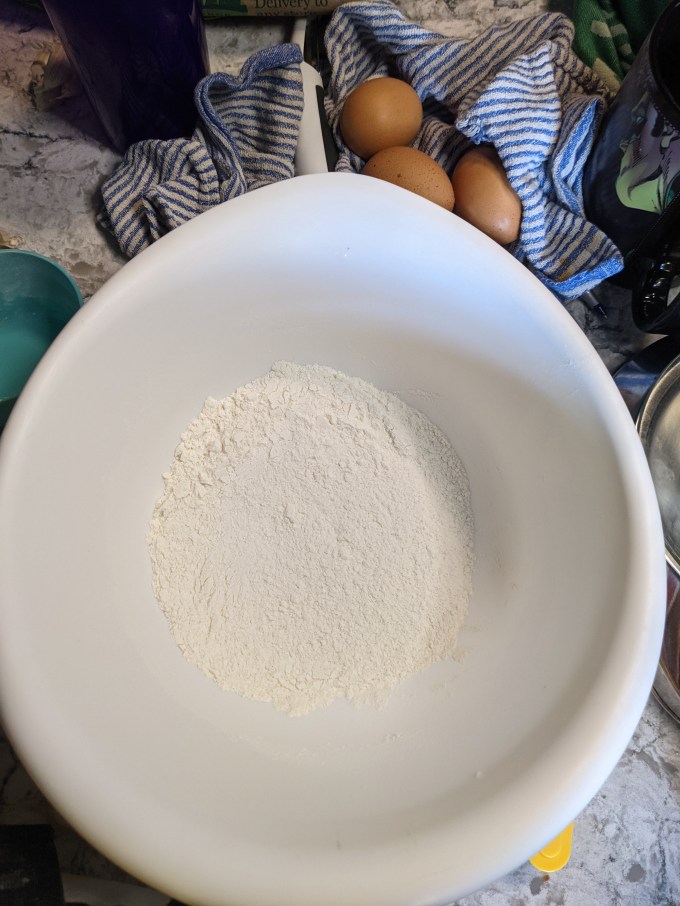
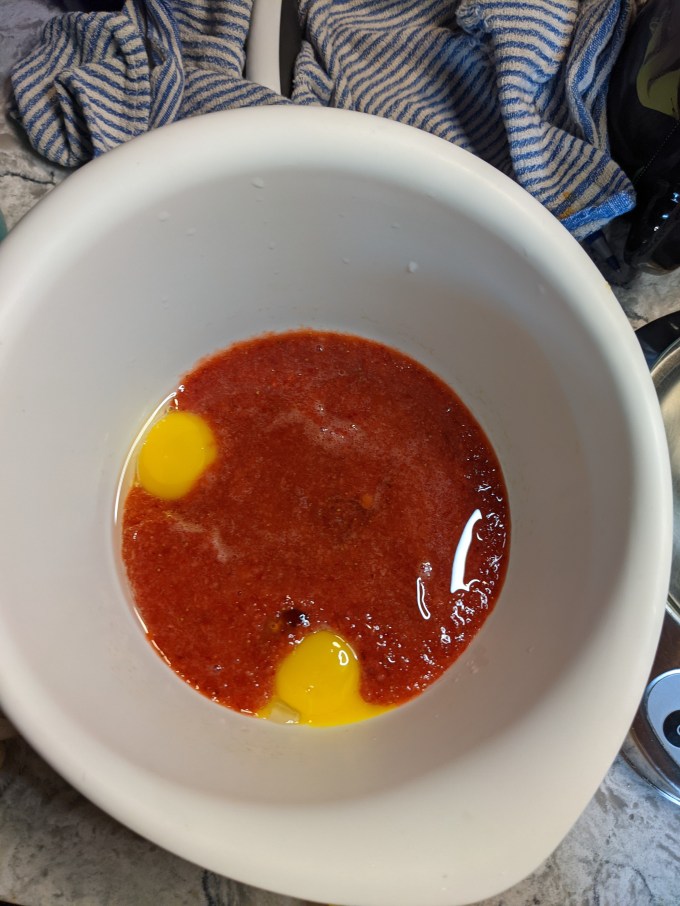
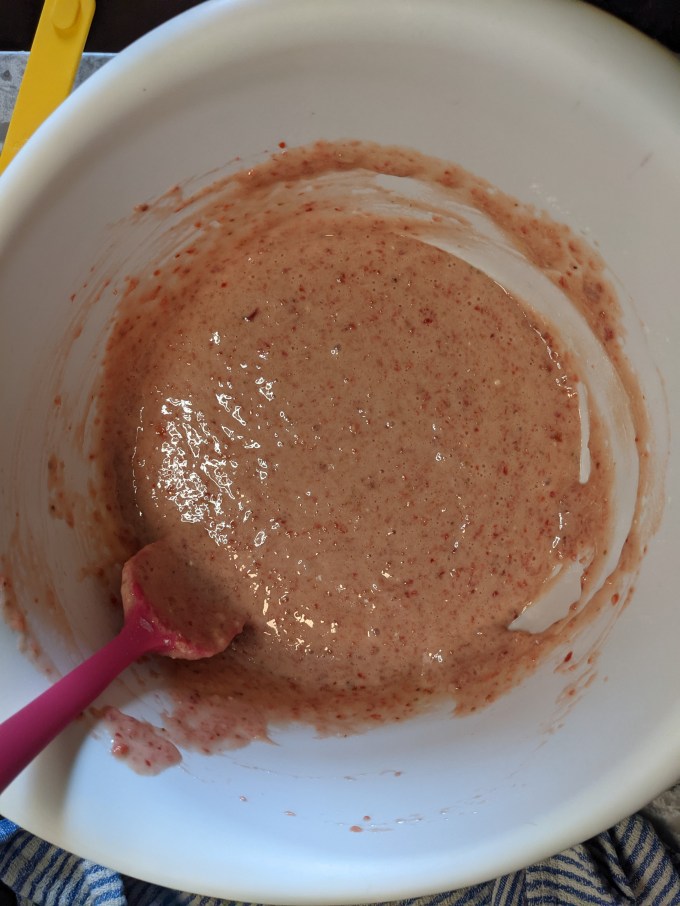
Strawberries are pureed with sugar. Dry ingredients are blended. Batter base of egg yolk, fat, and the strawberry is mixed and then combined with the dry ingredients. This is the first of many technical traps in this bake. The flour needs to be sufficiently sifted/whisked with a fork before adding to the batter base. If it isn’t, there are two possible negative outcomes. If the baker notices chunks of unsifted flour in the batter, they may be tempted to overmix to try and break them up. This will cause the final cake crumb to be chewy instead of spongy. If the baker doesn’t notice the unsifted chunks of flour, there will be unmixed flour visible (and undelicious) in the crumb. This happened to me the first time I ever made sponge cake back in high school. Disappointing lesson learned!
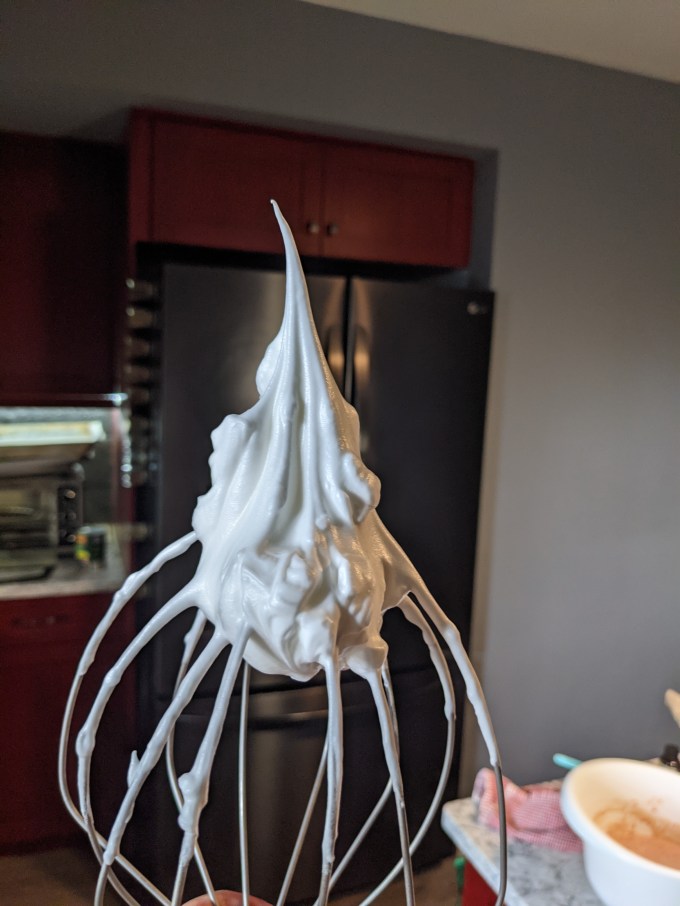
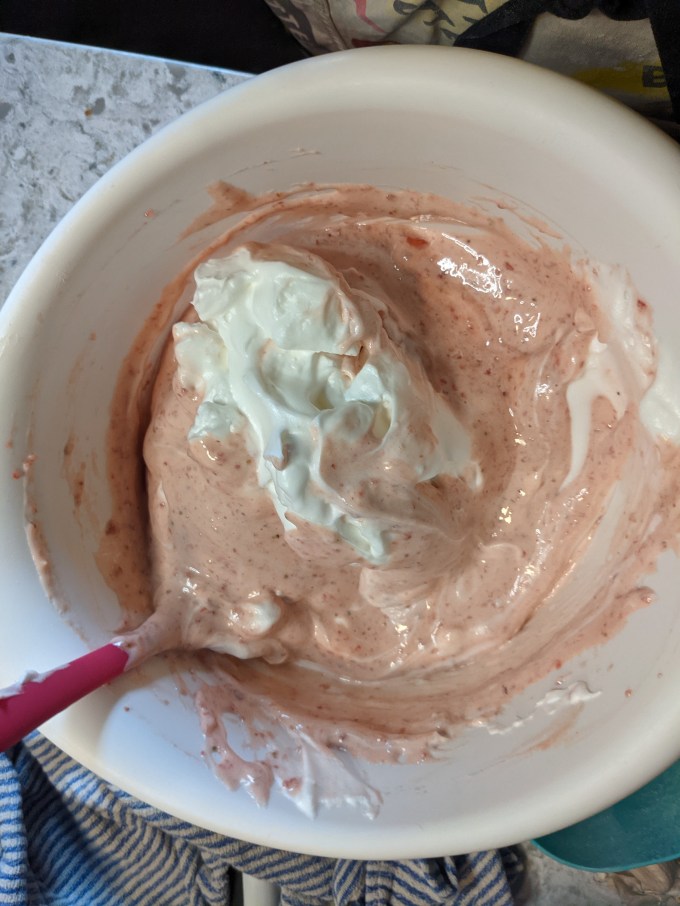
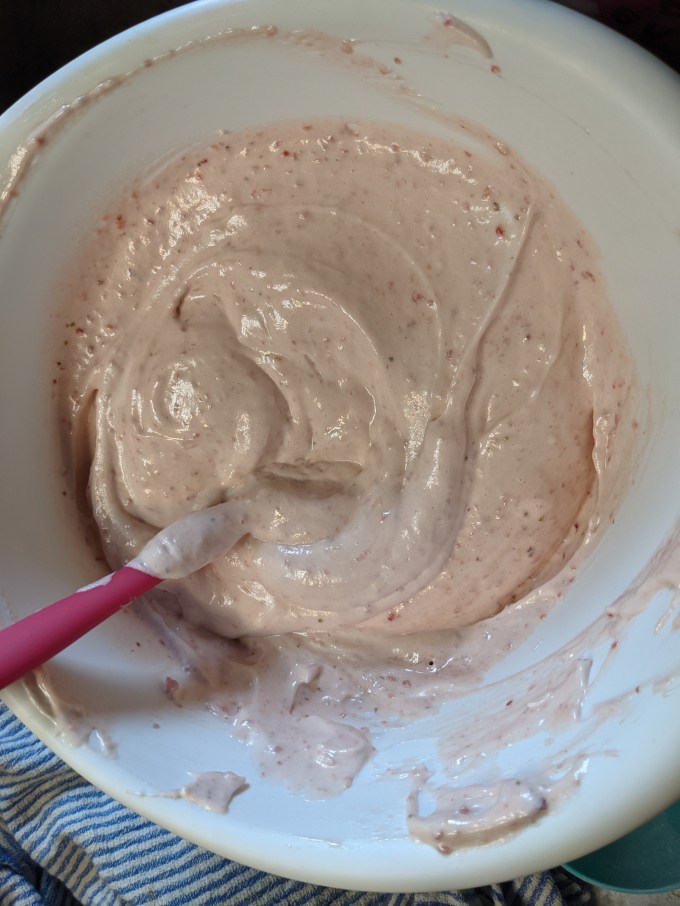
Egg whites and sugar are whipped to stiff peaks. The meringue is folded into the batter and then the batter is spread into a full size baking sheet. This is another pitfall: if the batter isn’t evenly spread, it won’t cook evenly and the spiral will be lopsided. Also it is possible to over mix the batter if you spend too much time fussing over it in the pan which can completely collapse the sponge and it will just turn into a leathery echo of sponge cake.
Step 2: Italian Buttercream
I have already made French Buttercream for this challenge (see my post about Marjolaine to learn more about that!), which is almost the same as Italian Buttercream. The difference between the two is French buttercream has egg yolk in it while Italian does not. The method for preparing both is the same.
Sugar is heated to temperature. While heating, egg whites are brought to stiff peaks. This is a real feat of timing because the egg whites need to be at soft peaks when the sugar syrup is added. If they get to stiff peaks, they will overwhip before the sugar is incorporated and the meringue can’t be saved after that happens. It is necessary to manage the development of the meringue at the same time as the sugar is heating, which are both challenging skills to use on their own. Having to do both at the same time takes real confidence and knowledge, and even then I think we all go into these things quite surely ready for failure. Re-doing egg whites and sugar work are part and parcel of the baker’s life.
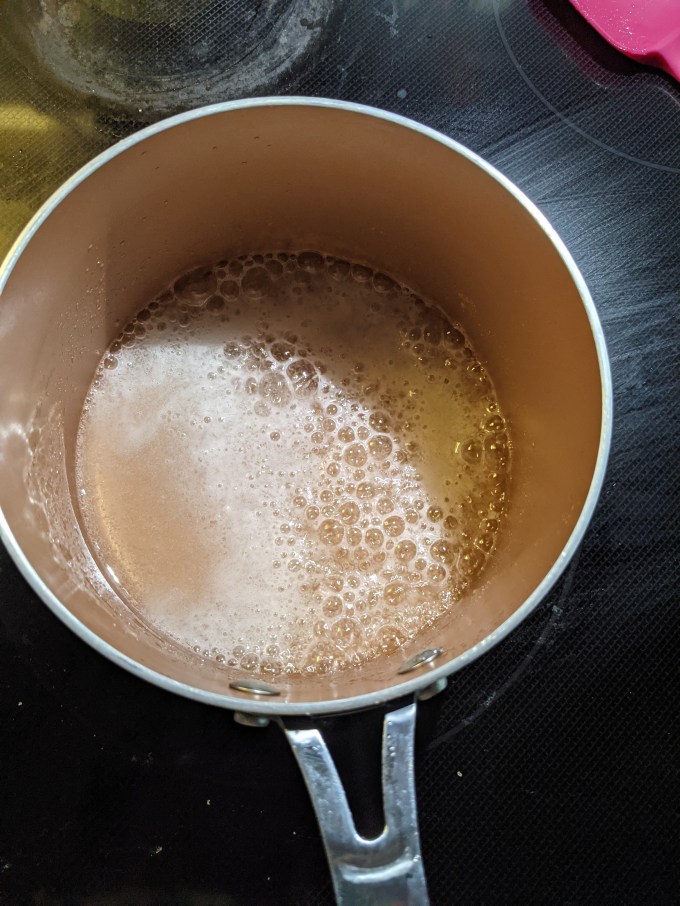
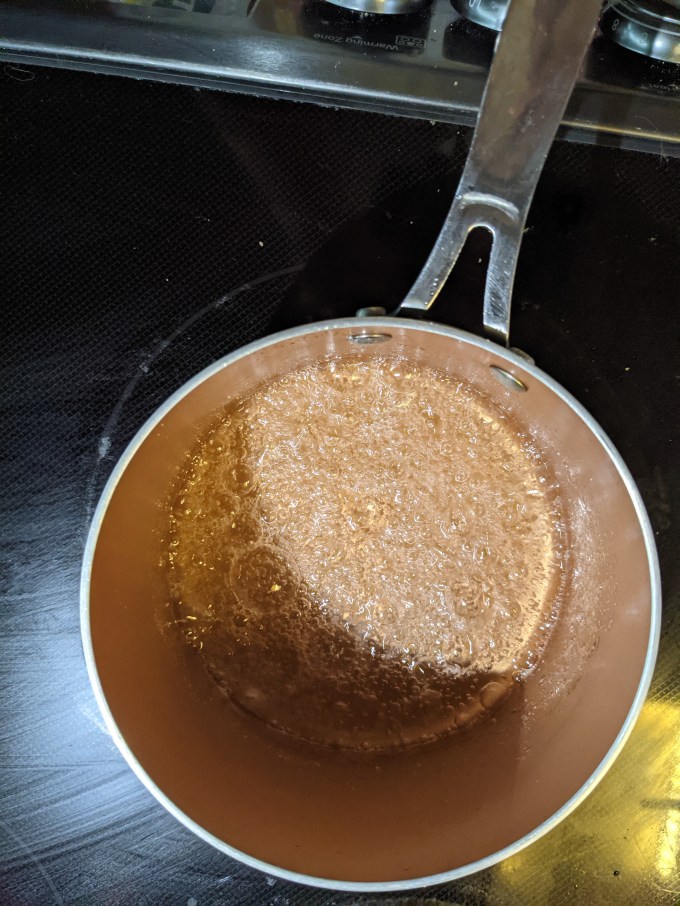
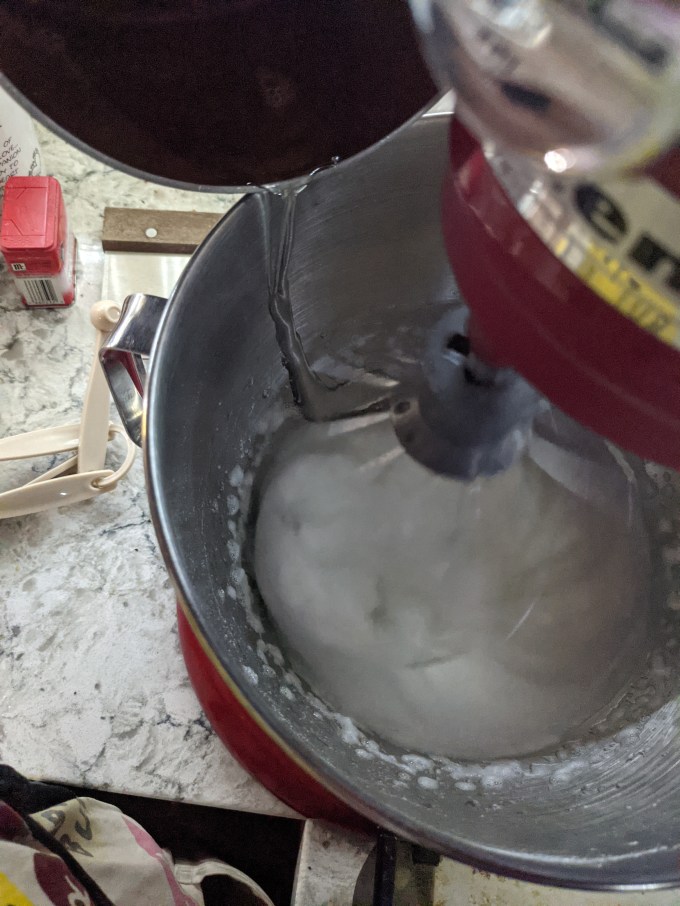
Once the sugar and egg whites are ready for each other, the sugar gets drizzled slowly into the meringue while it is still whipping. It is then left to whip on high speed until it comes back down to room temperature, which takes several minutes. The final meringue is thick, fluffy, and glossy. Cooking it with the hot sugar makes this type of buttercream very stable at room temperature so it’s great for a make ahead bake.
When the meringue has cooled, room temperature butter is slowly incorporated until it reaches that perfectly spreadable buttercream consistency. The final icing is amazingly rich but also super light and fluffy. As I mentioned, I am not a huge fan of icing, but this is a frosting junkie’s dream for sure.
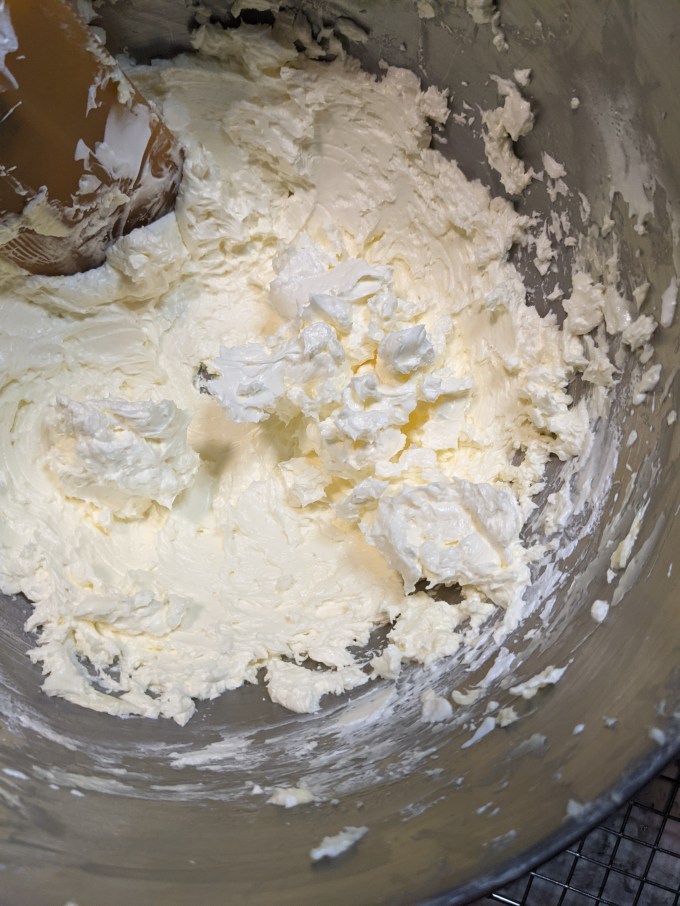
Step 3: Assembly
When the sponge comes out of the oven, it has to be left in the pan for a couple of minutes to tighten up, but it needs to be turned out before it cools completely. Another challenge of the bake is getting the bake time just right. Of course, this is the case for ANY bake, but some are more forgiving than others. If the sponge is even slightly overbaked, it will likely crack when rolled. If it’s underbaked, it will be mushy to eat and is also likely to crack when rolled. It has to be springy to the touch when it comes out and the crust should have a slight shine.
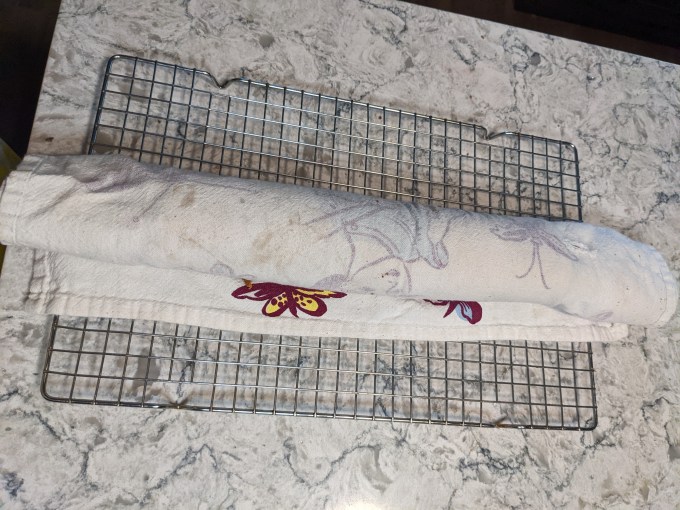
The warm cake is turned out onto a towel and the parchment is removed. As I said earlier, I think I could have left mine in the pan for a few more seconds and the parchment would have picked up more of the crust to reveal more vibrant pink in my final presentation. The cake is then rolled up, including the towel, which keeps it from sticking to itself as it cools.
Generally speaking, cakes have to be iced when they are room temperature or cooler or the icing will melt. Rolling the cake while it’s warm creates the flexibility in the final sponge needed to re-roll it after icing. If the cake was left flat to dry, then iced, then rolled, the sponge will not be elastic enough and it will crack.
Once the cake has cooled completely, it gets unrolled, iced, and rolled back up. Ends are trimmed for presentation and taste testing purposes, and that is all there is to that!
Gallery
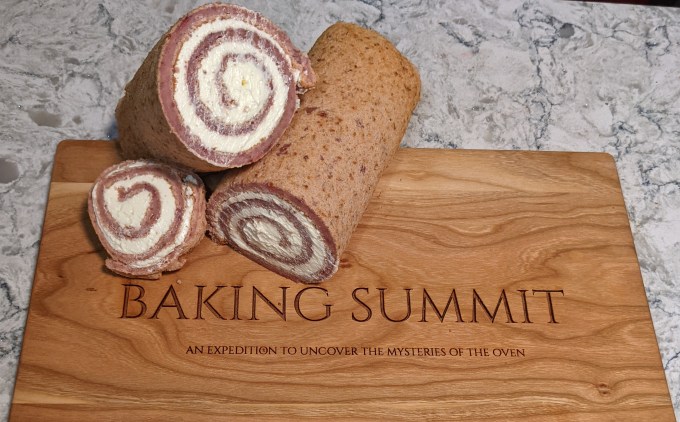
I had fun making this roulade and it went better than the only other time I made one, which was a bit of a meringue fail (I still served it though). Side note: Apparently I also made that meringue roulade in September 4 years ago, since it came up in my Facebook memories recently. Maybe I will just make one every September now for funsies. This is how my totally normal mind works: it happened twice, that’s a trend, BETTER DO IT FOREVER NOW. #logic
The italian buttercream was way too rich for my taste, but the sponge was great. I only regret I didn’t make this in July when the Ontario strawberries were in peak season (cue the good things grow song). Until next time!
Hey, bakers! Check out my BAKER’S PANTRY index if you want to deep dive on specific ingredients when attempting this bake for yourself


It looks so good! I love these type of cakes
LikeLike
My partner says this looks good as f*ck and REALLY wanted me to comment this
LikeLike