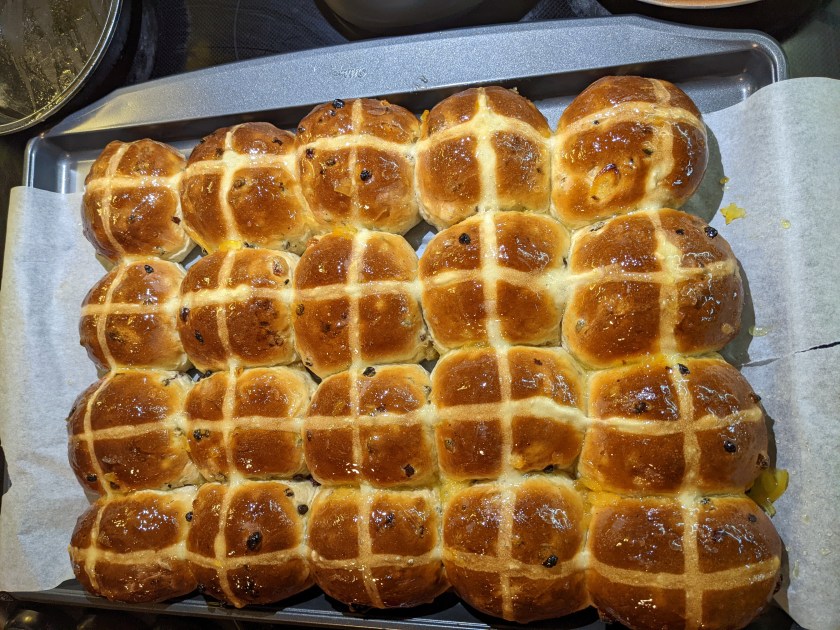
Here we are, Friends and Fellow Bakers! I can’t believe it, this post marks the second-last technical bake I have to do from Seasons 1 – 4 of GCBS! Crazy town! This slow meander to the finish line that I am on is a bit of a wind down. I had left these off the list until now. I was saving them in case I needed an easy bake to do on a week where I was too busy or tired to try something more difficult. The good news is, I didn’t ever find the need to leverage this bake to give myself a break over the past few months. The downside is this makes our penultimate post a little bit less exciting than you might expect. Win some, lose some.
Hot Cross Buns (recipe here) are a traditional Easter bread from the UK and were featured on Season 2 Bread Week of GCBS. As with other Easter bakes, this bread is lightly spiced, with citrus and other fruits baked in. Hot cross buns are usually made snack-size with the distinctive white crosses and glaze garnishing the top. They are a hearty and satisfying snack best enjoyed warm with a bit of butter or jam.
This is another example of a bake that was more challenging for the contestants than it was for me. The contestants were not provided with measurements for their fruit add-ins or spices, and I got the impression the mixing instructions were also pared back considerably. For my version, I had all the measurements I needed, and I know this method like the back of my hand so I would have been able to execute this with no instructions if needed.
Adding to the level of ease on this bake for me is the fact that I recently spent my time off over the holidays to bake 12 Christmas breads (here is the first of those posts), and hot cross buns are in the same wheelhouse. I would even go so far as to say that all of the European style holiday breads are fundamentally the same dough with minor variation, and these are no exception.
Side note: I often reference the Bread Baker’s Apprentice by Peter Reinhardt and he has a bit of discourse in there about the apparent similarity between the European holiday breads. To paraphrase Reinhardt’s own account: he made a remark about how European holiday breads are all similar and offended some German bakers who were present when he said this. People take their cultural bread traditions quite seriously, so I hasten to add that it is only in reference to the bread science that these breads are similar. Their histories and cultural relevance is as storied as the European nations they came from.
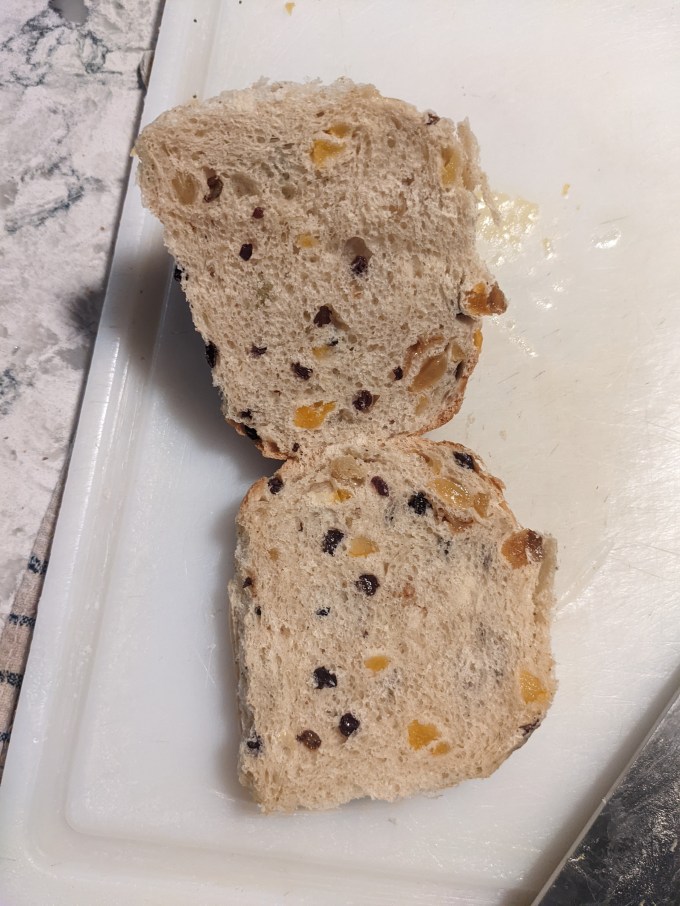
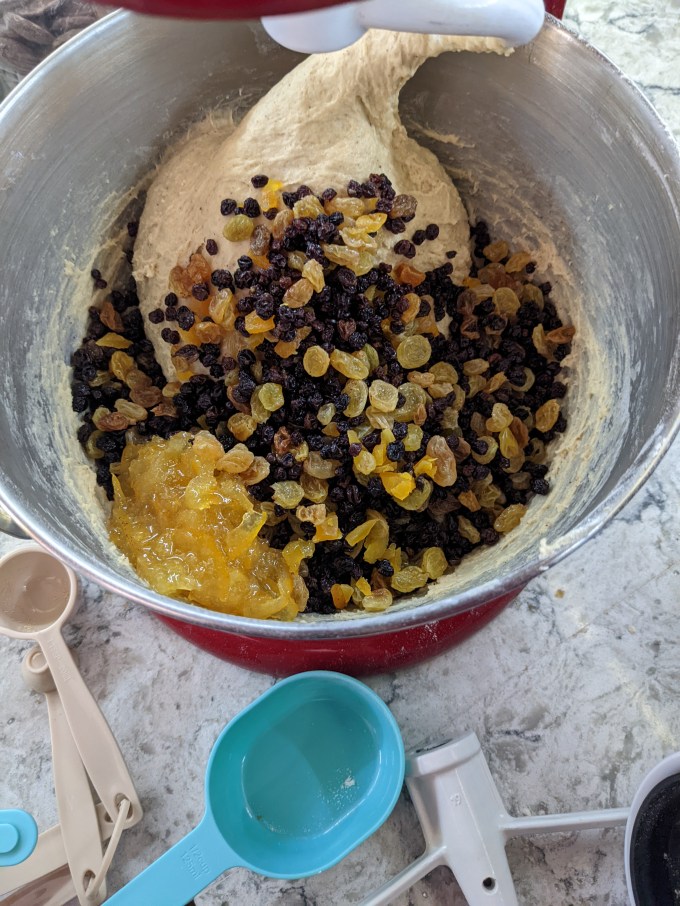
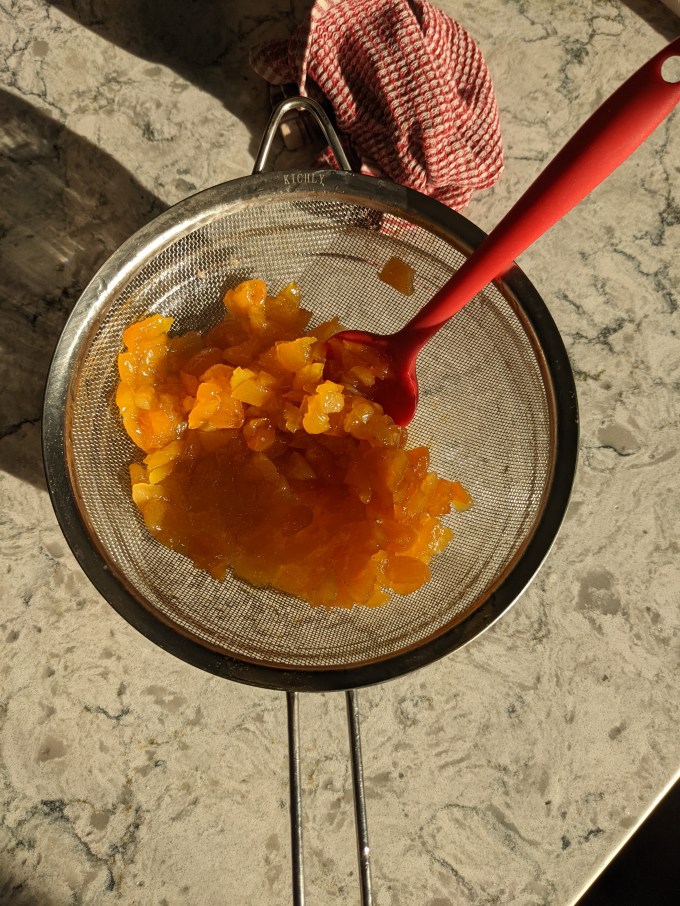
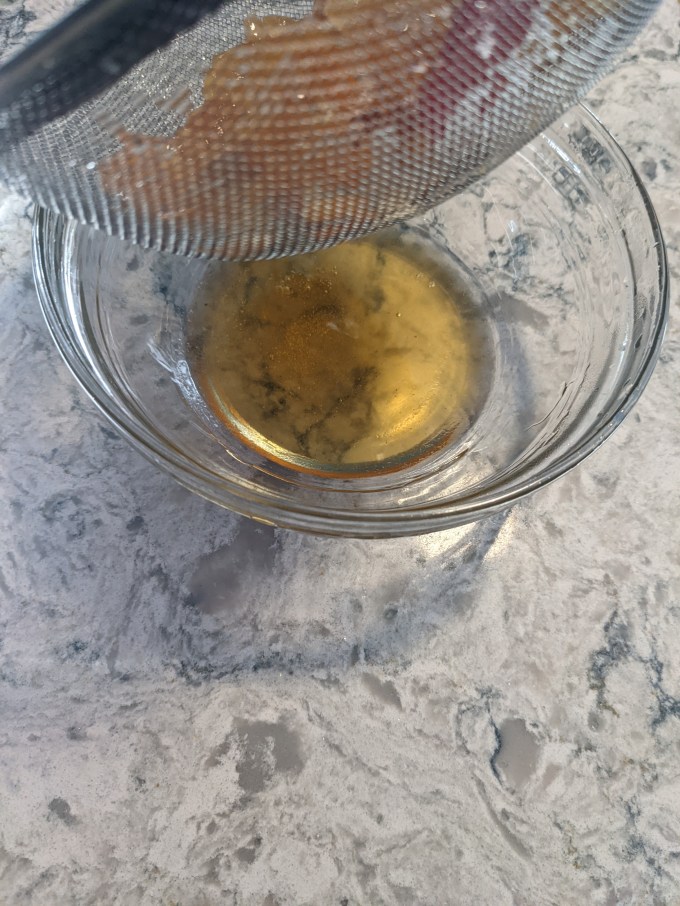
My notes on this bake are minor. The recipe calls for citrus peel, which is only available locally during Christmas and Easter seasons (and not so much this year due to the ongoing global supply chain issues). I have a jar of Korean Citron Tea in the fridge which is very similar to marmalade, but more of a thin liquid base rather than a spread or jam. I strained enough citrus peel out of it to make the ⅓ cup called for and then added the citrus liquid to my apricot glaze to cover the buns. I am nothing if not a cheapskate resourceful.
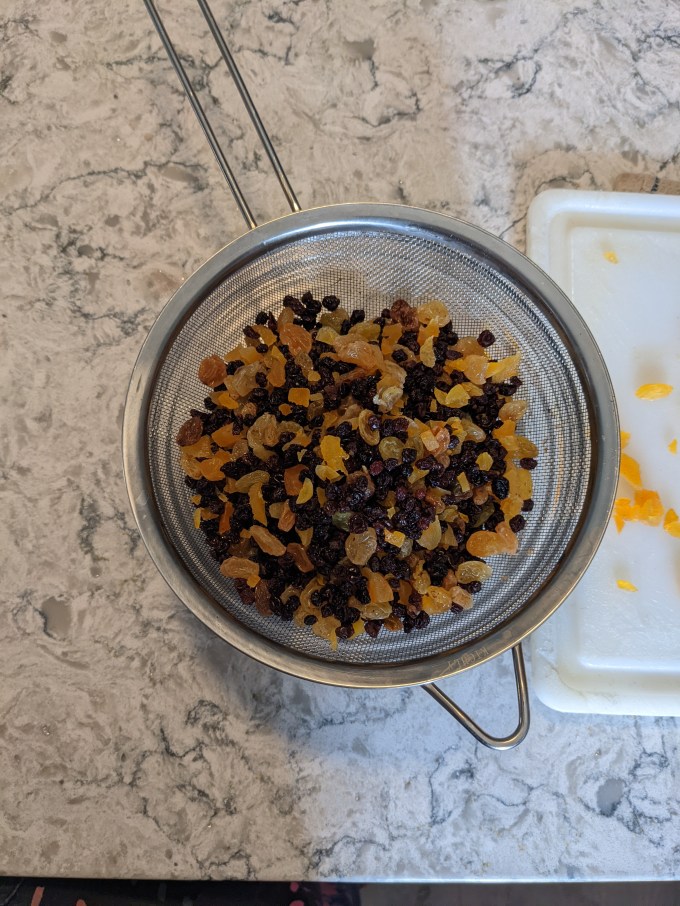
In keeping with my ingredients conservancy, I decided to use up the dried fruit that I still had leftover from all of my Christmas bakes instead of buying more to match the recipe. The end result is my buns have golden raisins and currants in addition to the dried apricots that were called for.
Finally, this version of the recipe has us making apricot glaze from dried apricots instead of using diluted apricot preserves which is how this is usually done. As with other bread challenges from the show, I believe this was an added element of busy work designed to produce some additional footage since most of this process is passive while the bread rises. I found I did not get sufficient apricot glaze to cover all of the buns by following the recipe, but I had that citron tea liquid leftover as I mentioned and that topped it up enough to cover everything.
Step 1: Dough
The CBC version of this recipe calls for active dry yeast, which needs to be hydrated before it is added to the dry ingredients. I keep instant yeast on hand, which can be substituted (ratio of active to instant yeast is about 1: 0.7) with active yeast directly, or the method can be modified to eliminate the yeast hydration by adding the instant yeast directly to the dry ingredients. I decided to do the latter. Work smarter, not harder, I always say.
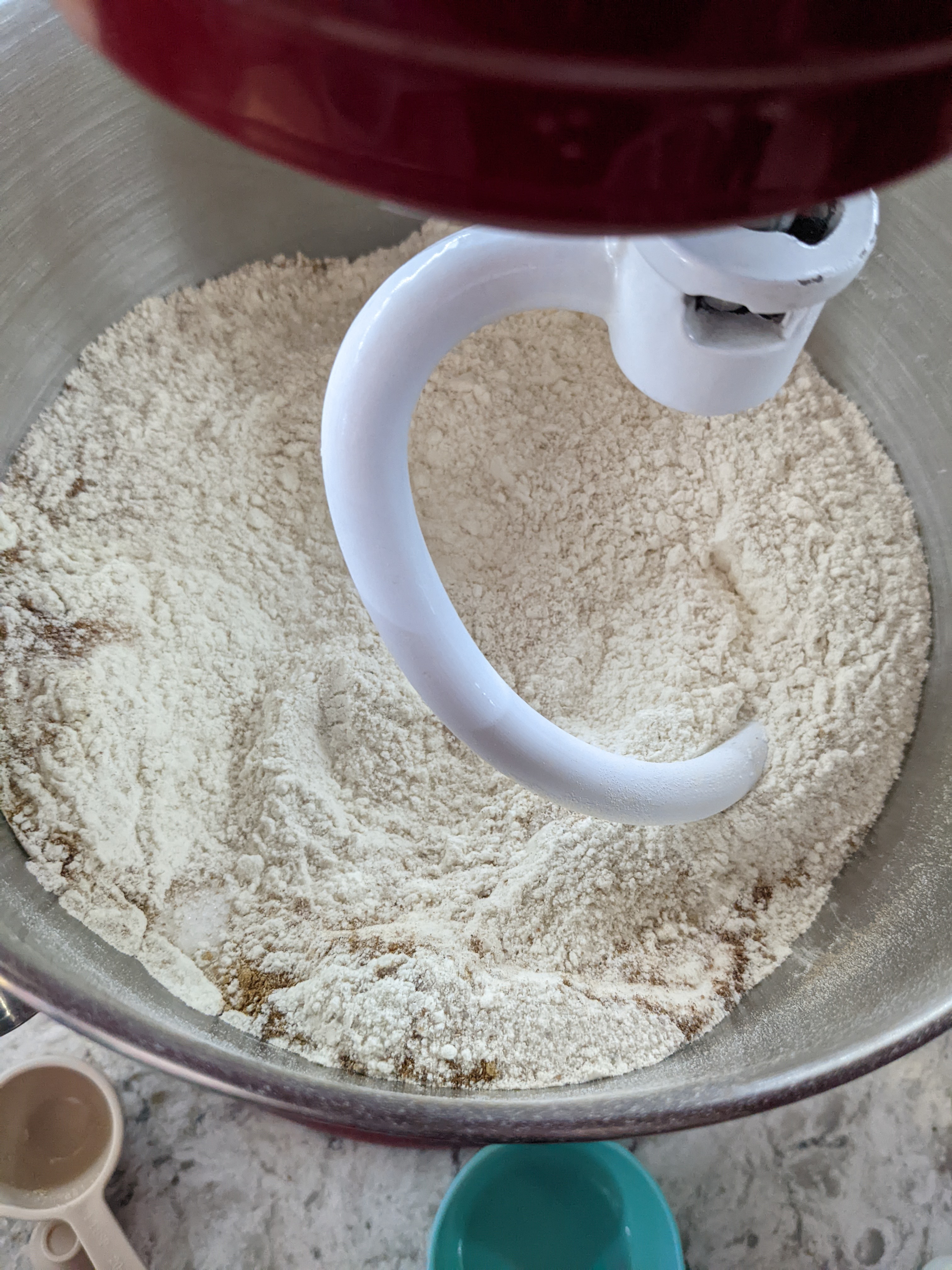
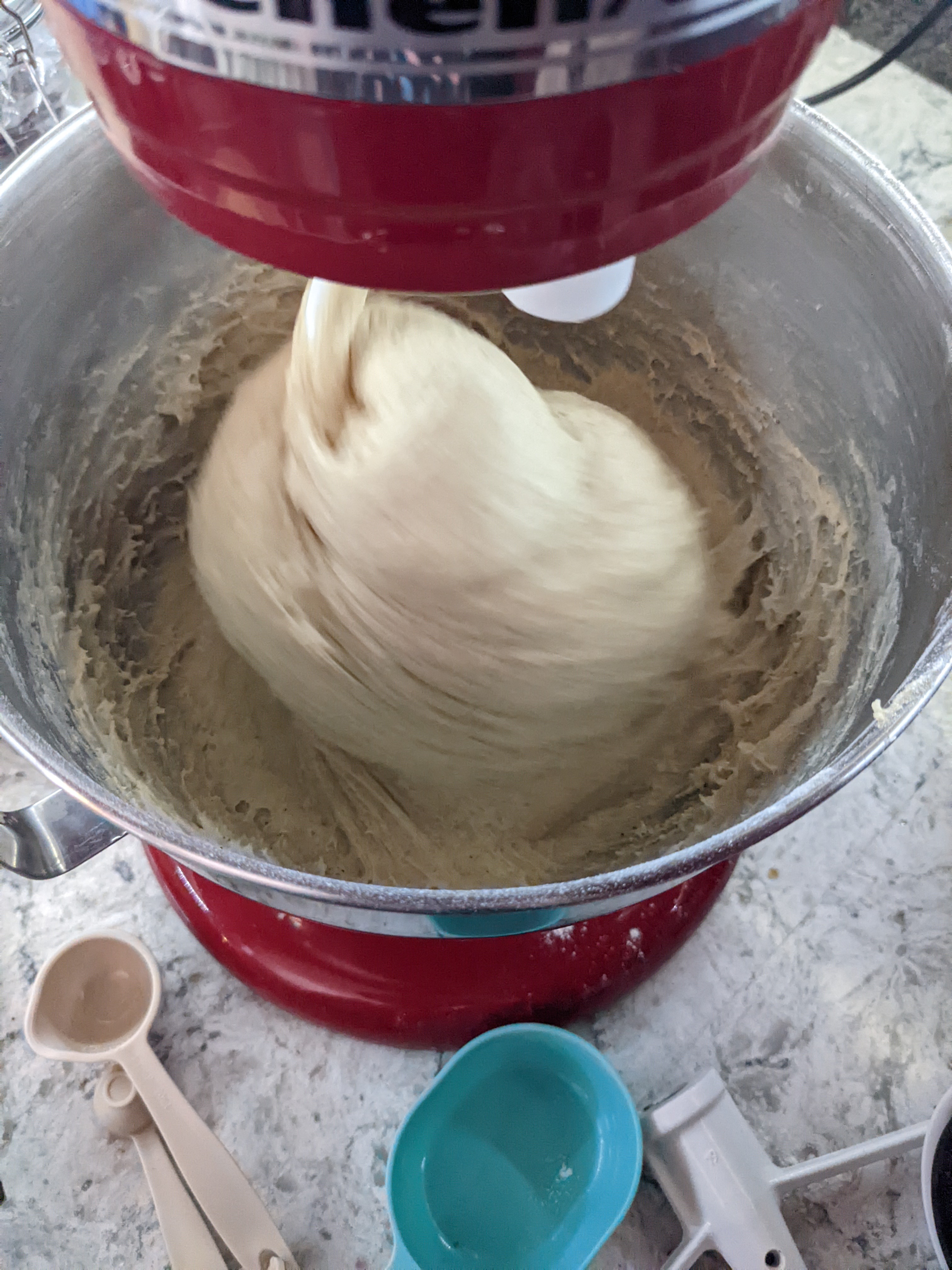
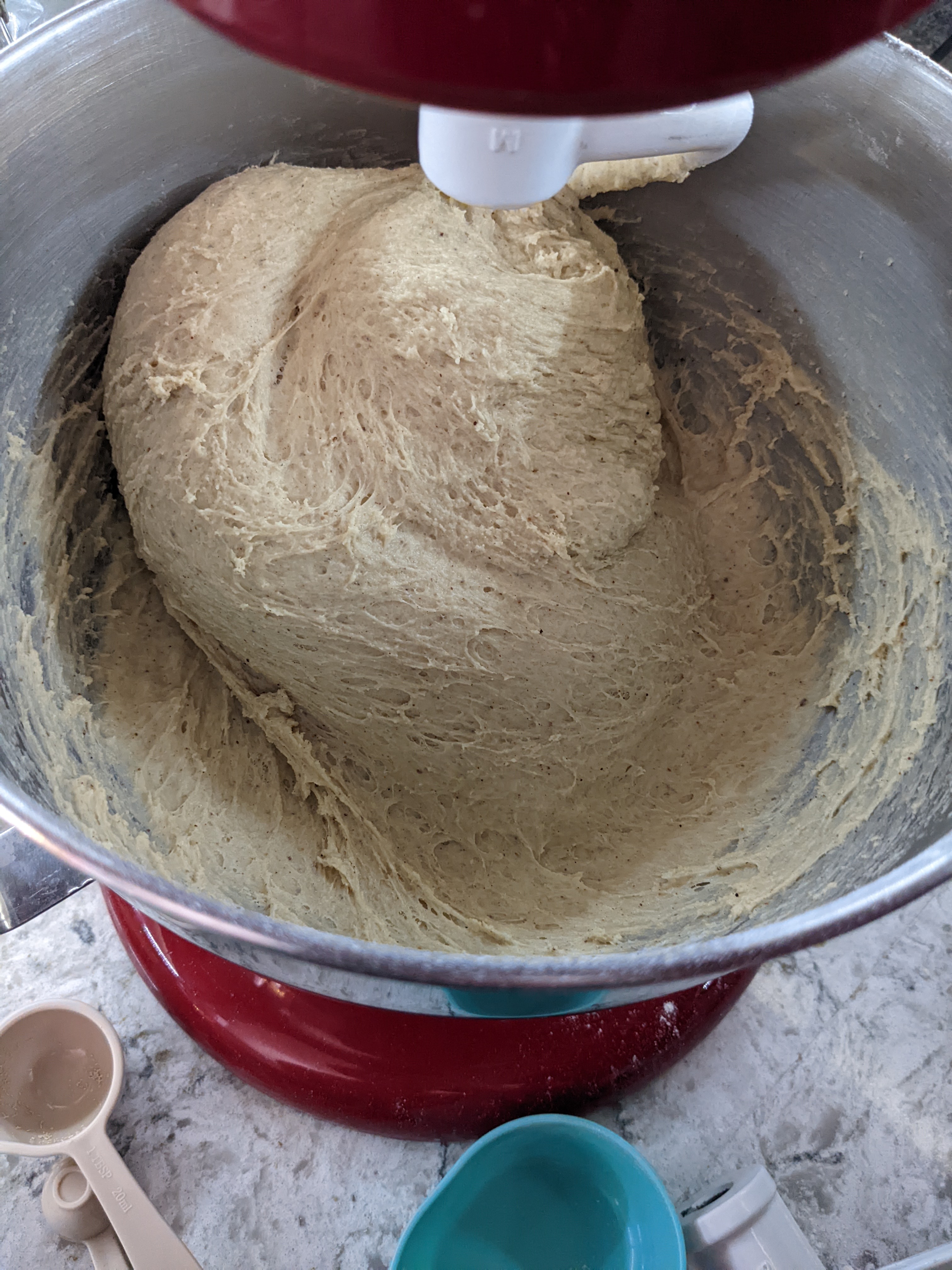
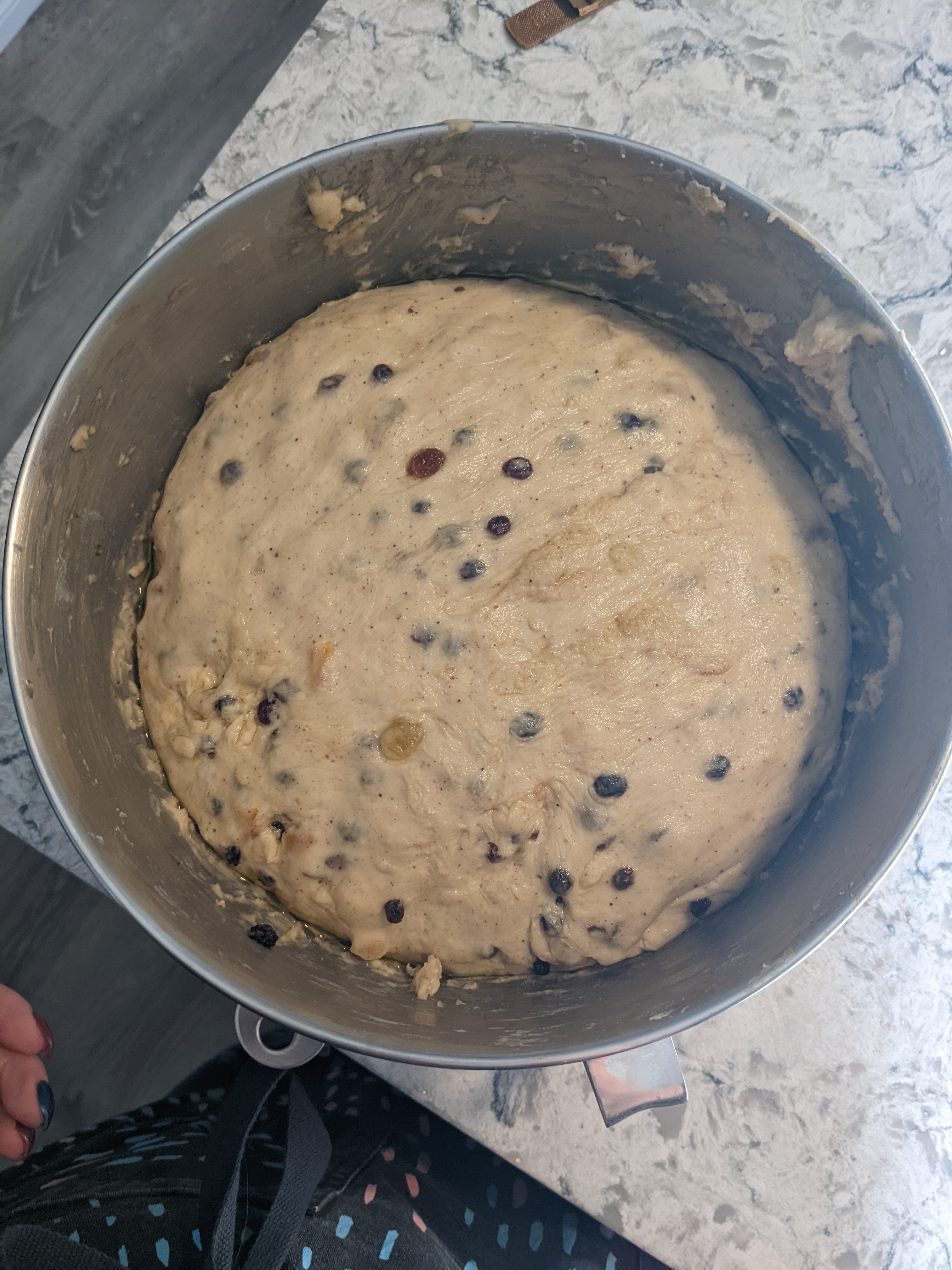
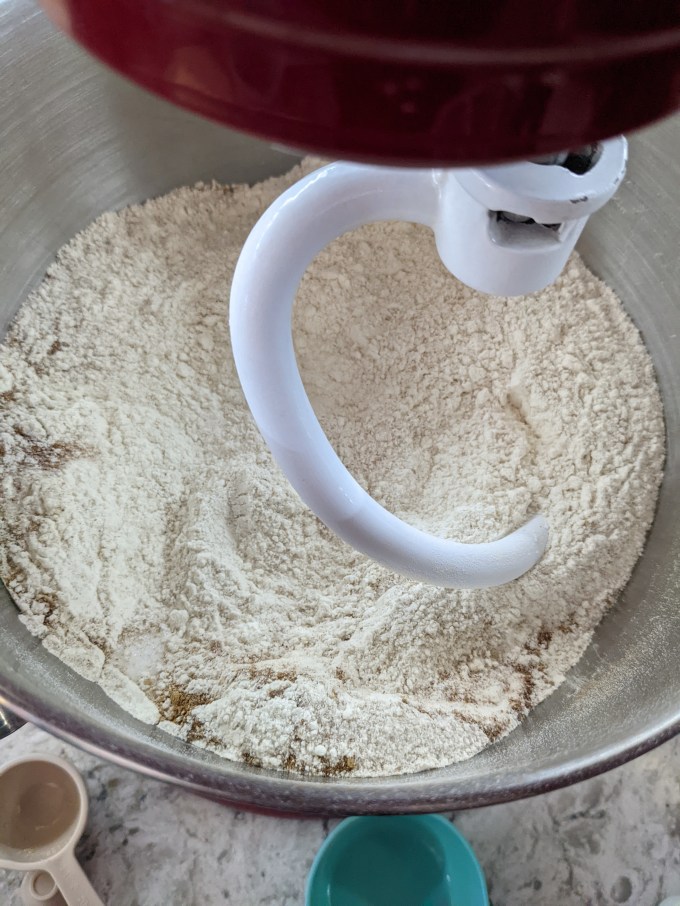
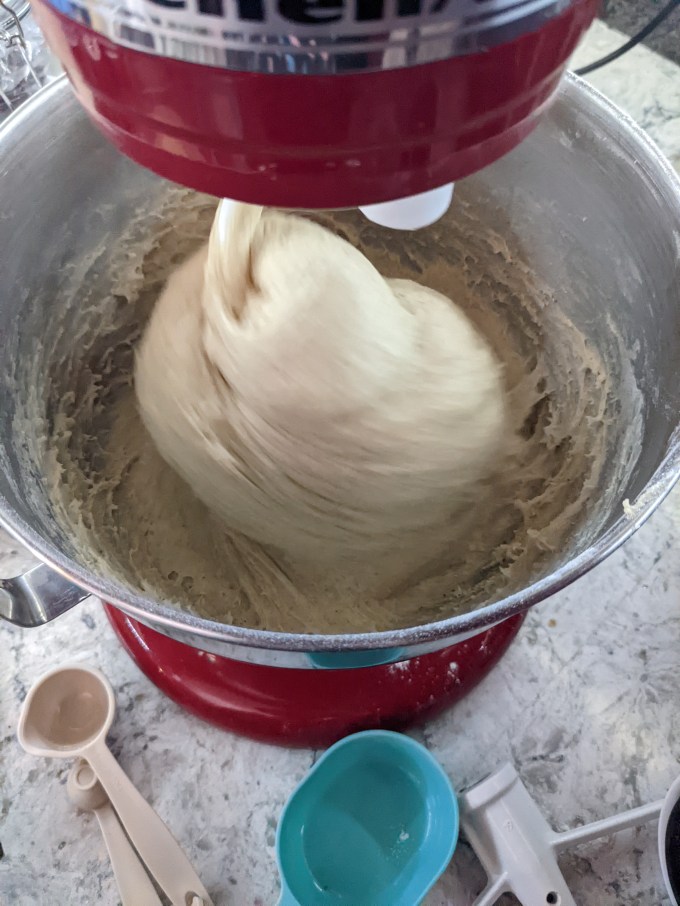
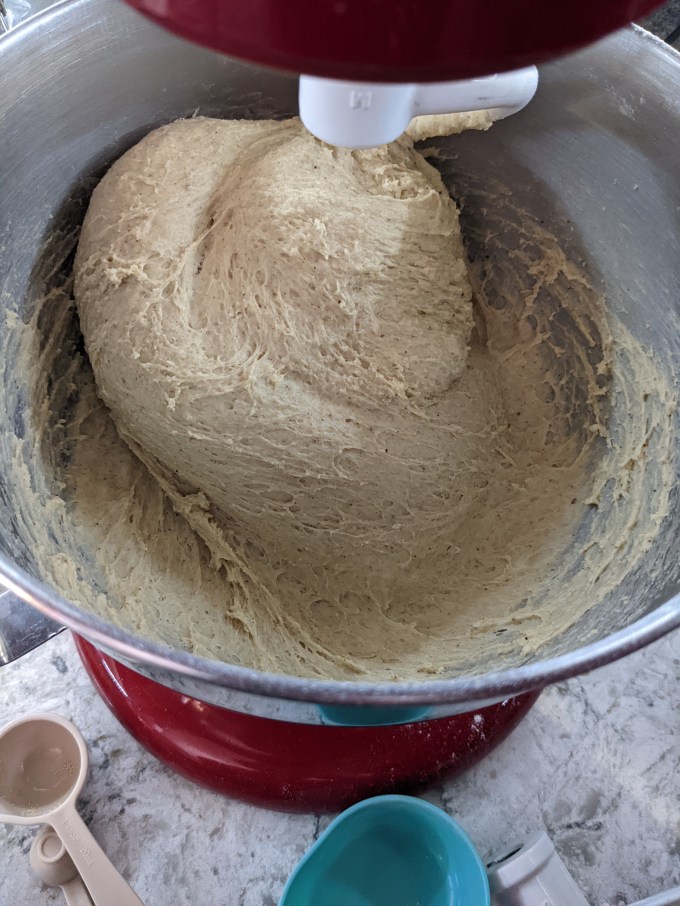
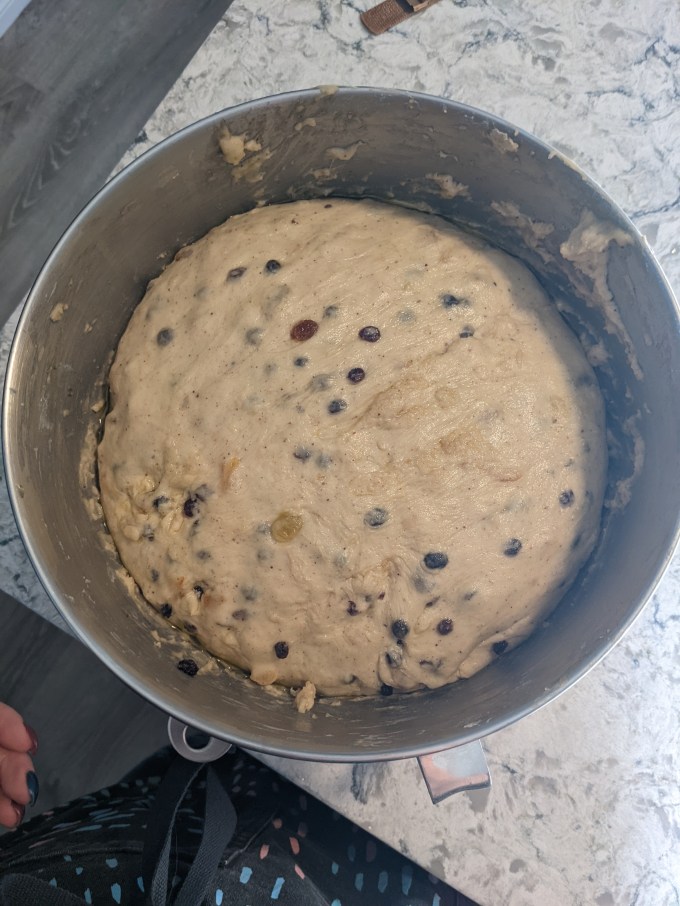
Flour, yeast, salt, sugar, and spices are combined. Milk, butter, and eggs are added as hydration and to enrich the dough. The dough is kneaded until gluten is well developed and the dough is tacky but not sticky. I went with 6 minutes on the mixer, 4 minute break, and then another 6, which is my standard for direct dough method.
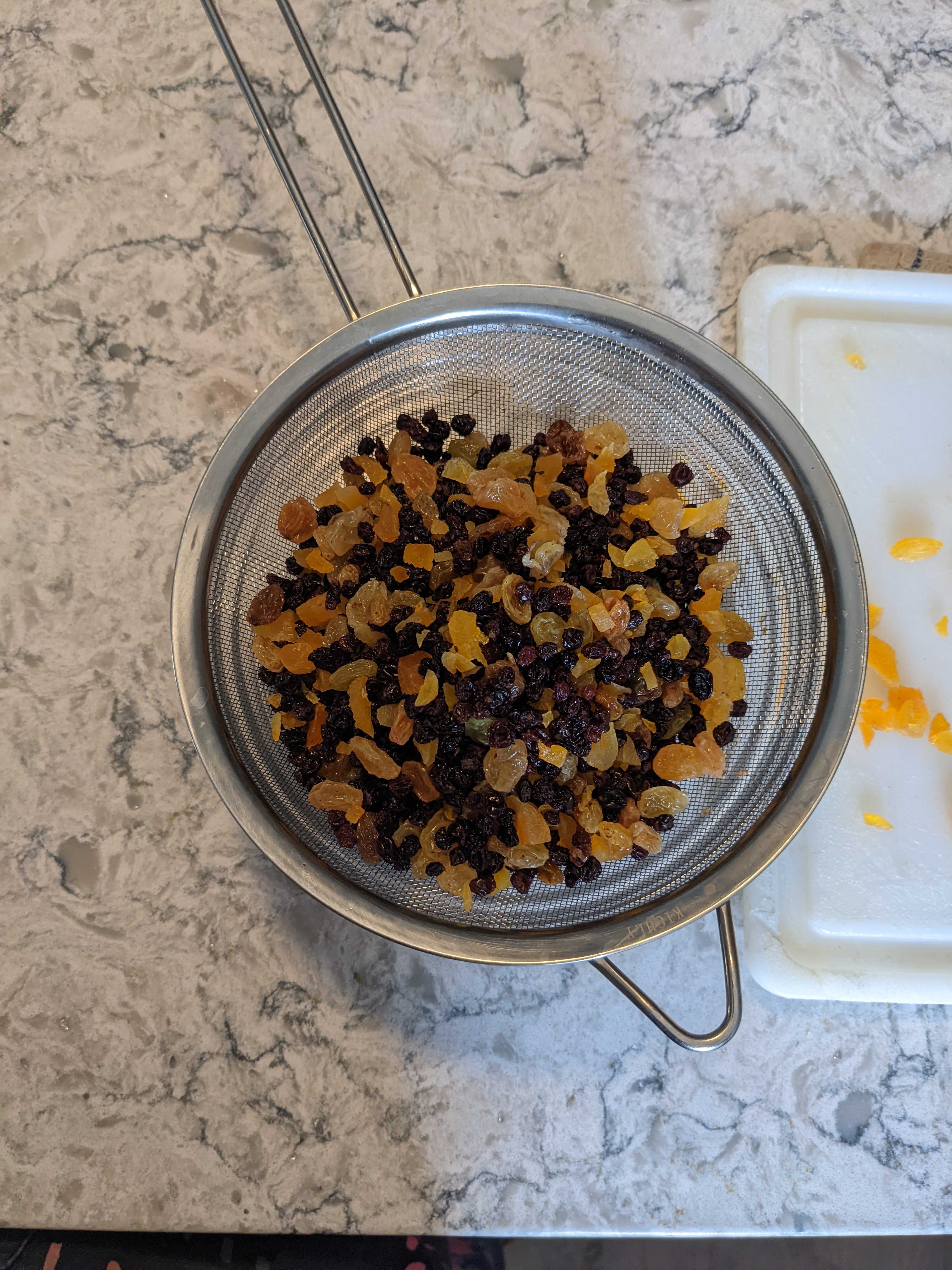
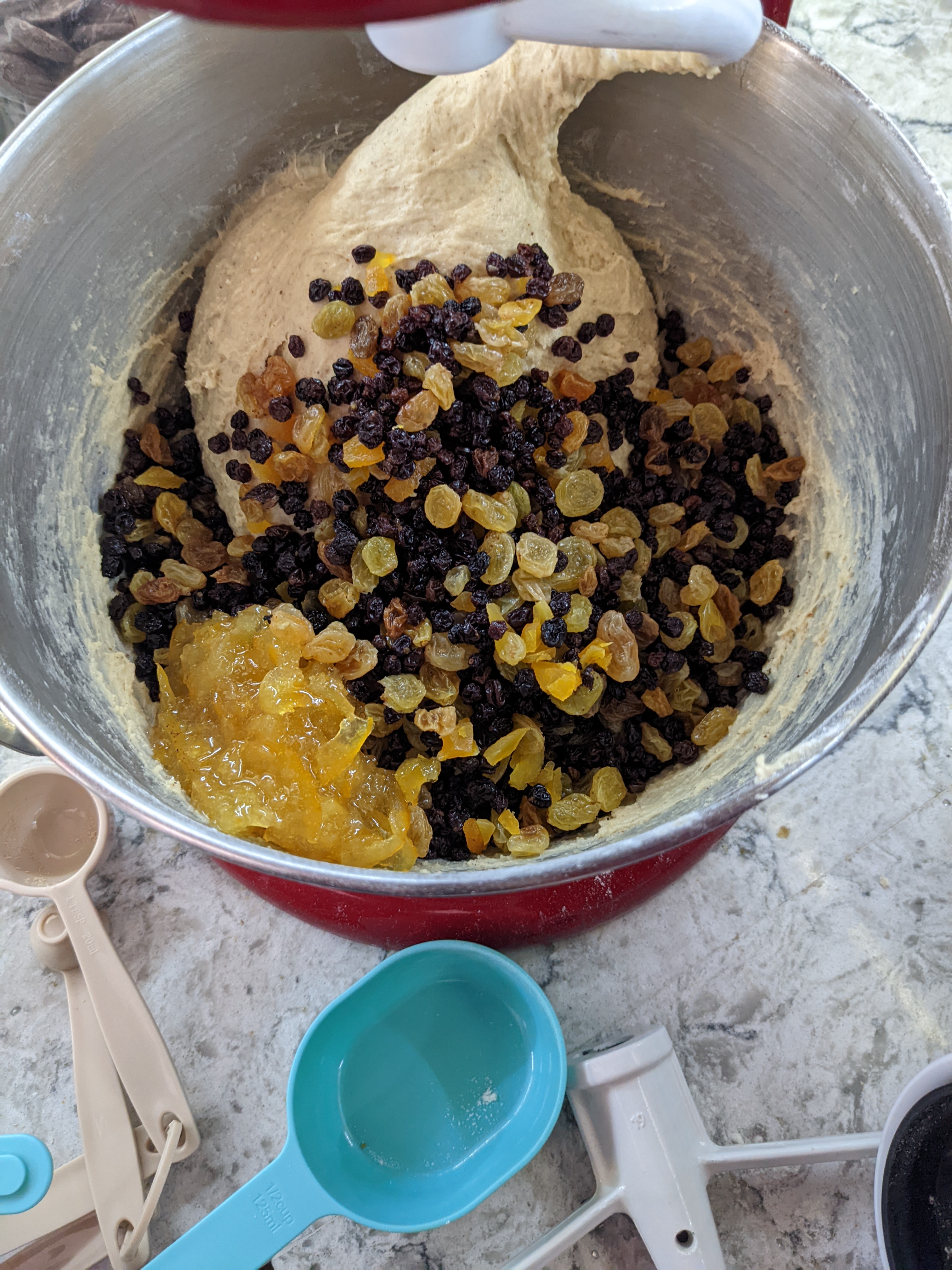
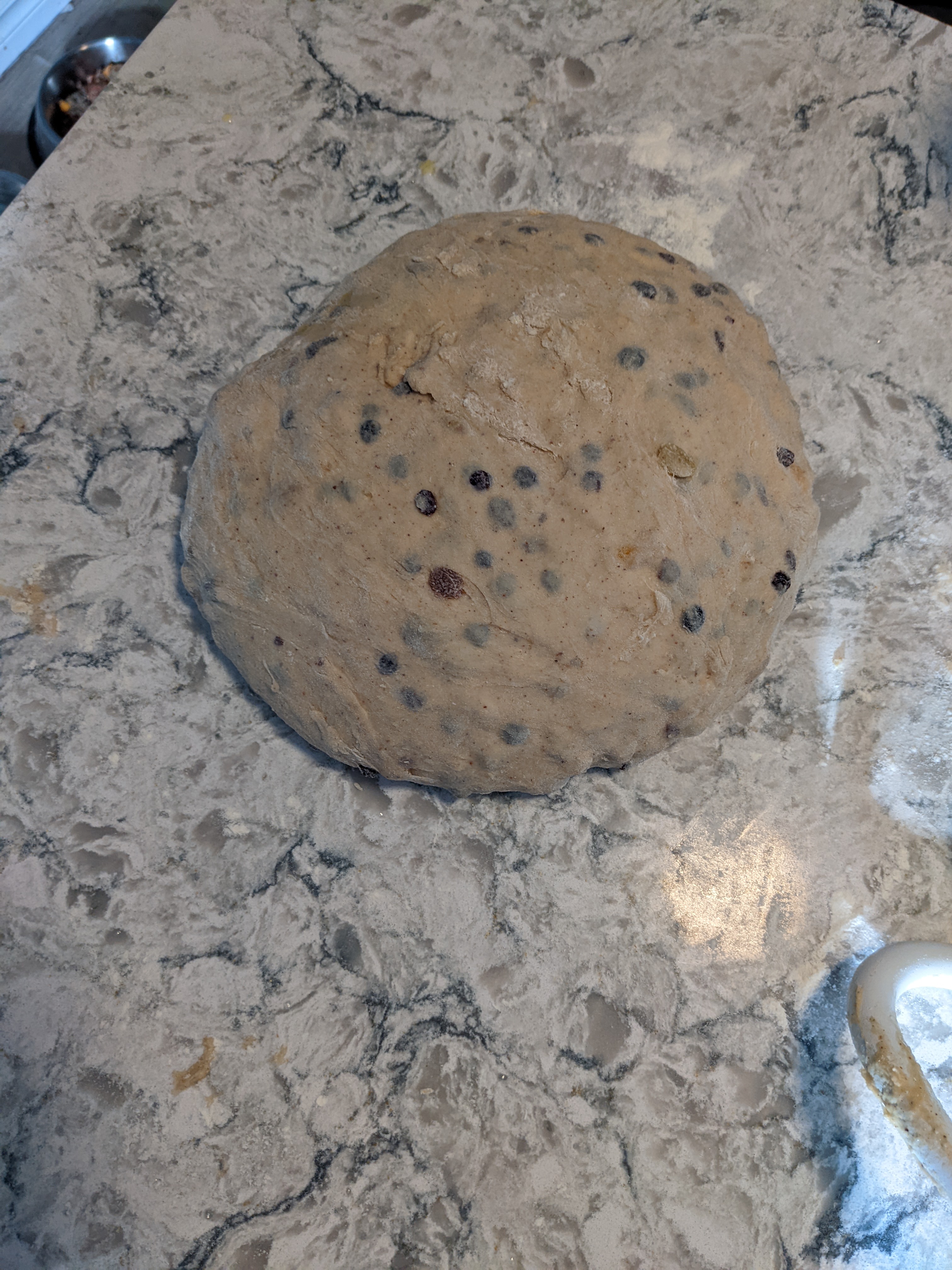
While the dough is mixing, the dry fruit is hydrated with boiling water. The CBC recipe called for mixed peel and sultana raisins. As I mentioned above, I took some liberties here and used a combination of currants, raisins, and craisins. The re-hydrated fruit is added to the dough in the last few minutes of mixing and kneaded in until evenly mixed. The dough is set aside (or in a proof box/drawer/oven with a proof setting) for first proof.
Step 2: Apricot glaze
As I noted above, the CBC added this little make-work project to this technical, presumably because people standing around waiting for dough to rise doesn’t make for good television. If I didn’t already have apricots on hand from Christmas, I don’t think I would have bothered doing this. There was no significant improvement to doing this method versus using a jar of apricot jam as would normally be the case.
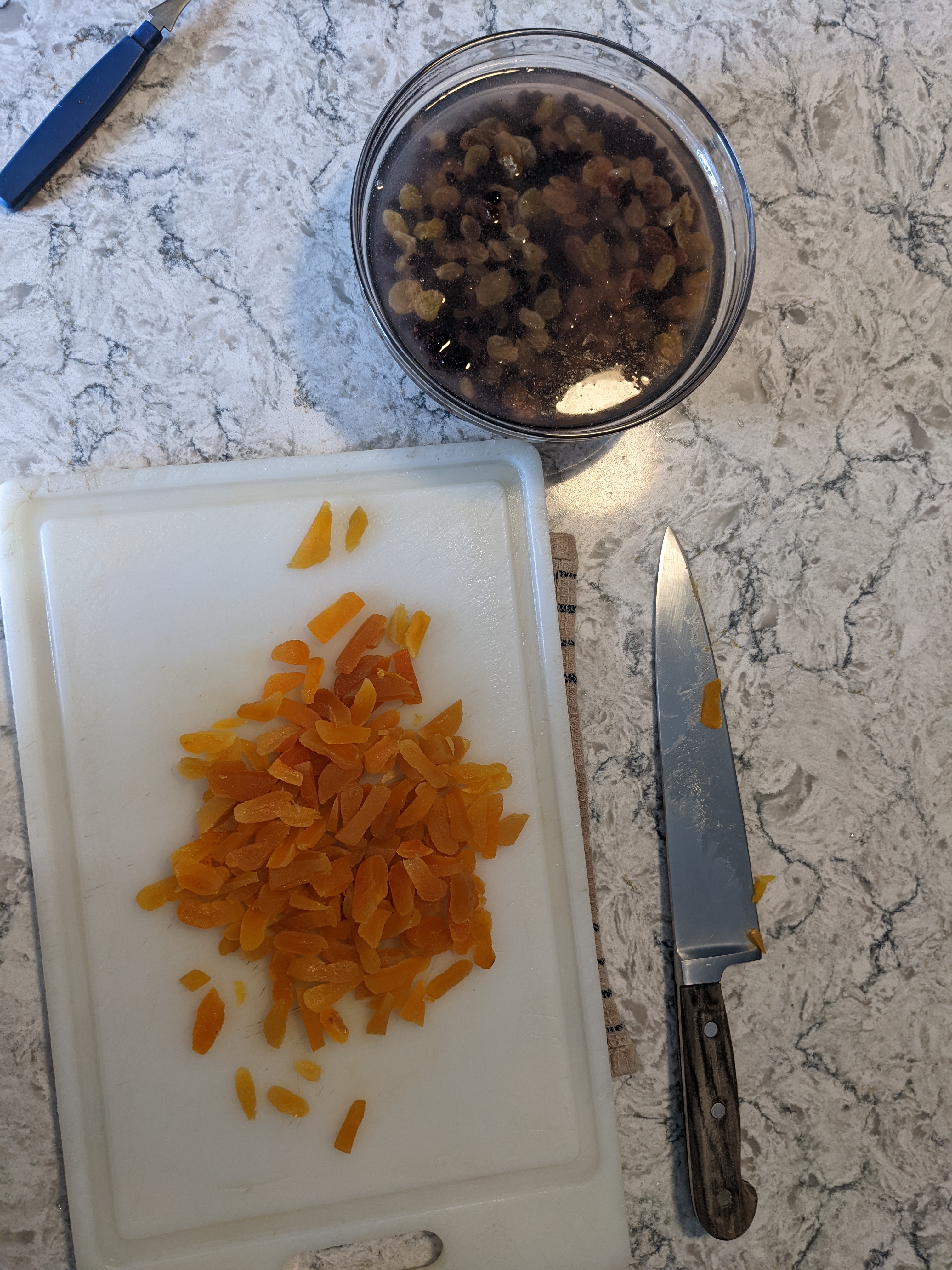
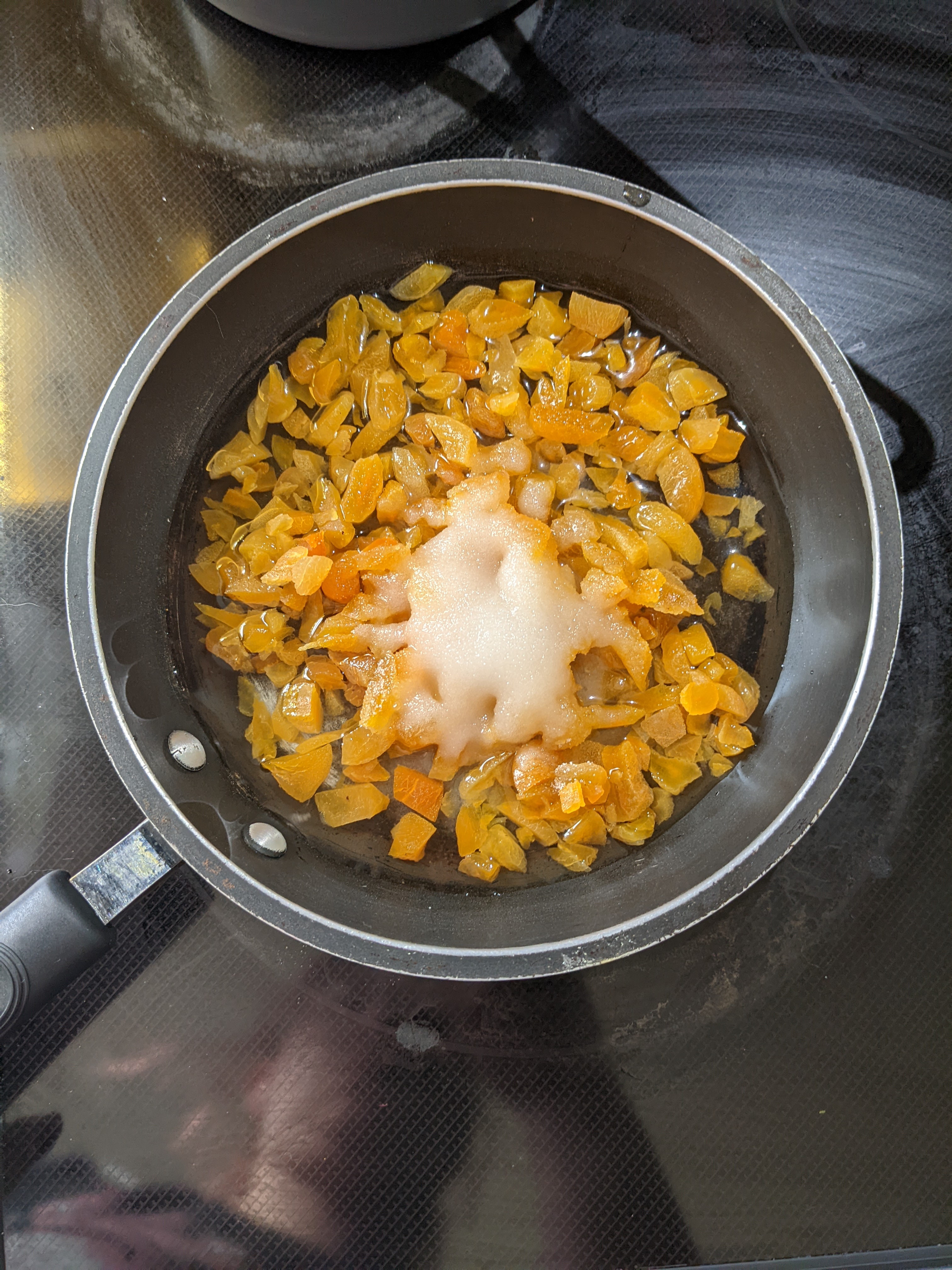
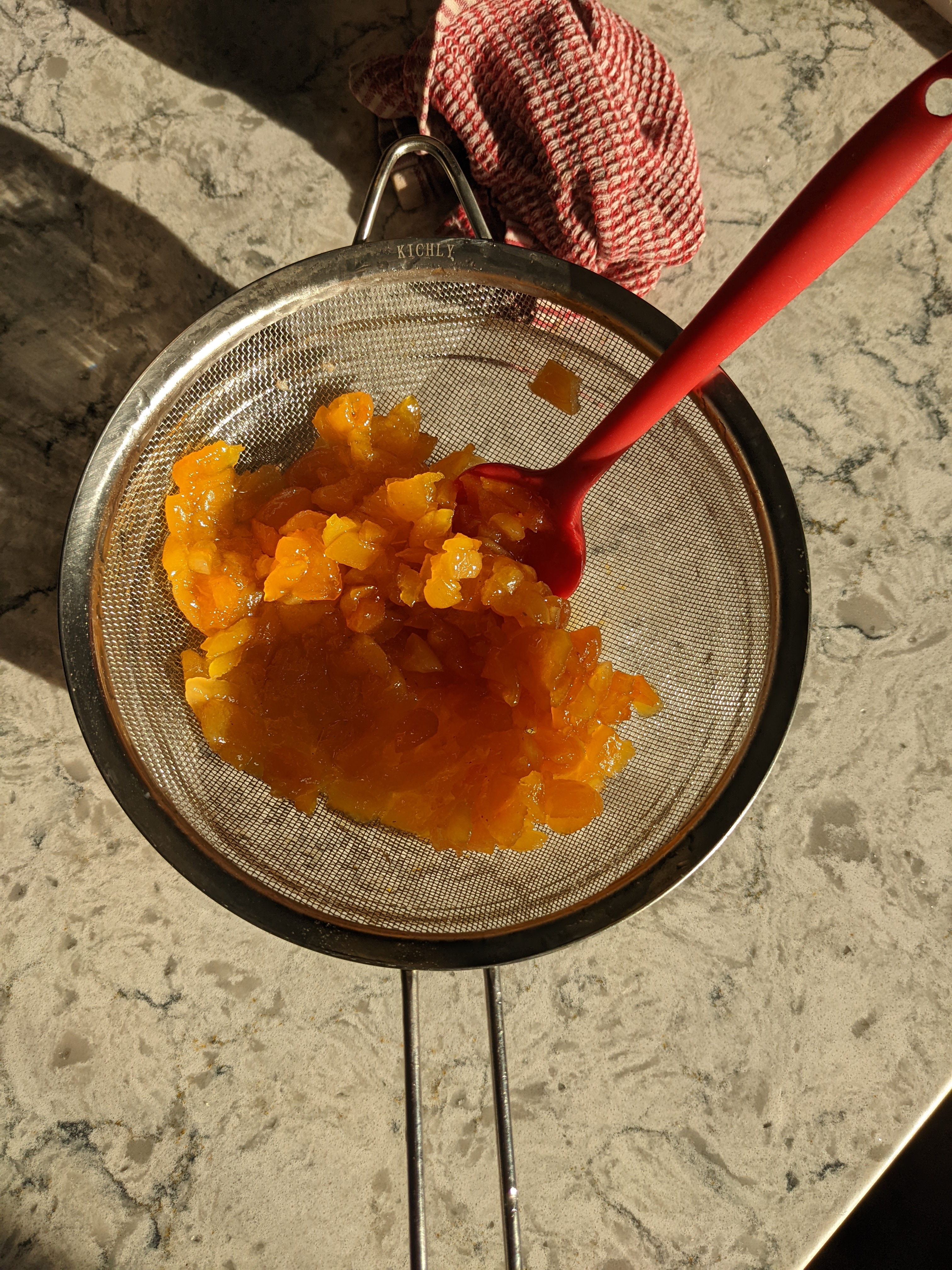

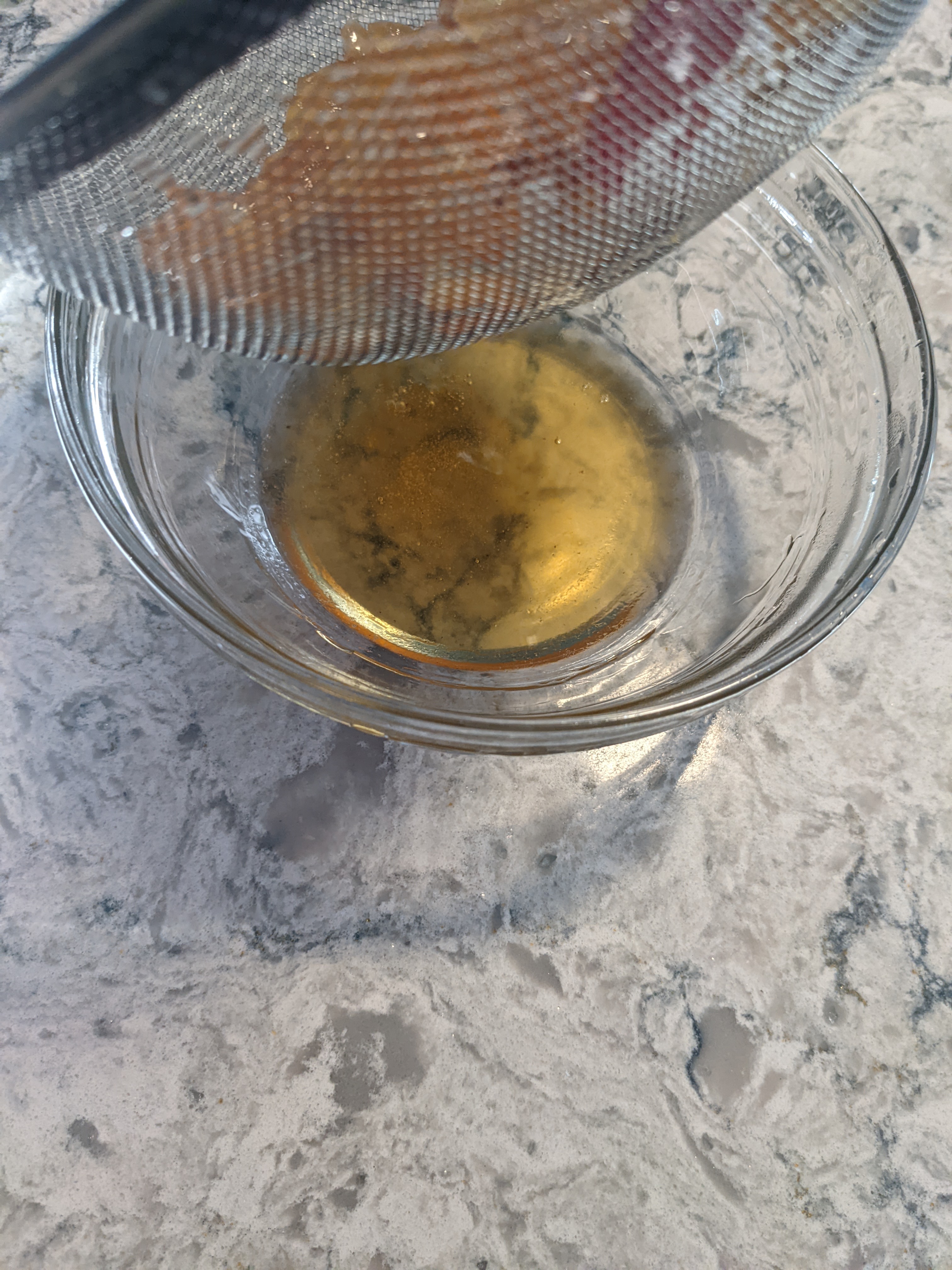
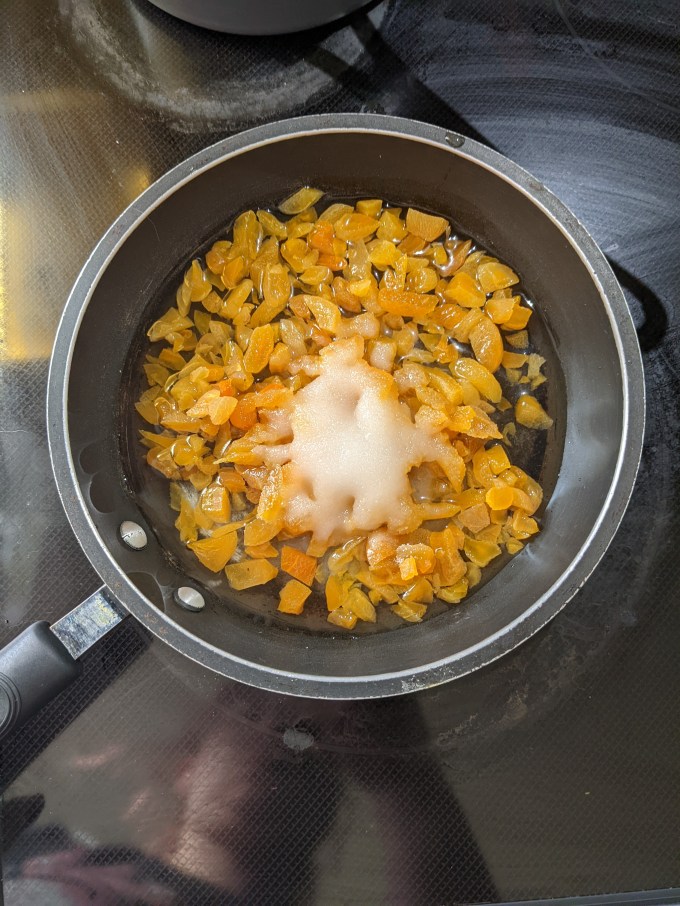
Dried apricots are chopped up and heated with water and sugar. The whole mixture is boiled for about 15 minutes until the apricots have broken down a bit and the mixture is thickened. The warm liquid is pressed through a sieve and the final result is the apricot glaze.
Step 3: Shaping and Second Proof
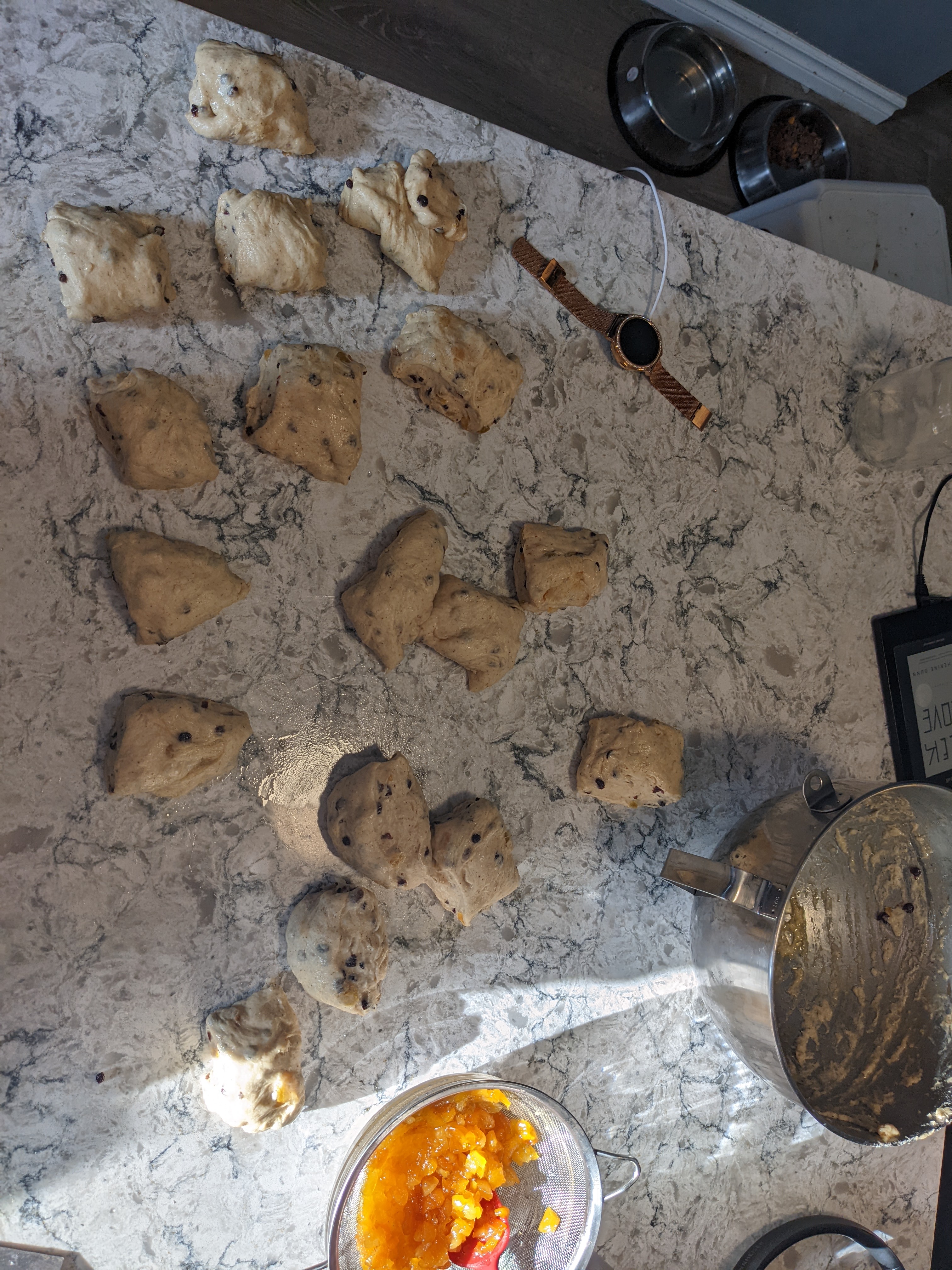
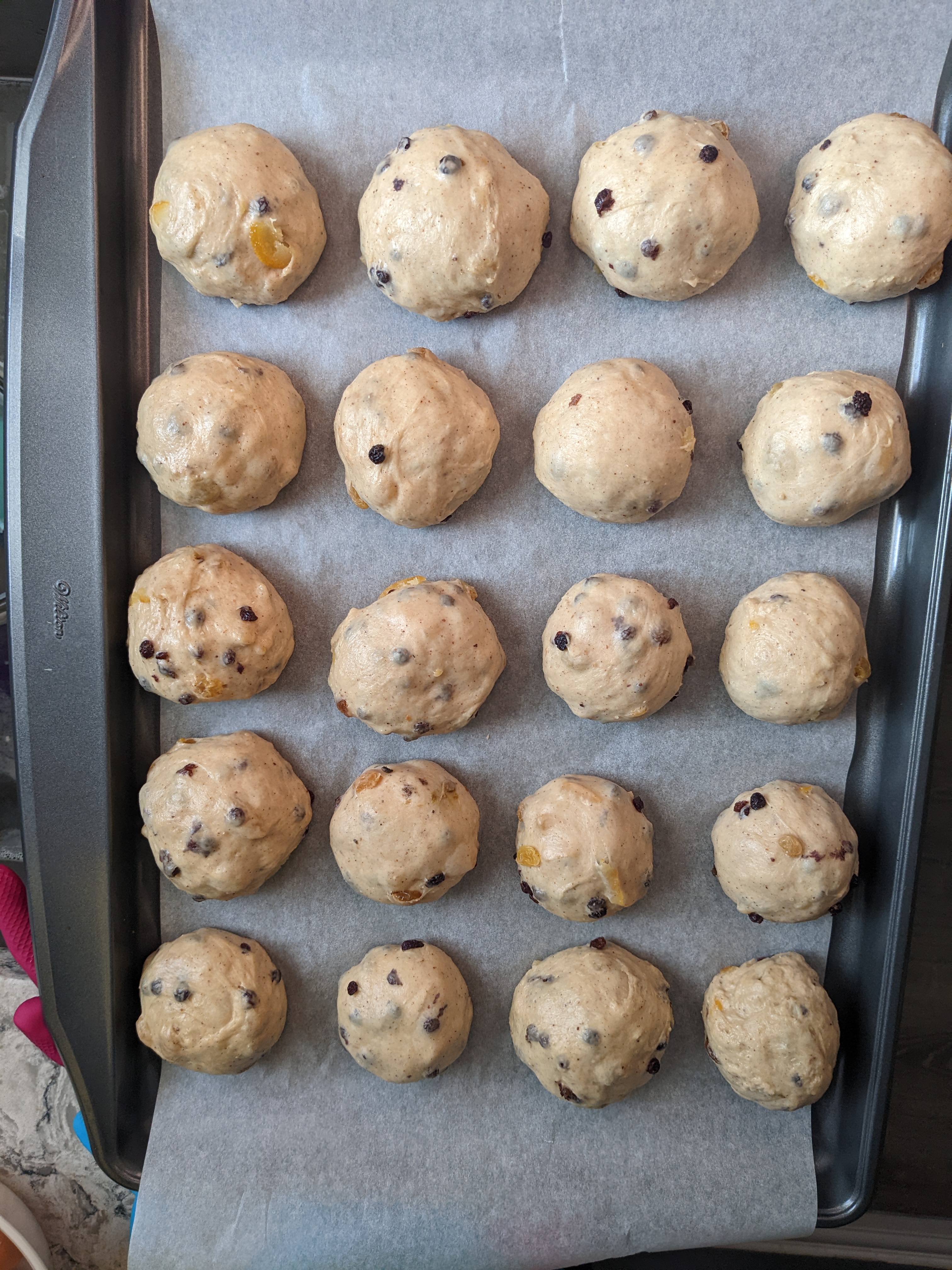
Once the dough has doubled in size, it is punched down and divided into 20 equal pieces. The pieces are rolled into balls and placed on the final baking tray. The rolls should be spaced 1 – 2 inches apart. The goal is that the rolls will rise into each other during proofing and baking but still be distinct buns when they come out of the oven. When shaping is complete, they are left for second proof
Step 4: Flour Paste
At the risk of ruining the magic of hot cross buns, it is time to reveal what the crosses are and how they are made. Spoiler alert: it is very boring and simple.
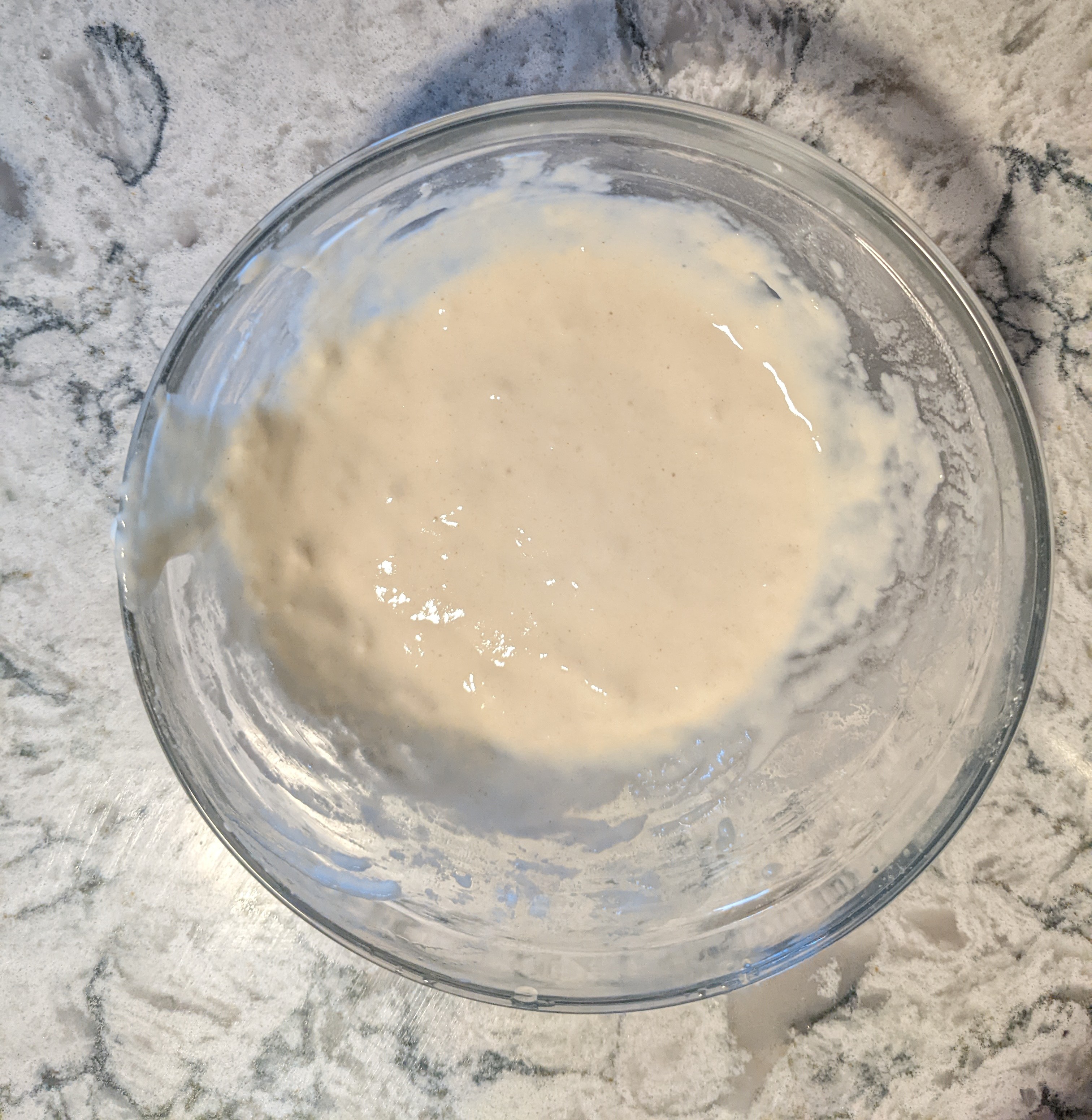
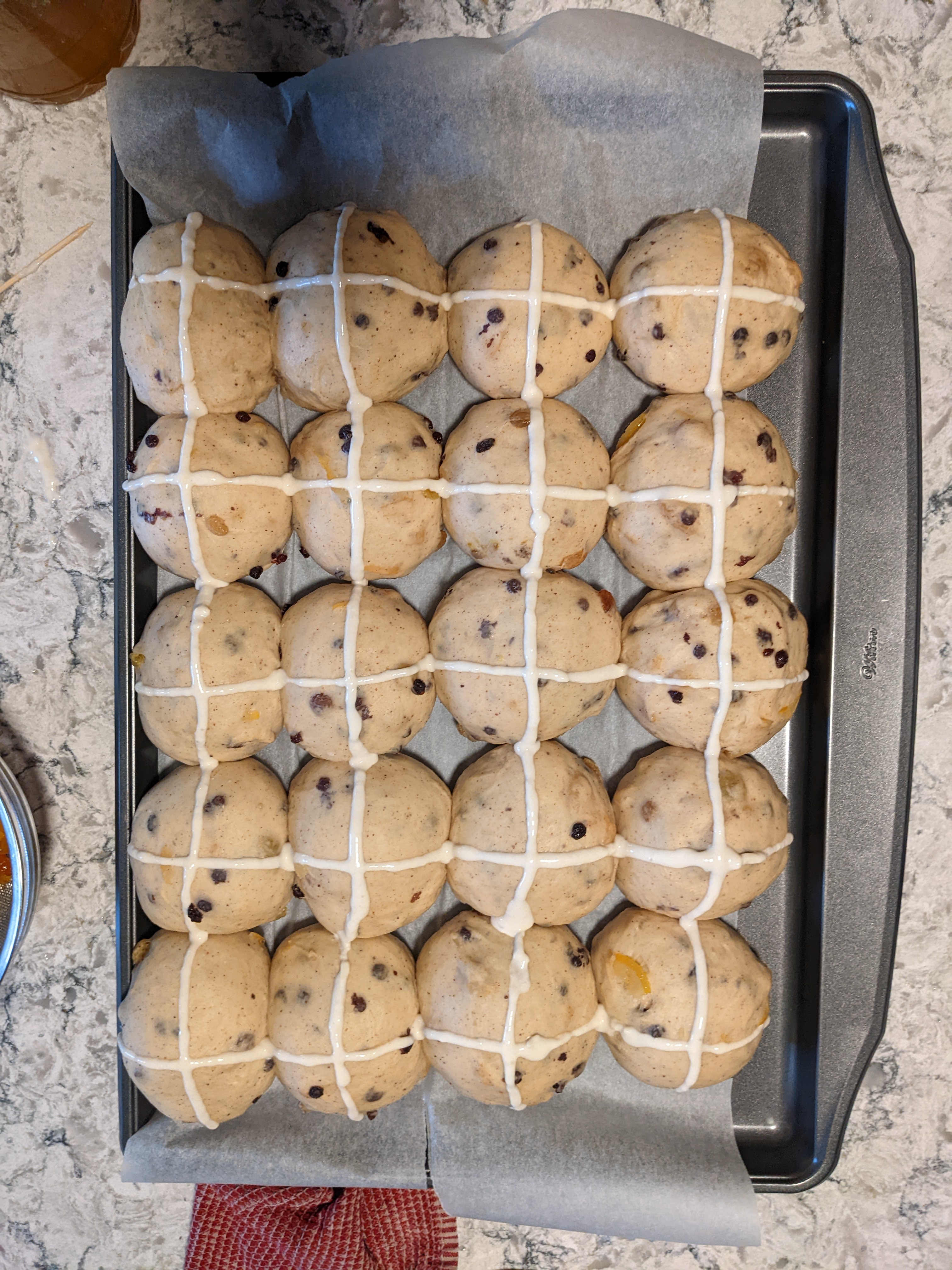
Flour is mixed with just enough water to make a smooth paste that is thin enough to pipe but thick enough to hold its shape. Once the paste has the correct consistency, it is put in a piping bag (or a paper cone) and piped into neat lines onto the rolls. This step is performed immediately before the buns go into the oven to bake.

Step 5: Glaze
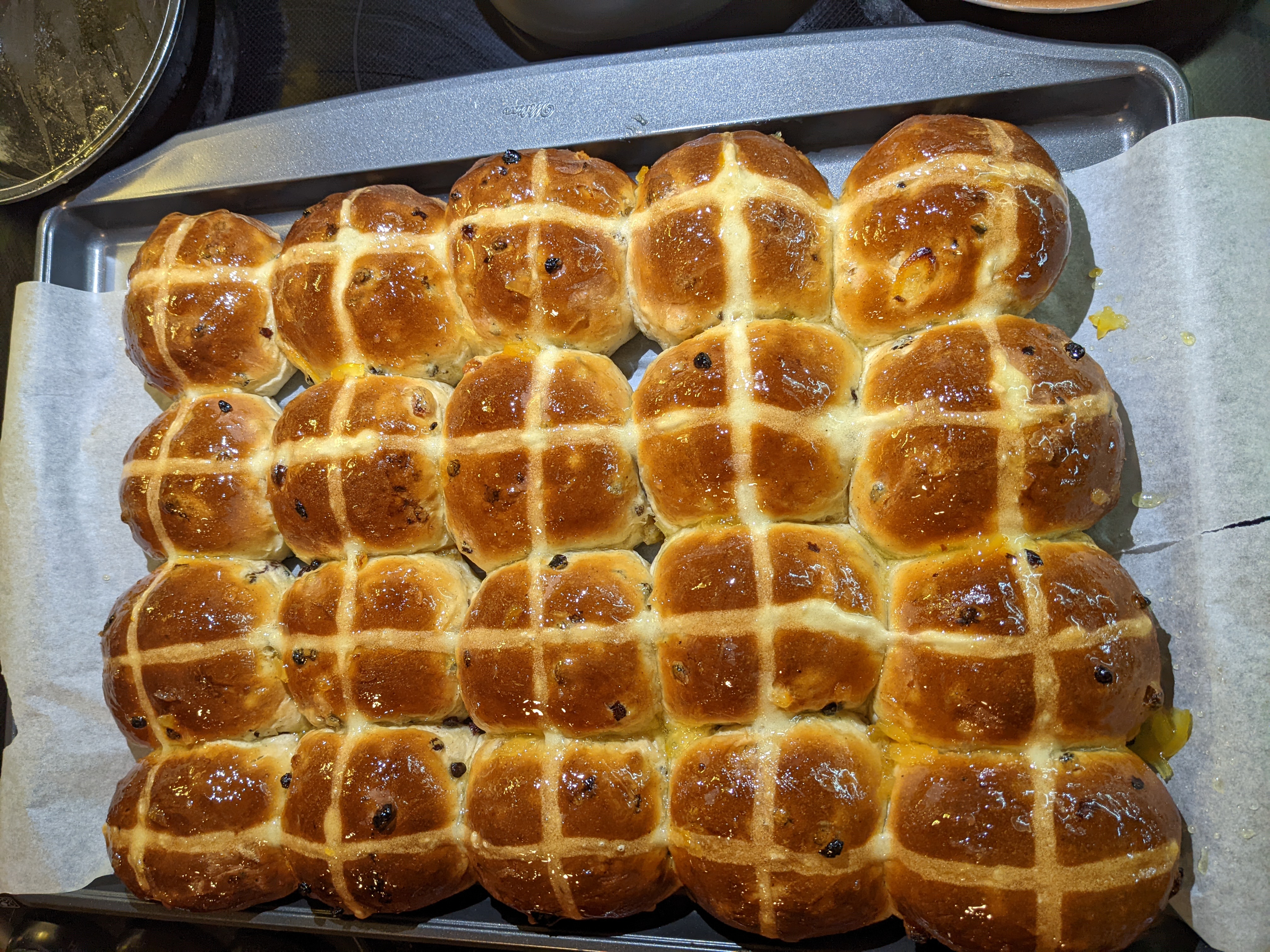
When the buns are finished baking, the glaze is generously poured/brushed on top and that is it, these are ready to nosh.

Gallery




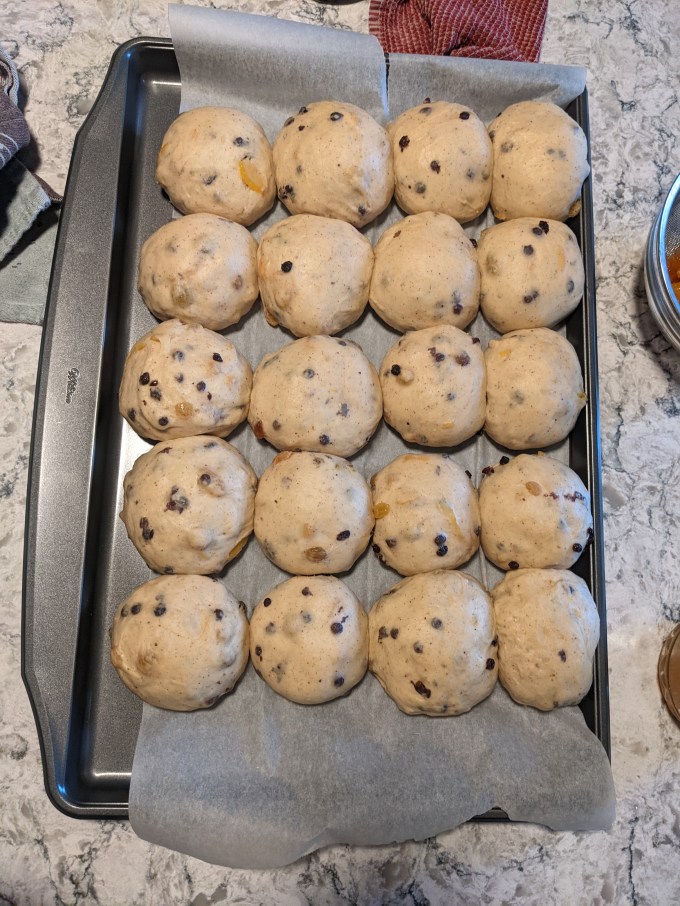
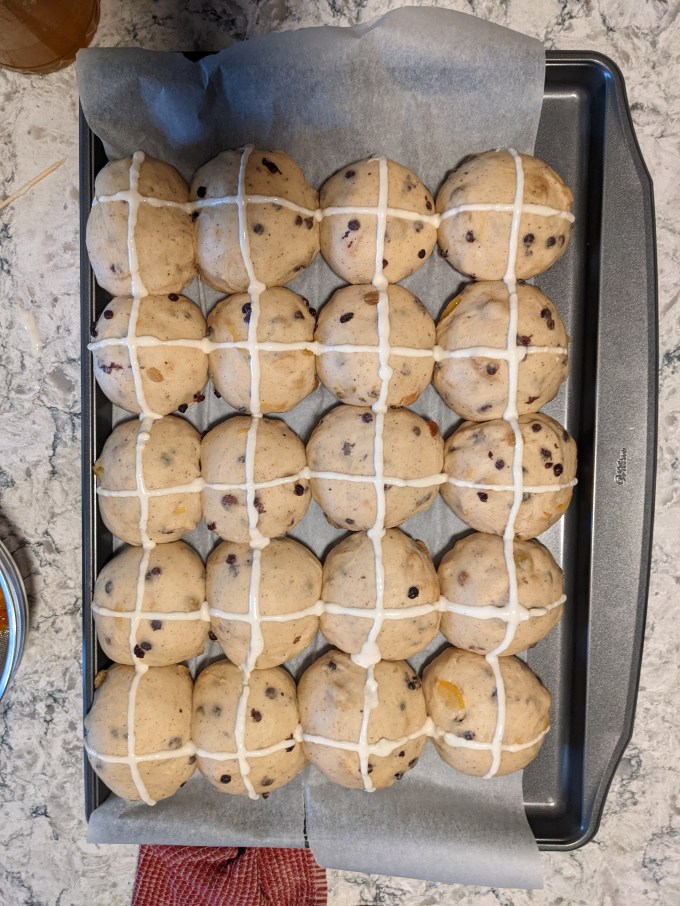
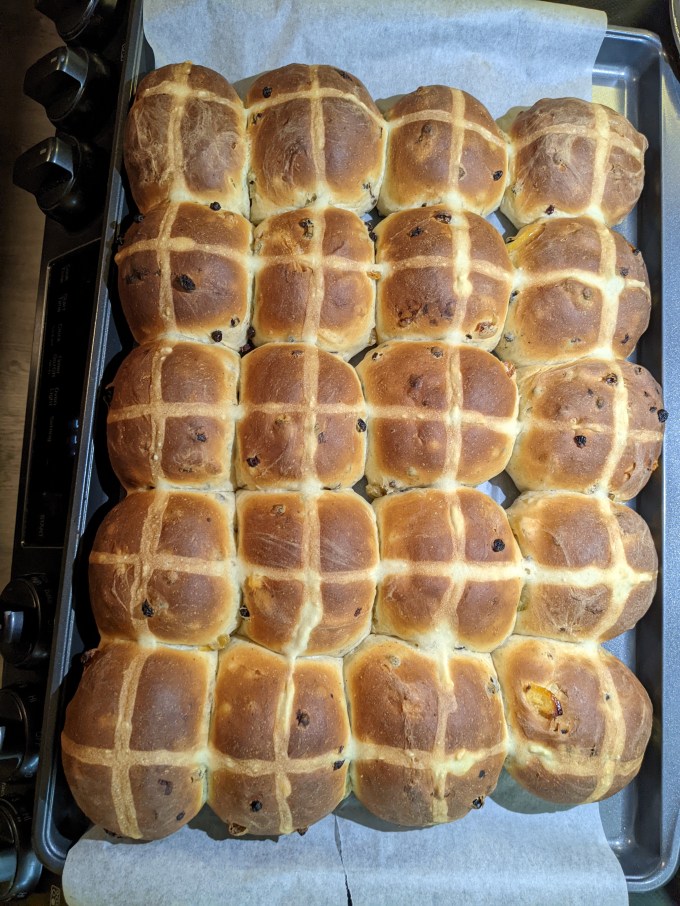

I have to say my bake turned out textbook perfect. The only thing I could have done better is actually weighing out each bun so they were exactly the same size, but I mean. COME ON, look how good these are just from eyeballing it. They were tasty and satisfying and I liked the addition of the apricots. If I was going to do this recipe again, I would probably cut it in half, because the yield of 20 (large) buns on this is a little crazy and they do not freeze well due to the glaze.
 Baking Summit