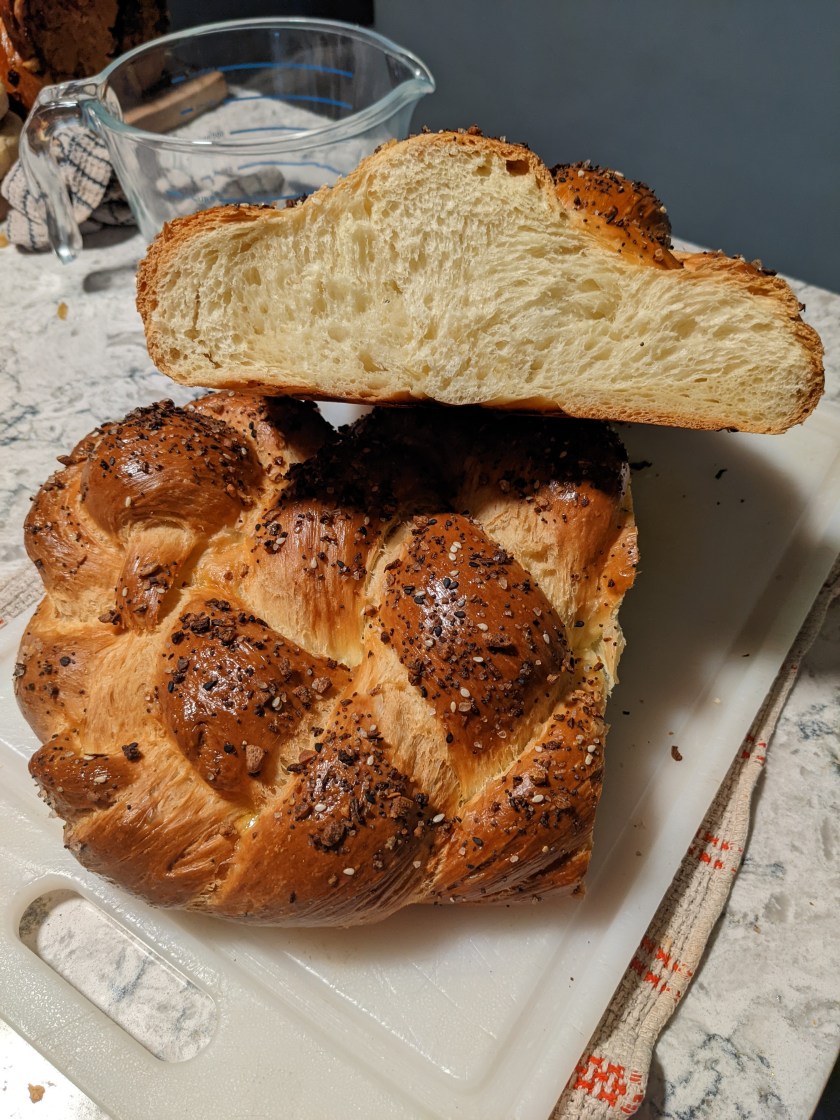
Hello again Friends and Fellow Bakers. I am adding this preface to this post as I had some constructive feedback on social media. I would like to apologise if it seemed that I was representing Challah as a part of Christmas. I also apologise if my attempt to call out that Challah as unrelated to Christmas by referring to it as “Not Christmas” was creating some kind of binary of Christian holidays vs. the rest of the world. When I decided to bake 12 breads this month, I wanted to push my abilities by practising different methods from around the world and I sought to find 12 different recipes. The historical story of the 12 days of Christmas just provided a logical theme to me. I wasn’t necessarily trying to choose breads that are served or associated with Christmas. I have other breads coming on this list that are also not specifically served at Christmas, such as the Swedish Rye I already posted about. Challah is a personal favourite of mine so I wanted to include it. I did not give it more thought than that and I appreciate the kind and thoughtful feedback I received on this. I realise upon reflection that some people view their food traditions in a more sacred space than I personally do and I did not mean to encroach on that at all.
With that being said, someone suggested I link an article/recipe about Challah by a Jewish baker and I think that is a great idea. Please check out these links to learn more about Challah, it’s meaning and history, as well as great recipes by Jewish bakers.
Hello Friends and Fellow Bakers! I have included Challah in my list of Christmas breads, although I am fully aware Challah is a Jewish tradition and therefore not a Christmas bread. However, it is one of the best holiday breads of all time and I would be remiss if I excluded it. Can’t we all break bread together? Of course we can. I also needed at least one of these to be more neutral flavour-wise because I need something to eat with my eggs in the morning.
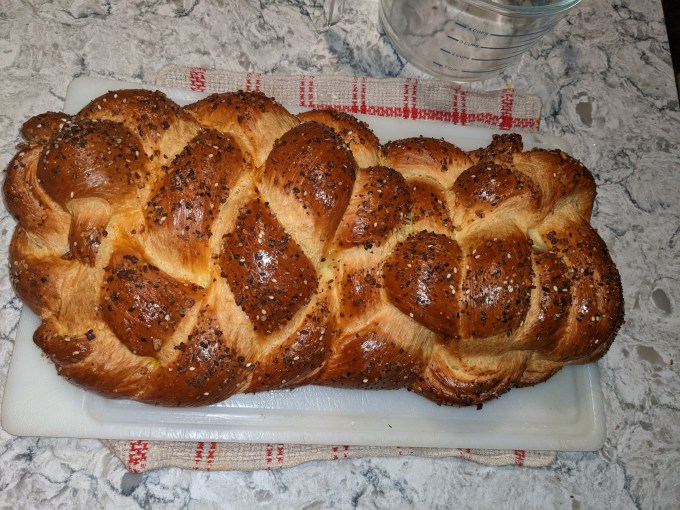
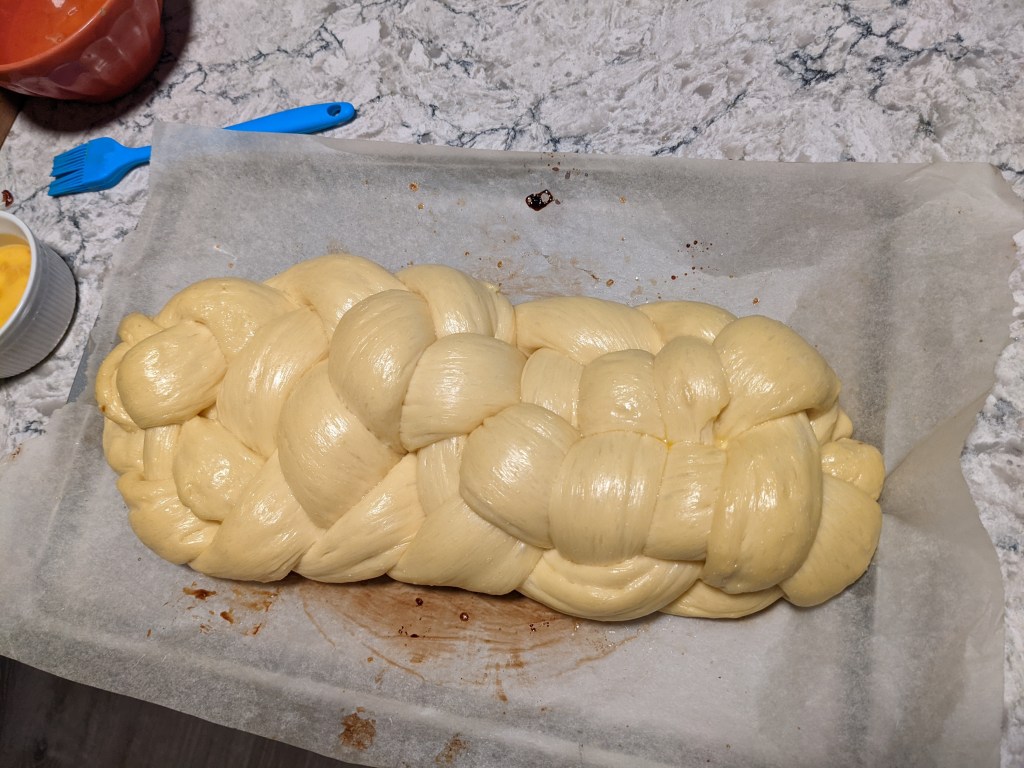
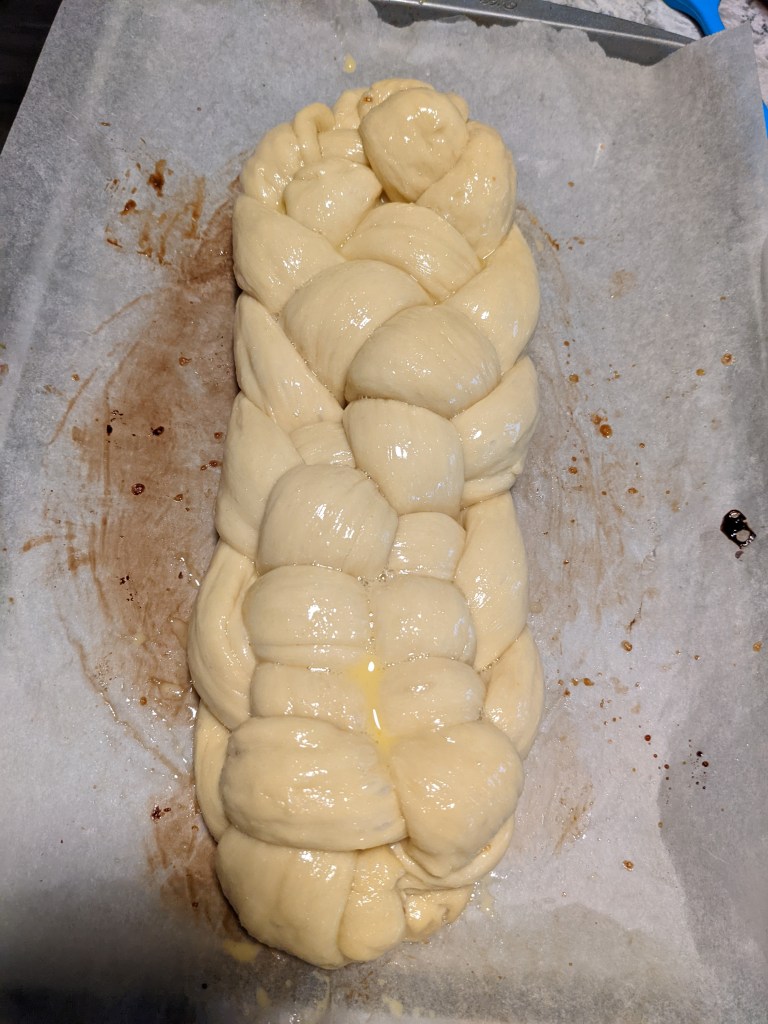
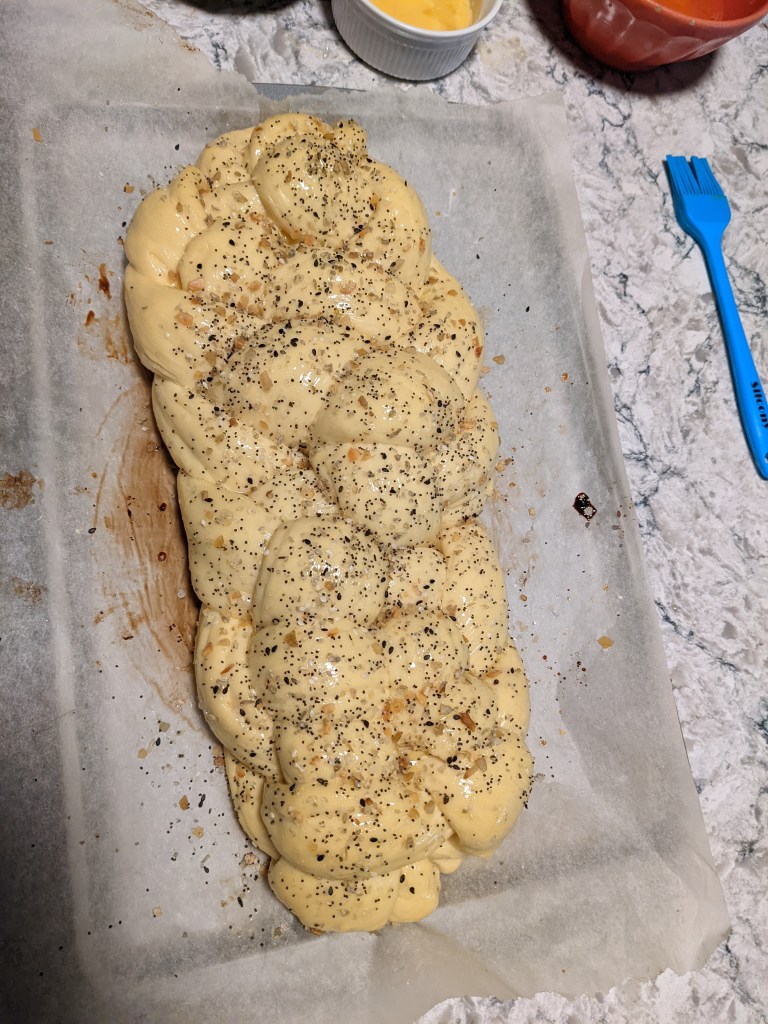
One of the things I like about Challah is how much it transforms while it proofs and bakes. This is because the ratio of yeast in the dough is a bit on the high side so the dough doubles and doubles and doubles for a long time even with heavy manipulation .This makes it perfect for the traditional braided presentation.
 Baking Summit