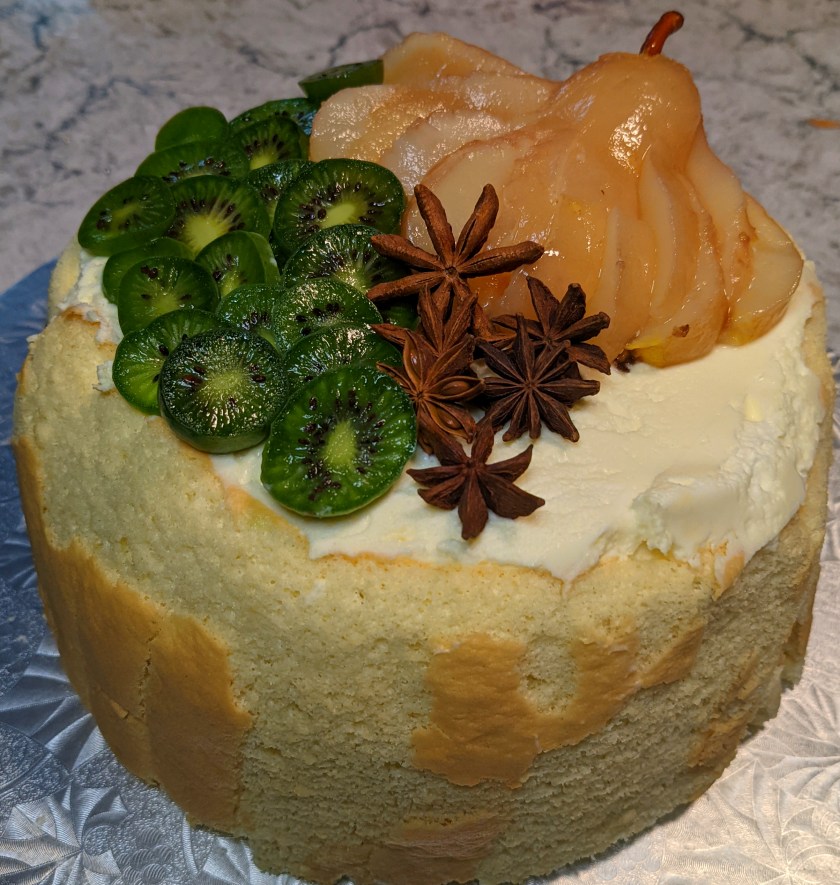
Well here we are again, Friends and Fellow Bakers! It has been a while since we had a complete rage fest here at Baking Summit, so buckle up, here comes the good stuff! Pear Charlotte (recipe here) is the first of two Charlottes I have to make for this challenge and was the technical bake on the Season 3 finale of GCBS.
This is a one of the hardest and most complex bakes on the list of recipes, and I am not afraid to say I had trouble with it. So sit back, grab a nice mug of tea, and settle in for the tale of Not Having The Correct Pan, with guest appearances from The CBC Recipe Is Garbage and Lack Of Access To Essential Ingredients. Ready? Let’s go.
A Charlotte is basically an elevated version of trifle, which I figured out on my own long after this information would have been useful to me in any way. Trifle is basically sponge cake or biscuits layered with custard and fruit, served family style from a dish: sloppy AF. The Charlotte takes things up a notch by actually moulding the whole assembly into a free standing cake. Although the final eating experience is essentially the same, the concepts are wildly divergent. Trifle comes by its name because it is L I T E R A L L Y supposed to be made from leftovers. Leftover cake, fruit that is about to turn; soak it in booze, cover it in custard and call it dessert. Love it. Charlotte takes all of those basic elements but demands the kind of exacting cake assembly usually seen in much more interesting bakes.
My issues with this bake started very early and just did not improve at all. First off, the recipe does not state anywhere what kind of pan to use. THANKS CBC! SO HELPFUL!!!!! In most situations, I can substitute a pan pretty easily and still get a good result, but this recipe is designed for a pan with exact dimensions and I didn’t know what they were. For a cake that is all assembly and very little substance, the pan is critical. Not providing this information is a complete recipe failure.
At one point the recipe refers to “the Charlotte pan” so I thought that might be a specific pan I had to buy. I combed the internet and I did find that there are specific Charlotte pans available, but all of the ones I found had moulding around the edges for the lady fingers and I could tell that wasn’t going to work for this recipe. That type of pan would only work if using packaged lady fingers, or if I was going to make individual lady fingers to put around the outside, which is not what this recipe called for. I also couldn’t tell what dimensions the pan was supposed to be, so it was really, really, unnecessarily difficult for me to try and plan this bake around the pans that I had, because I didn’t know how much batter I would end up having to work with. I tried ordering a small tube pan with a flat bottom to see if I could make that work, but as soon as it arrived, I could see it wasn’t right.
I figured I could use the flat bottom from the new pan in my existing, larger, tube pan, and planned out the cake around those dimensions. Once I had the batter done, I found I wasn’t going to have enough cake to assemble in that pan. At this point I had already put the batter onto the parchment, so I couldn’t really go back without starting over or ruining the batter. I am a big believer in forging ahead when I can. So. I changed gears and pulled out my trifle dish, which is close to the same size as the tube pan but smaller in diameter, and decided to just trim the cakes to fit. It worked, but the dish was still too big and I didn’t get the nice, thick layers of pear I was going for. At least I poached an extra pear as a precaution, because I would have been SOL otherwise.
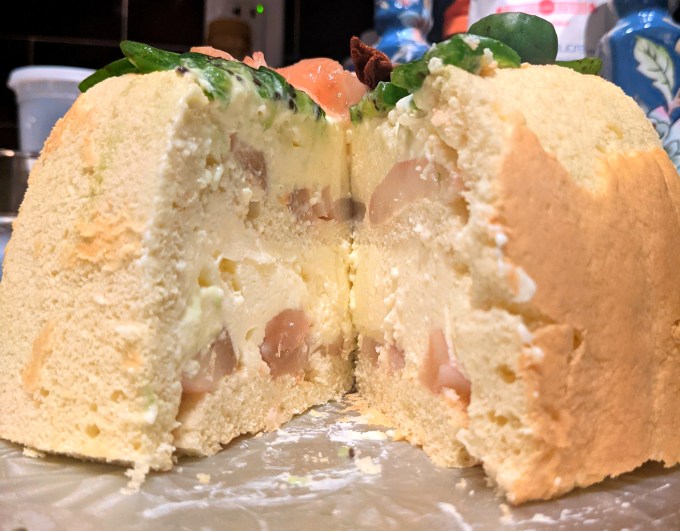
My next issue was I could not find “no melt” icing sugar anywhere. This was not the end of the world, but it was needed to layer between the ladyfingers and the mould. I tried just using regular icing sugar, but of course it got absorbed by the cake and didn’t create the non-stick layer it was supposed to which is why the sides of mine don’t look neat and uniform the way they should. If I attempted this again (I will not), I would try mixing icing sugar and corn starch to see if that works better, but that is an absolute stab in the dark as to what the appropriate substitution would be.
I also could not find fresh currants, which the recipe calls for as decoration. I am sure those are highly seasonal and highly regional and I think I am not in the season nor the region to get them. I found miniature kiwi fruit instead and I think they look nice, at least, even if I am not particularly happy with the presentation overall.
All of that being said, my biggest complaint about this experience is THE RECIPE IS MISSING A CRITICAL ASSEMBLY STEP. This would be upsetting at the best of times, but after dicking around with pans, running out of batter, and driving all over hell’s half acre looking for non-existent currants, this pushed me over the edge into full blown rage mode. I was so ready to just pitch this asshole wannabe cake out the window once I realized I put the filling down before I put the ladyfingers in the dish BECAUSE THE RECIPE IS MISSING THE STEP DESCRIBING HOW THE LADYFINGERS FIT INTO THE ASSEMBLY. Head explosion in 3, 2, 1 ……
Once I calmed down, I went into cake recovery mode (is there any other mode for a humble breadmaker? Apparently not). I realized I could just sort of shoehorn the ladyfingers into the dish and then clean up the edges after unmoulding. So that worked out. Ish. It was also around this time that it occurred to me I was just making unnecessarily complicated trifle and then I got mad all over again, but that is neither here nor there. In the end, I got something on the plate, and I think I am in better shape for the next Charlotte on the list. So that’s something, I suppose.
Step 1: Poached Pears
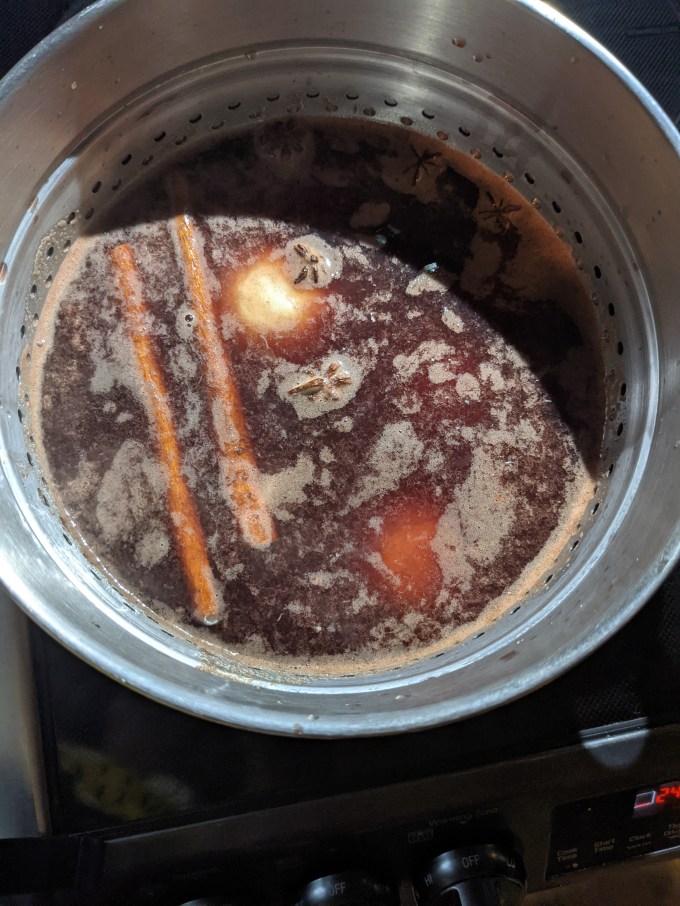
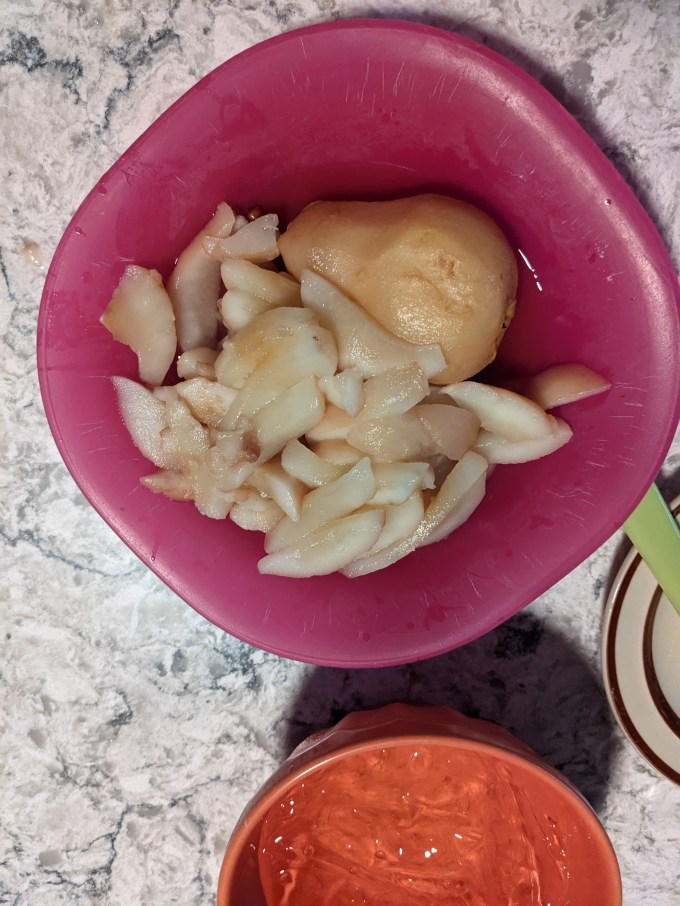
The pears are poached in a lovely broth of mulled wine. I went a little off book here and added orange juice and used pomegranate molasses instead of grenadine. The cinnamon and the star anise are the real stars here. Once the pears are soft but not mushy, one is reserved for garnish and the rest are cut into thick slices and left to cool. The pears were my favourite part of this recipe. I could have eaten all four of them just on their own, to be honest. The star anise was a nice touch that really elevated the recipe.

Step 2: Sponge
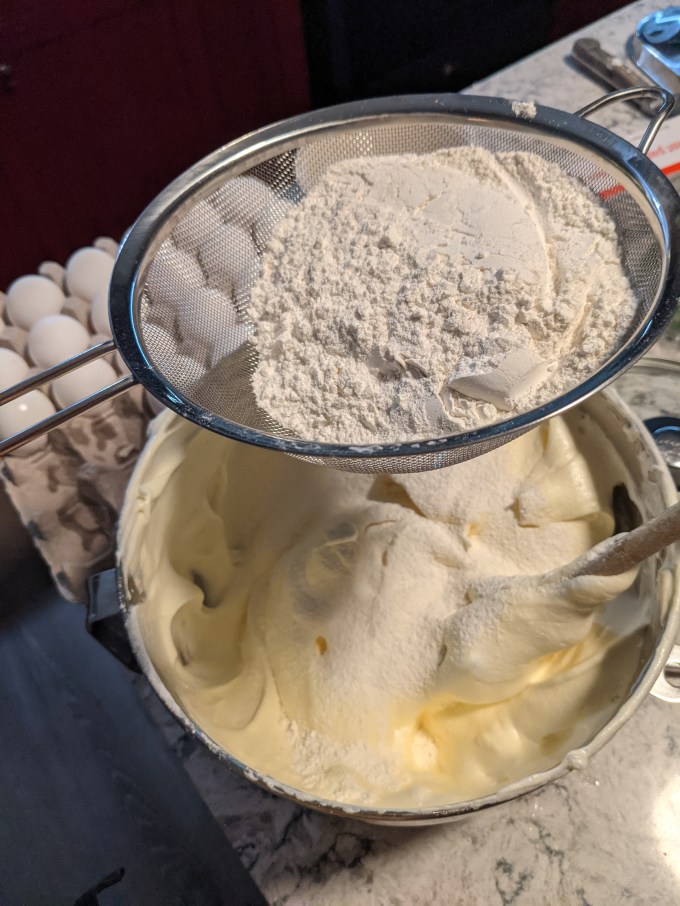
This recipe uses a basic white joconde. Egg yolks are blended with vanilla. Egg whites and sugar are mixed to stiff peaks. The two egg mixtures are folded together then a small amount of cake flour is folded in to finish. The batter was a lot thinner than I was expecting. I am still not sure if I made an error in handling or execution or if it was supposed to be kind of runny. I had a lot of trouble getting it in to the piping bag and I found the finished cake was a little on the chewy side, so I might have over worked it a bit.
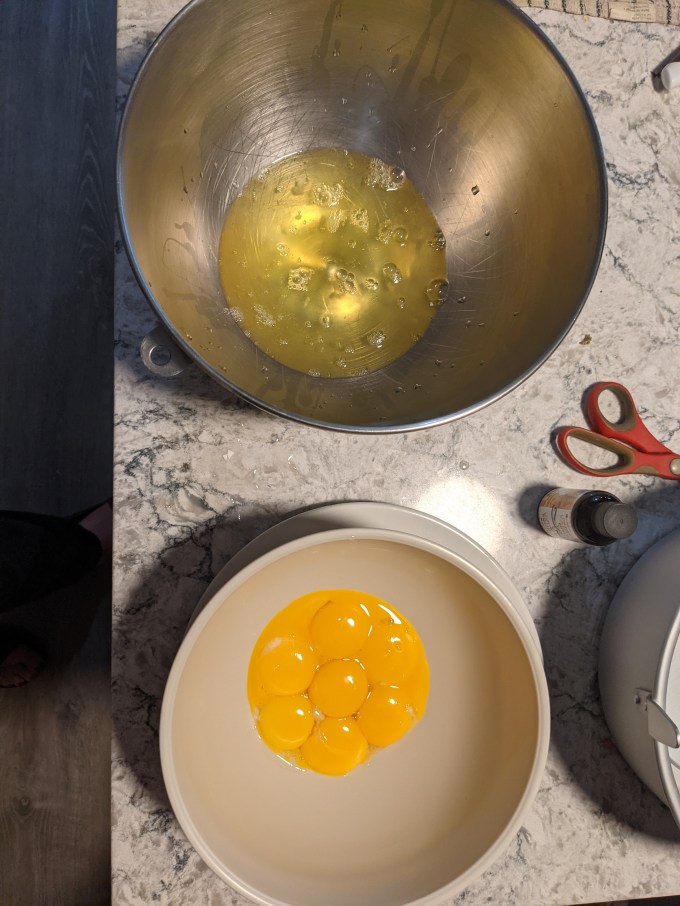
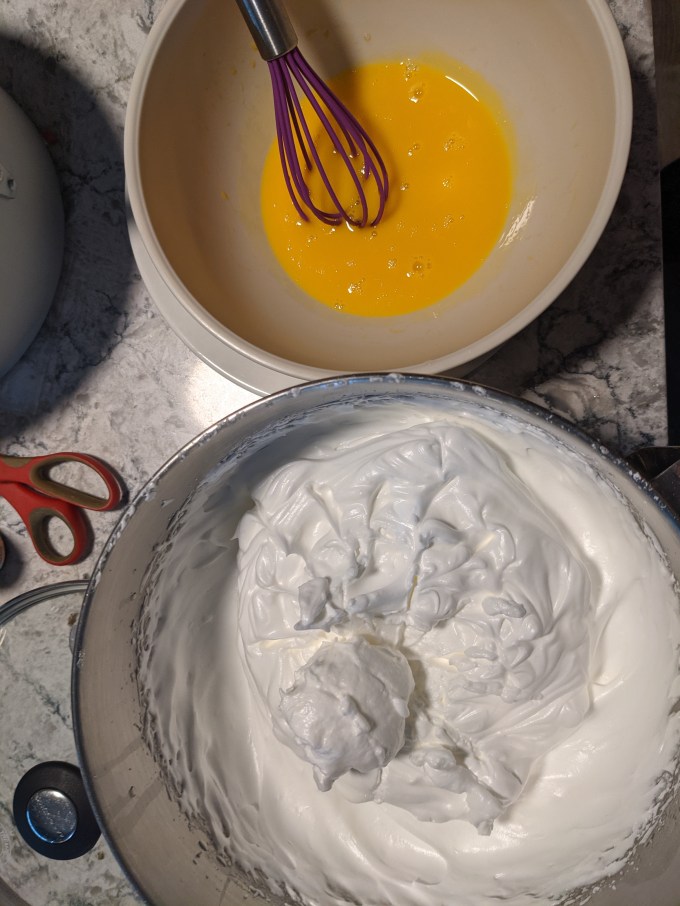
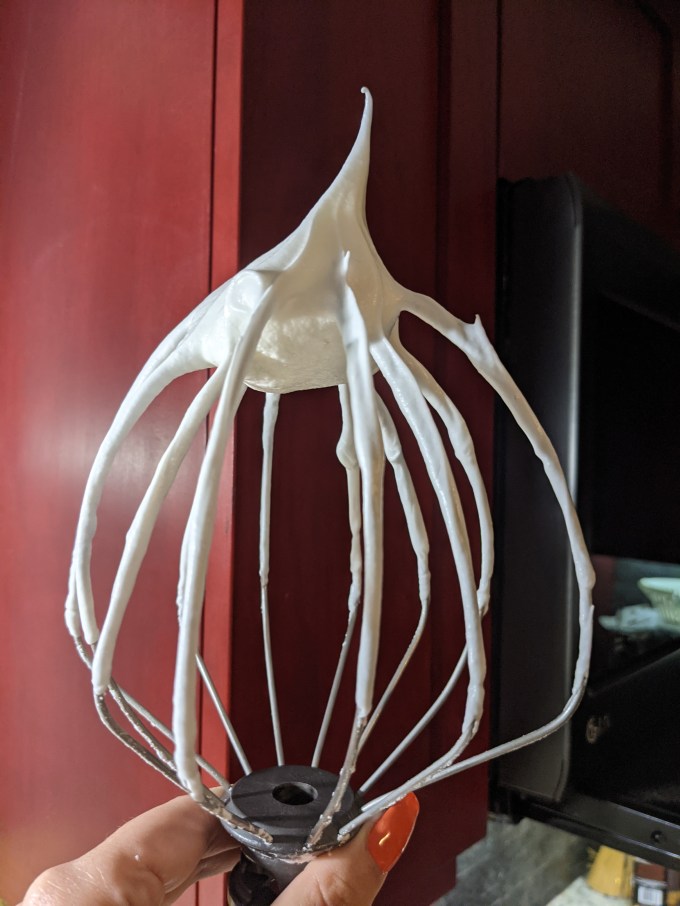
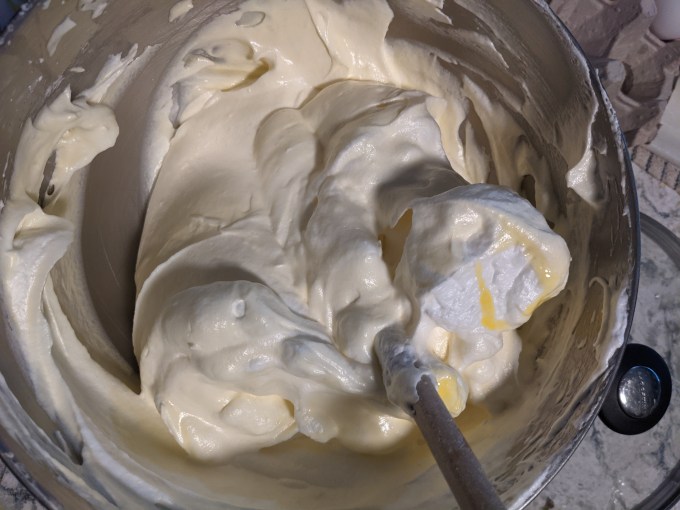
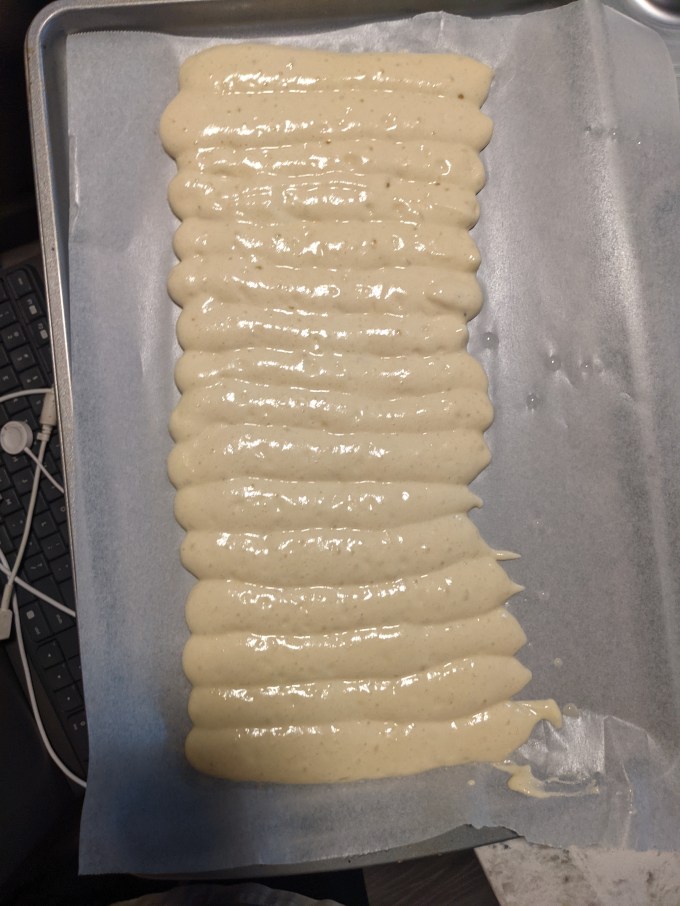
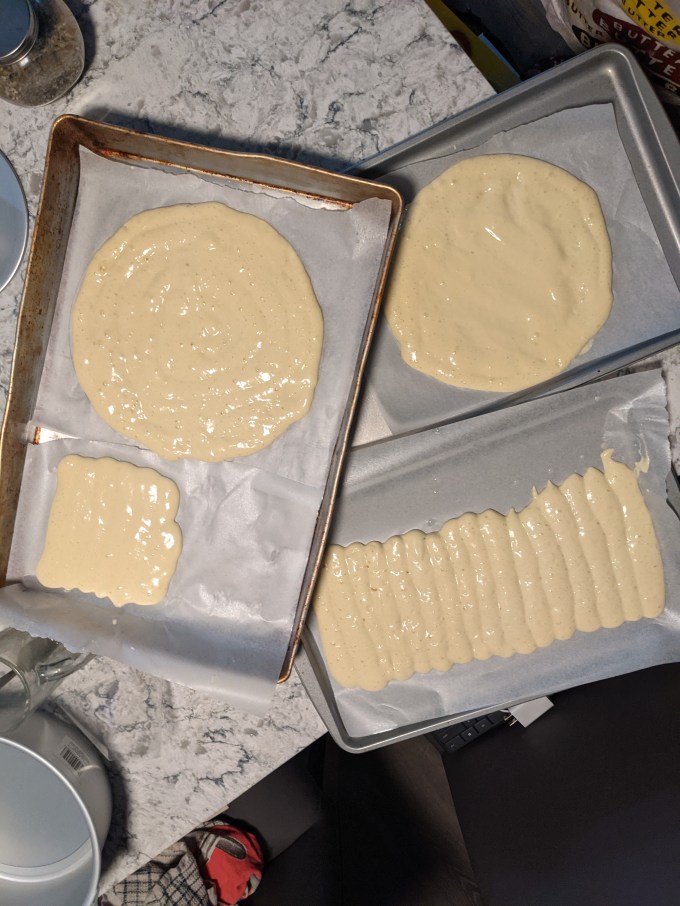
In a perfect world where I had the correct pan, the batter would be piped into circles the size of the top and bottom of the pan, and then piped into touching ladyfingers matching the height of the pan. As I mentioned above, I had originally planned to make this in my tube pan, but once I started piping the lady fingers, I realized I didn’t have enough batter to make ladyfingers to cover the entire circumference and the two layers of cake circles needed. So I just filled the two circles I had drawn and piped as many lady fingers as I could. I knew I would have some trimmings from the circles so I could fill in any gaps after changing to my smaller trifle dish. In the end this was serendipitous because once I started assembling in the trifle dish, I realised I was basically making trifle. As much as that realization made me absolutely apoplectic with rage, it also took the sting off of how much of a bomb this was. So that’s something, I guess.
Step 3: Bavarian Cream
Bavarian cream or bavarois is basically diplomat cream that is thickened with gelatin instead of cornstarch. The gelatin gives the cream more structural integrity than cornstarch which is why it is used for this moulded cake. The thicker gel of the bavarois holds up better after unmoulding and has better room temp stability than basic pastry cream.
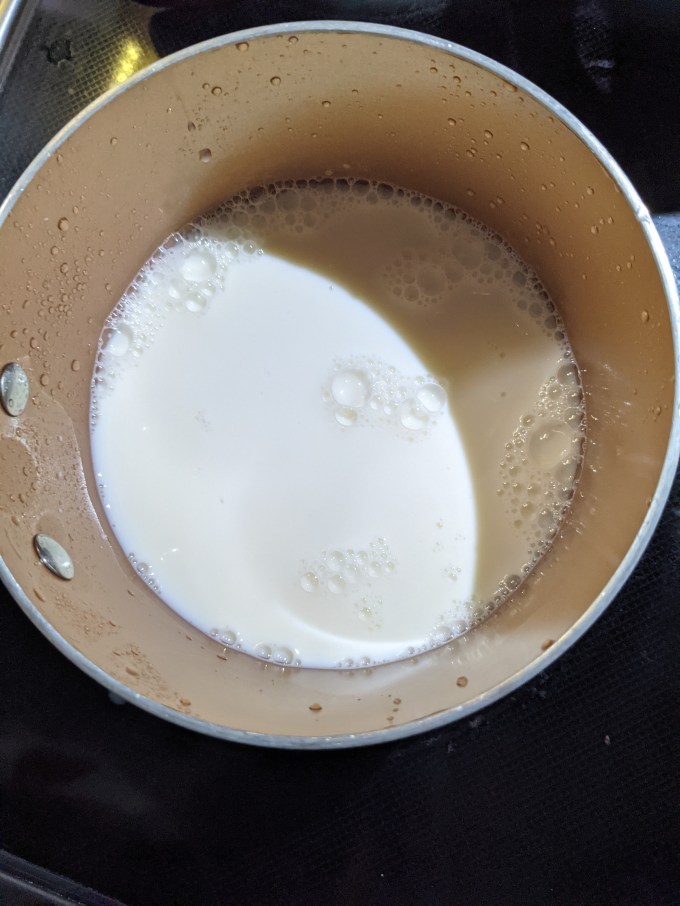
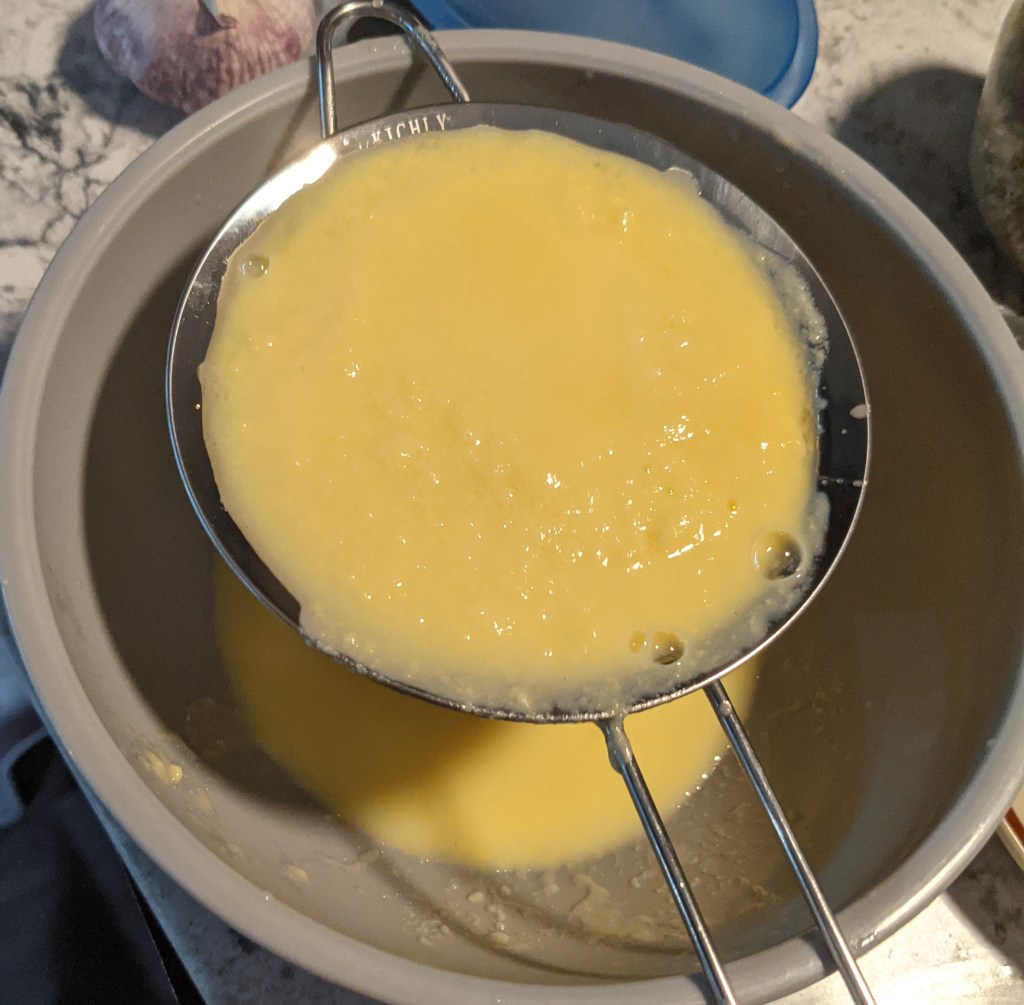
Milk is scalded then tempered into egg yolks, sugar, and vanilla. The tempered mixture is heated until thickened and then strained. I ended up zipping mine with the immersion blender, because sometimes eggs just need a little push to get them where you want them and that is OKAY.
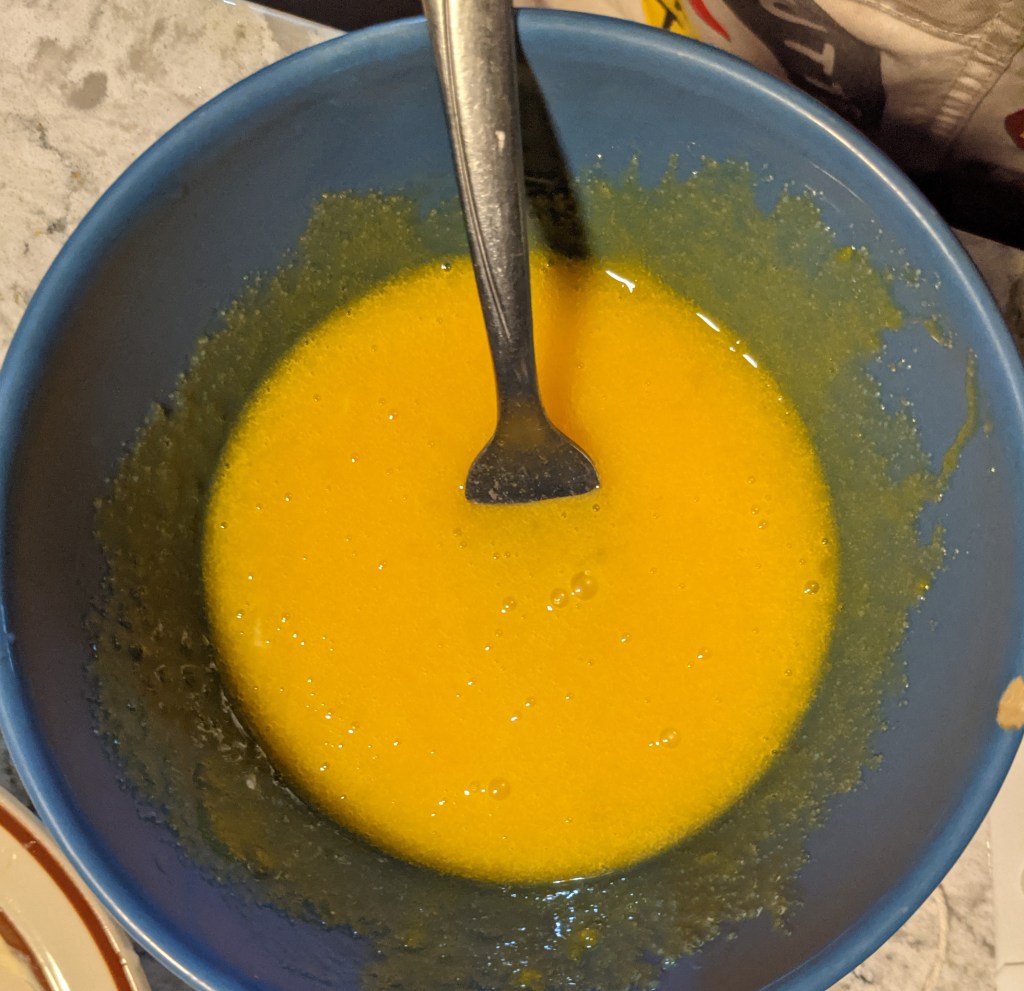
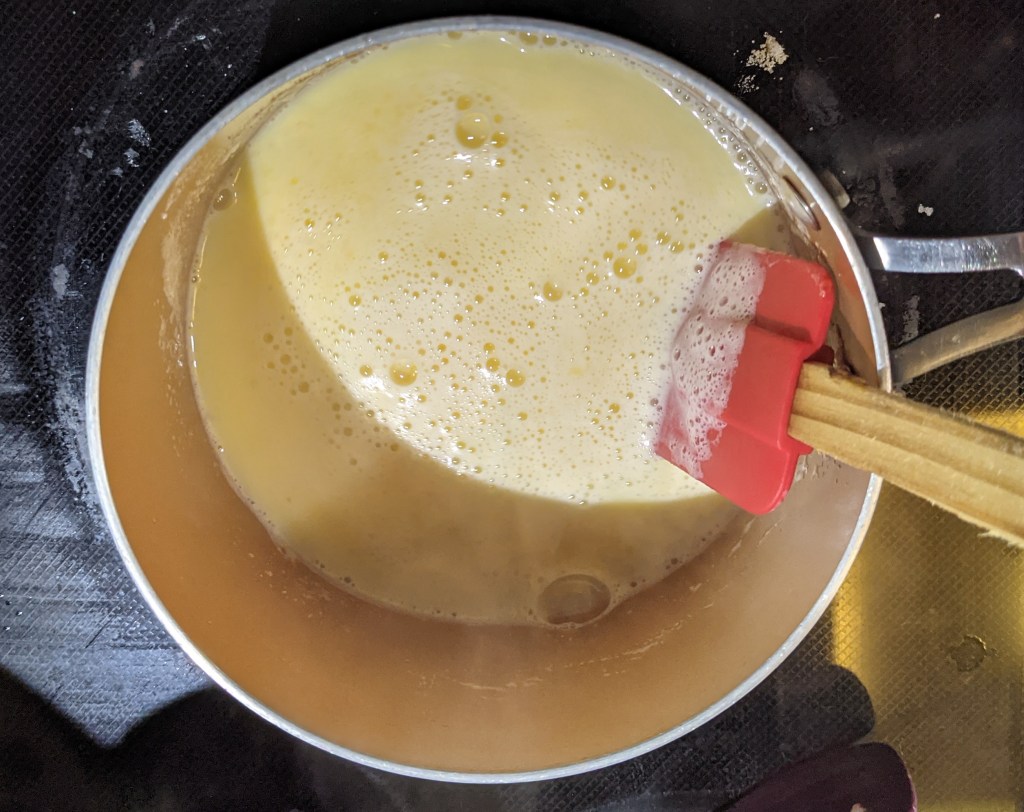

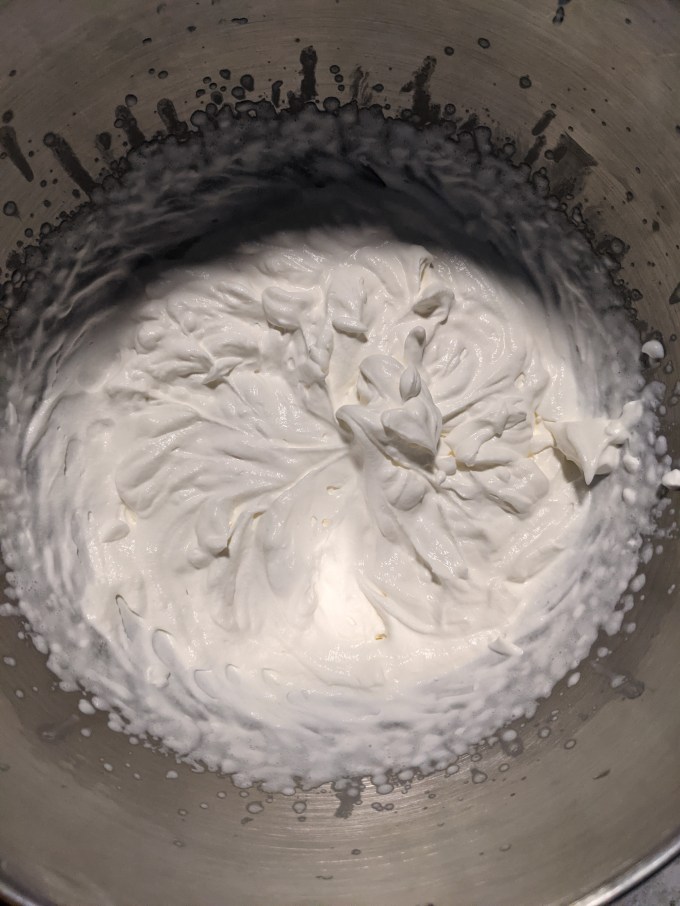
Gelatin sheets are bloomed in cold water and then combined with the warm custard. The whole mixture is gradually cooled over an ice bath until it is a pudding consistency. In the meantime, heavy cream is whipped to stiff peaks. The whipped cream is folded into the partially set custard. I found I had difficulty incorporating the whipped cream with the custard, so I just threw the whole thing back into the stand mixer and that worked just fine. I don’t know why the method didn’t just call for that in the first place, but I am so done with trying to understand the logic of the CBC recipe developers.


Step 4: Assembly
If I was working with the correct pan, the assembly would start with lining the sides and bottom of the pan with acetate and then wrapping the strip of ladyfingers (dusted with no melt icing sugar) around the edge of the pan with the acetate on the outside. As I mentioned, I reverted to using my trifle dish since that seemed to be the only thing that would be tall enough and proportional to the volume of cake I had made. My dish has a small reservoir in the bottom and I needed it to be more like a cylinder. So what I did was I put some dried beans in the bottom of the dish to fill the reservoir and then put the acetate on top of that.
I put the Bavarian cream in first because the step to add the ladyfingers is missing from the recipe. Thanks, CBC. I realized immediately this was wrong but it was too late to do anything about it. So I just forced the ladyfingers into the dish and figured I could fix it after unmoulding. At this point I was so pissed off and frustrated, I just did not care any more. Apathy is liberating.
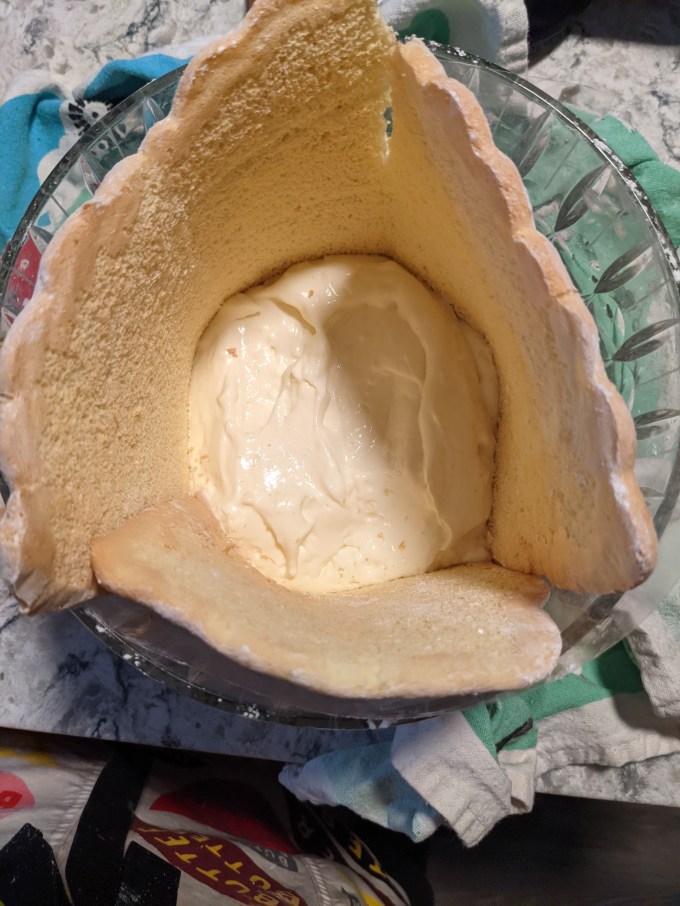
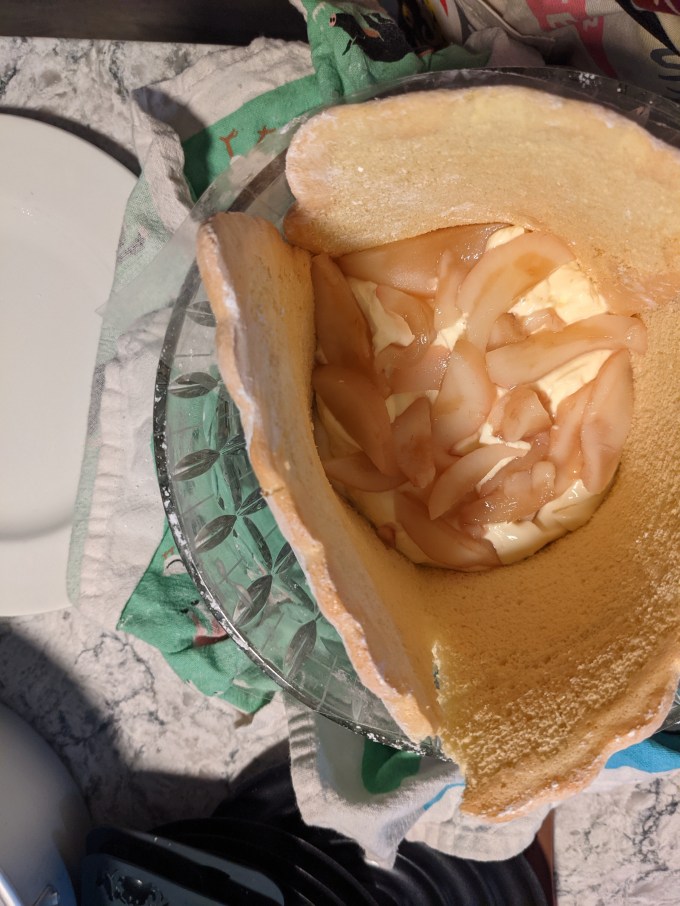
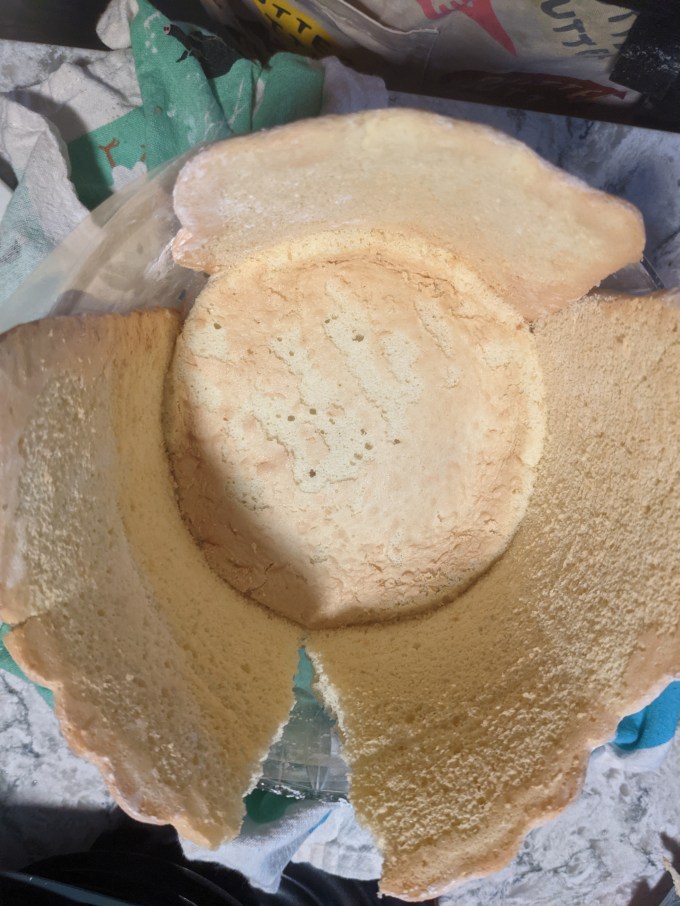
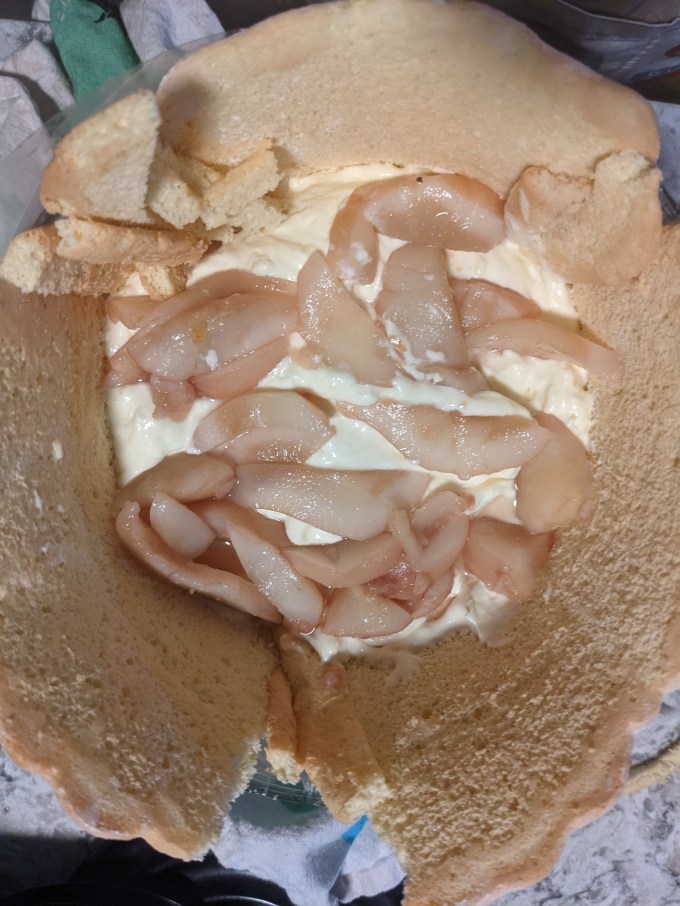
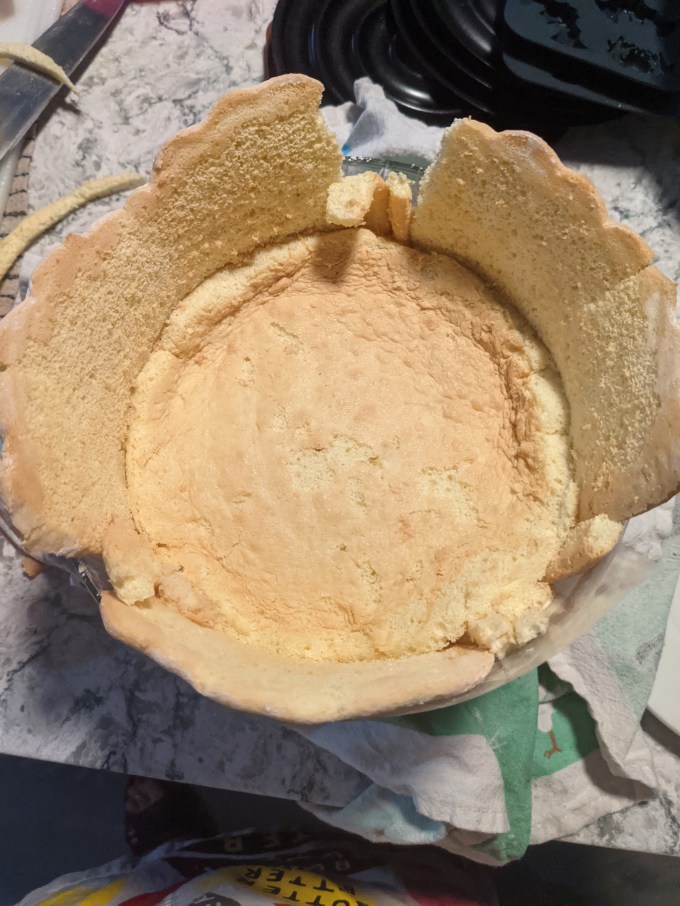
Next the pears go on top of the cream, then a circle of cake. All three layers are repeated and then the whole thing is left in the fridge to set. As you can see, I filled in the gaps in the ladyfingers with cake trimmings as planned. It all worked out fine, if not perfectly presented. I set mine overnight since I was bringing it to someone’s house the next day and I wanted the fruit on top to be as fresh as possible and I didn’t want the ladyfingers to dry out. I unmoulded it about an hour before we were leaving and added the fruit and star anise to serve. Since I didn’t have the no melt icing sugar, the sponge on the outside was a little mottled but I was just glad I managed to get something on the plate.
Gallery
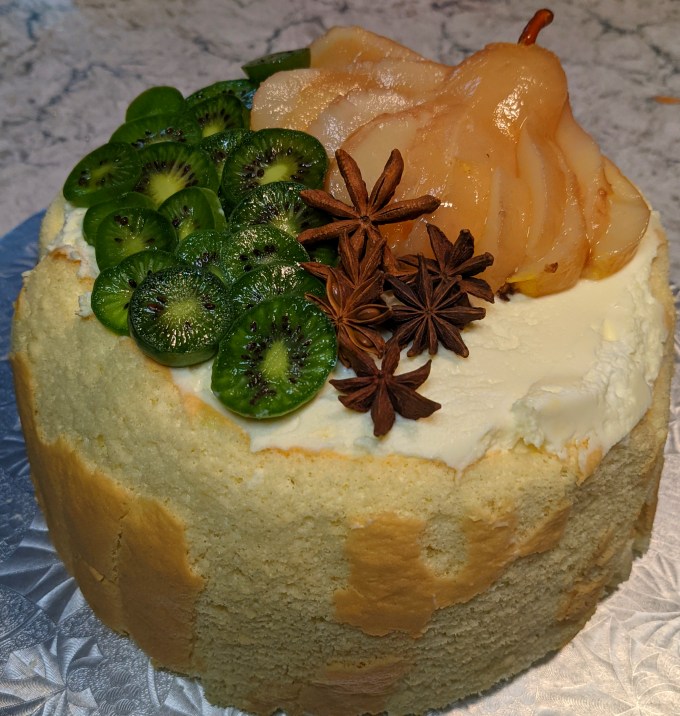
So there we have it. One of the big baddies done and in the bag. In spite of everything, this was a very delicious cake. The pears were my favourite part, the star anise was a perfect choice for the mulled wine they were poached in. Simple and sophisticated. I think if I made this again (probably will not make it again unless someone asks for it), I would find a different joconde recipe and make a 1.5x batch to ensure I had more cake than I needed. Also if I put it in the trifle dish again, I would probably make twice as many pears as the layers should have been a lot thicker but my dish was just too big to get a matching result to what was produced on the show. I think I did the best job I could with the tools I had available to me, and that’s all any of us can do. Until next time
Hey, bakers! Check out my BAKER’S PANTRY index if you want to deep dive on specific ingredients when attempting this bake for yourself
 Baking Summit