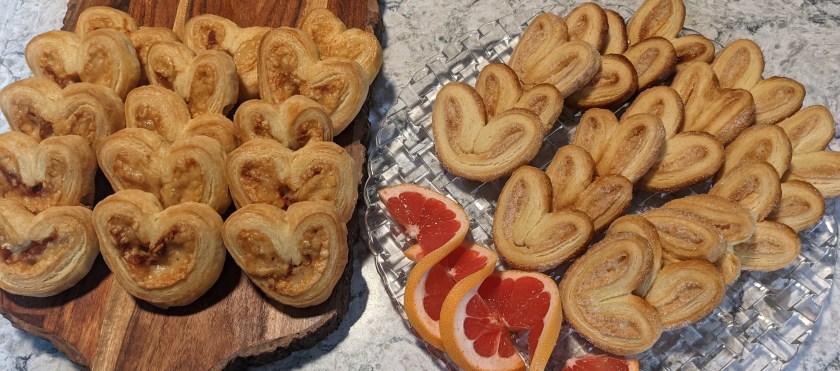
Hello Friends and Fellow Bakers! I can’t believe it, 8 bakes are done and that means I am ¼ of the way through this challenge! CRAZY TOWN! Today I am talking about Sweet and Savoury Palmiers which were featured on Season 2, Episode 5, Pastry Week of GCBS. This was a very memorable episode of the show for me. It was the one where Bruno asks Andrei (contestant who really was a stand out every episode) if he ever thought of moving to France and opening a pastry shop, and it is a STUNNING moment of public praise. As a reality TV junkie and appreciator of pastry, I ate that shit up the first time it happened, and it was a delight to revisit.
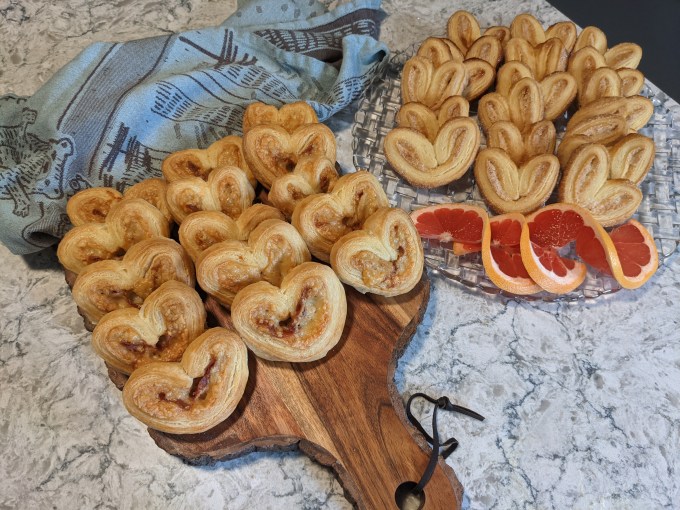
Palmiers (translation: palm tree leaf), also referred to as elephant’s ear, is a puff pastry shape that can be served with any type of filling or flavour profile. This recipe made a basic sugar version and a cheese and prosciutto (they used speck in the episode, but I couldn’t find any) version.
Palmiers are traditionally made with a full puff pastry, but the version in this recipe is a rough puff. As I discussed when I wrote about Pithivier and Cannoncini, learning to make laminated dough was a big motivator for me to start this project. The Pithivier was the first time I ever made a rough puff and it turned out well, so I was feeling a lot more comfortable going into this bake. I was happy to have the opportunity to try again. Practice makes perfect as we all know, and I would like to come out of this project as a well adjusted, sane adult better baker than I started.
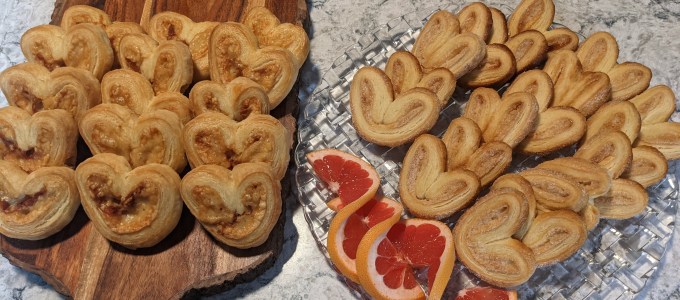
One thing I am struggling with in general doing these bakes is a lot of them are items I have never actually eaten myself, so I don’t have a standard in my mind to compare against. This makes little critical details like bake time difficult to nail down, but I try hard to listen to what the judges say and base my decisions on that. I think these came out properly. They puffed, have visible lamination, and are the correct shape. They were pretty crispy, but I don’t think they were over-baked. I definitely want to make the savoury ones again without the prosciutto (I am vegetarian so I only tried the sweet ones) because they looked BOMB.
This bake is the last laminated dough I have to do for this project and I have come to an unexpected conclusion: rough puff is a surprisingly speedy bake if you know how to do it. I would easily choose Palmiers as a quick bake to do for a social event or fundraiser; they’re just a little pricey because apparently the French are unconcerned about arterial health the amount of butter needed is staggering. (Fun fact: I calculated it to be about 11g of butter per serving in this recipe, which is over 2 teaspoons). With that in mind, I suggest going for a high-end butter (like Lactancia or Kerrygold) when making puff pastry for a crowd (which I most certainly did not do here. I have been buying as much butter as I can when it is on sale for this project and I do not have the luxury of getting fussy about brands).
Step 1: Dough (with commentary about Flour Hydration)
As Bruno said at the top of this episode:
Remember: when you are making pastry, you have got to get it right from the beginning
SUCH WISDOM, YET SO UNHELPFUL
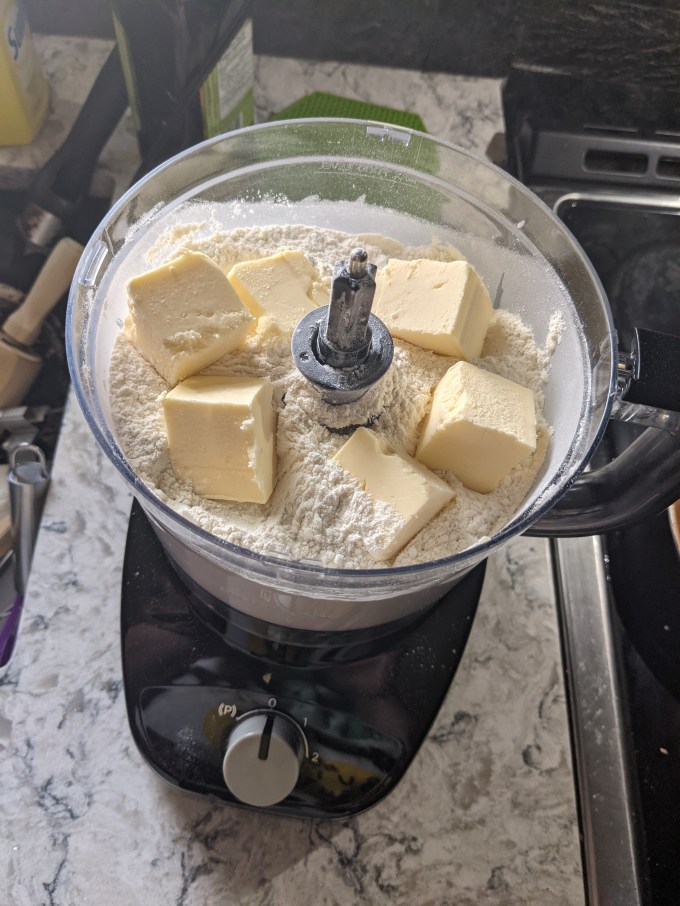
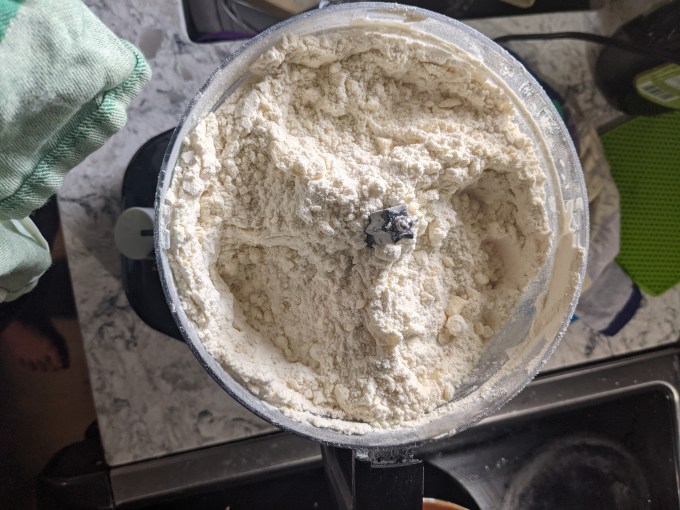
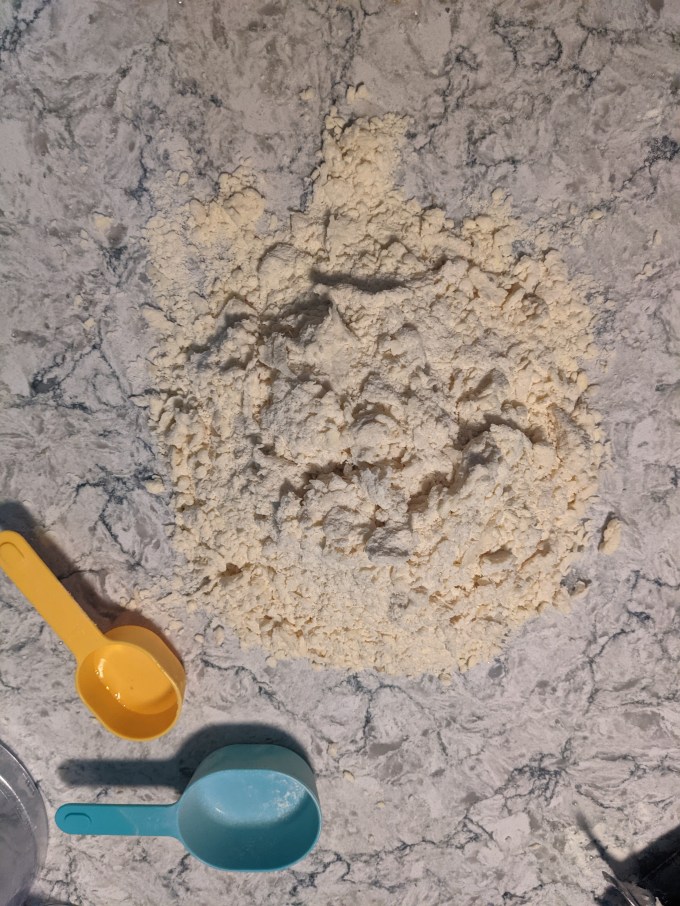
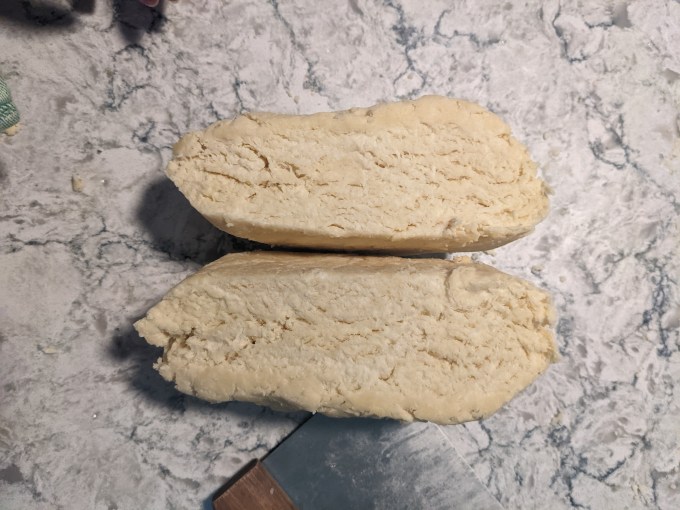
Allow me to offer some more useful commentary. The REAL fact to remember is: the key to good pastry is keeping everything as cold as possible until it’s time to go into the oven. The method outlined in this recipe is the same as the one used for the Pithivier, but it was about twice the volume. It was almost too large for my food processor, but I made it work. To review: butter, flour, and salt are blitzed to coarse crumbs. Ice water is added to bring everything together. The dough needs to be minimally handled at this stage to keep the temperature low which prevents the butter from incorporating into the dough. Once the water is introduced, it becomes even more important to minimize handling in order to keep the gluten development down. It is a delicate balance to try and bring the dough together without over working it – best managed by erring on the side of caution. Keep in mind: the roll outs themselves are working the dough further so it is always best to under work. You can’t un-ring a bell, and you can’t un-work a dough.
One thing I am finding consistently throughout this project is that I need more liquid to hydrate my doughs than what is called for in the recipe (I mentioned this when making Maple Leaf Sandwich Cookies and Pretzels). As much as I enjoy criticizing the CBC for providing inadequate recipes, different levels of hydration needed for different flours is A Thing That HappensTM. Flour, as we know but maybe don’t consider, is a milled grain. As with any plant, flour is susceptible to variation in growth conditions, genetics, climate, region, and manufacturing. This is why baking requires a bit of intuition on top of all that science. The baker is only as good as their flour and we need to know how our dough is meant to feel in order to create the same result over and over again. It’s a tactile knowledge gleaned from practice, patience, and experience. I get all of my flour from the Bulk Barn. If they have unbleached Five Roses, I use that, but otherwise it is just generic Bulk Barn unbleached white flour. Robin Hood is the official flour of GCBS, so I am not particularly surprised that this is coming up repeatedly as I work through this project. Something to keep in mind as we go along.
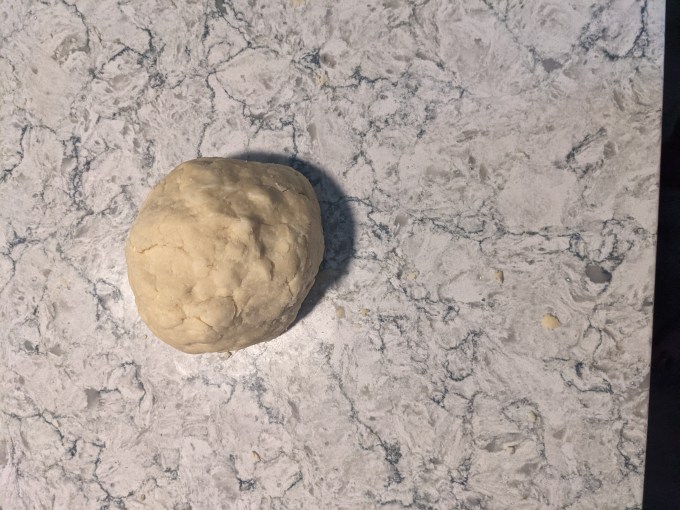
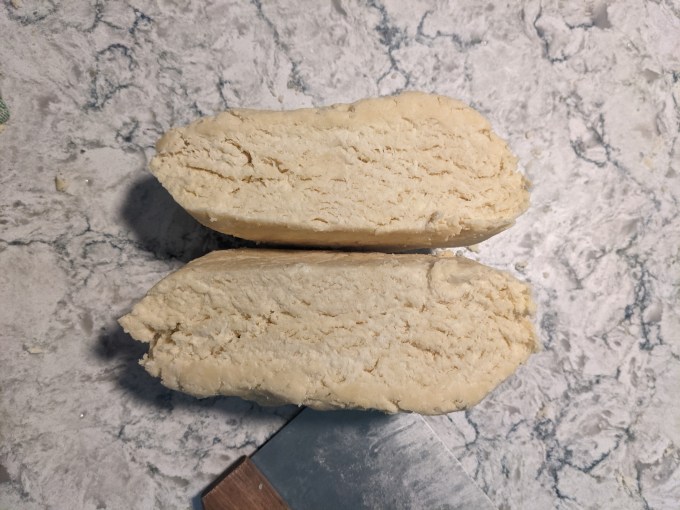
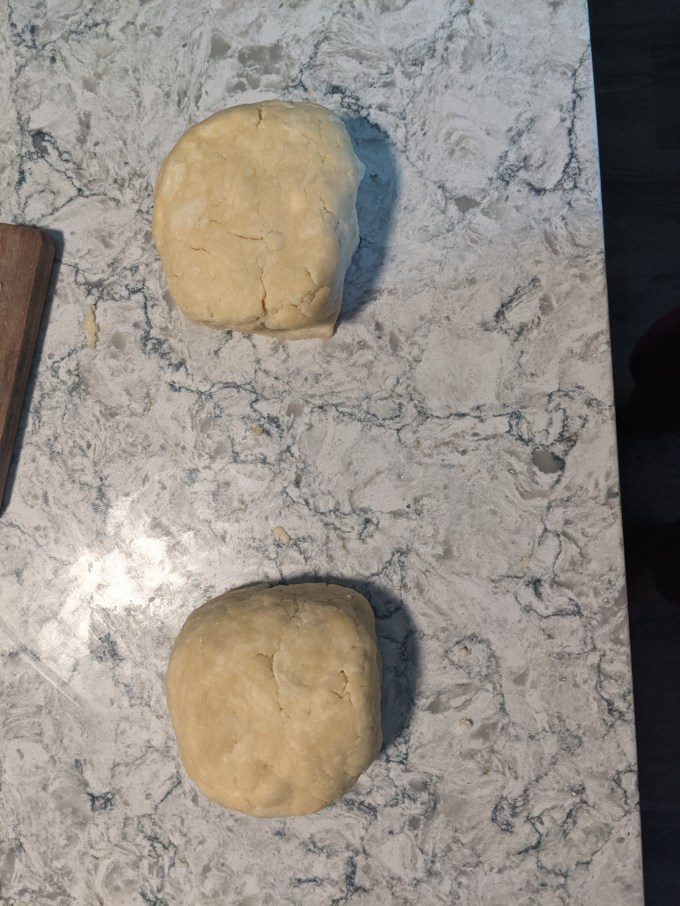
Step 2: Roll outs
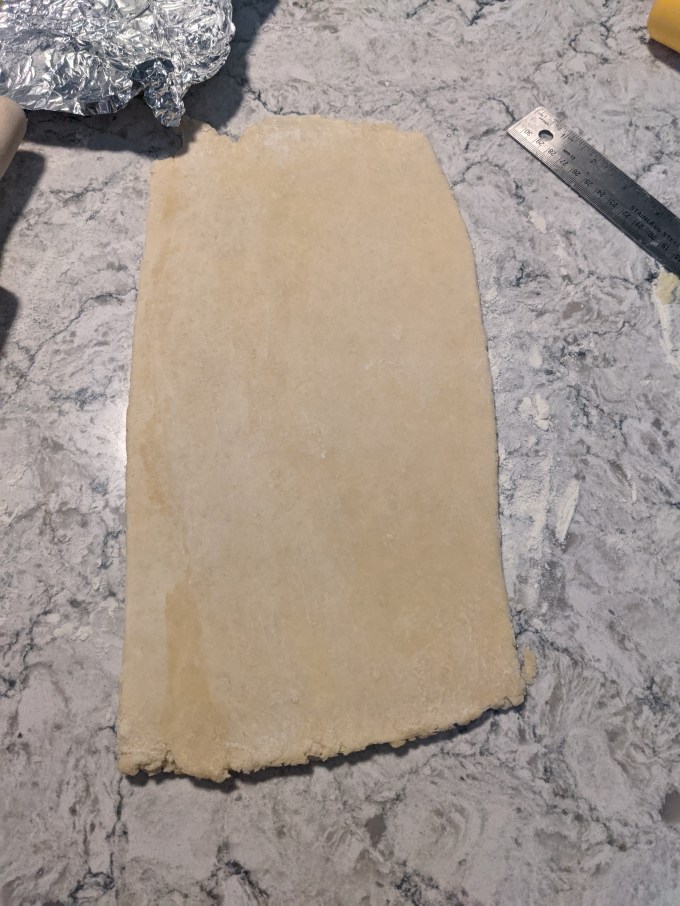
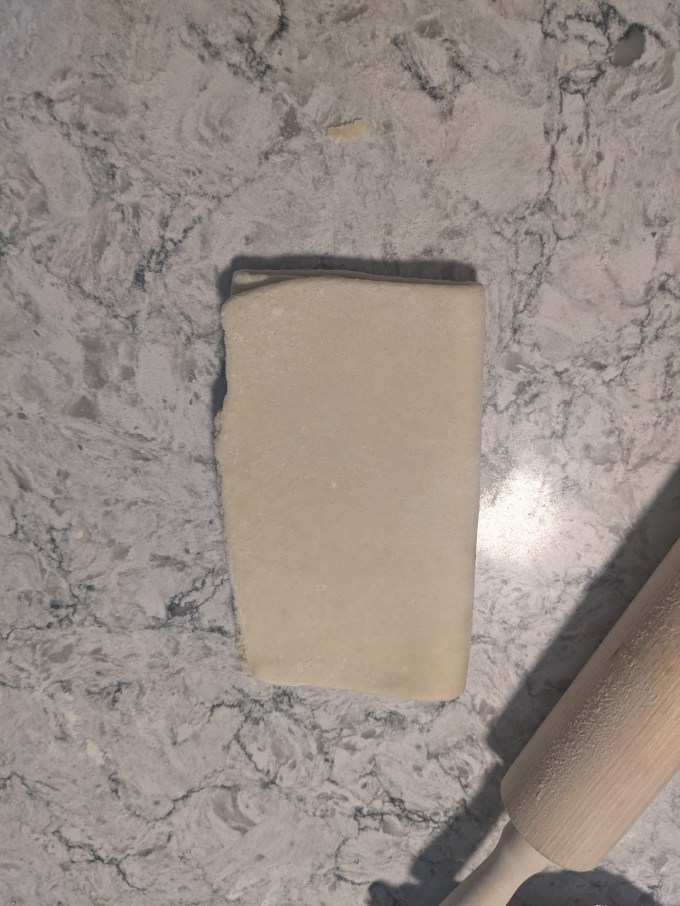
Once again we have a basic 3-turn roll out for this rough puff. As the roll outs continue, the dough gets more smooth and elastic. I don’t have too much to say here, other than mentioning all the usual important things to remember: keep everything cold, brush off excess flour from between the folds, follow the prescribed measurements as you go along to ensure consistent, even lamination
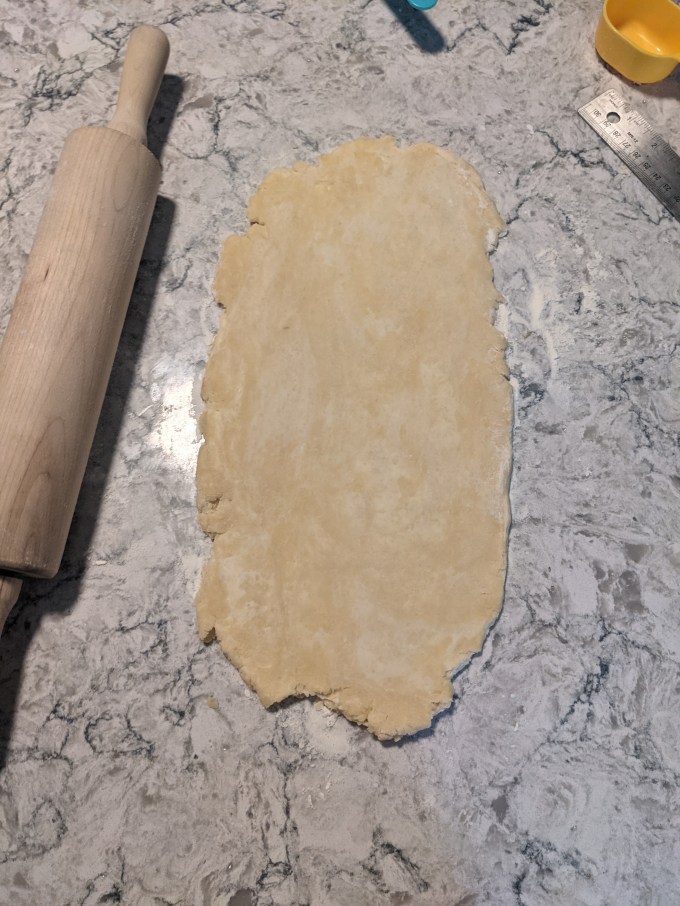
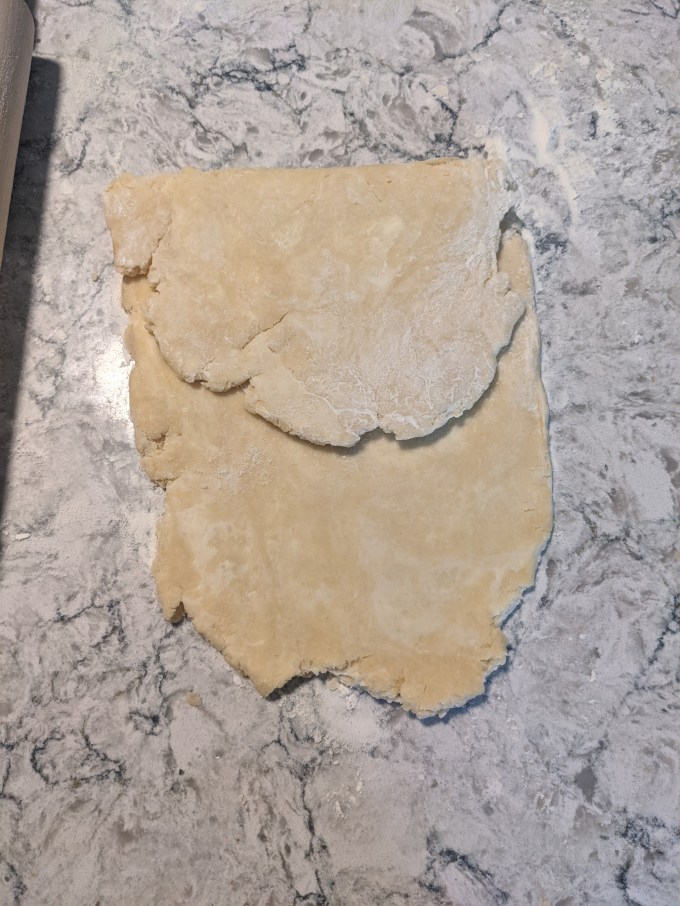
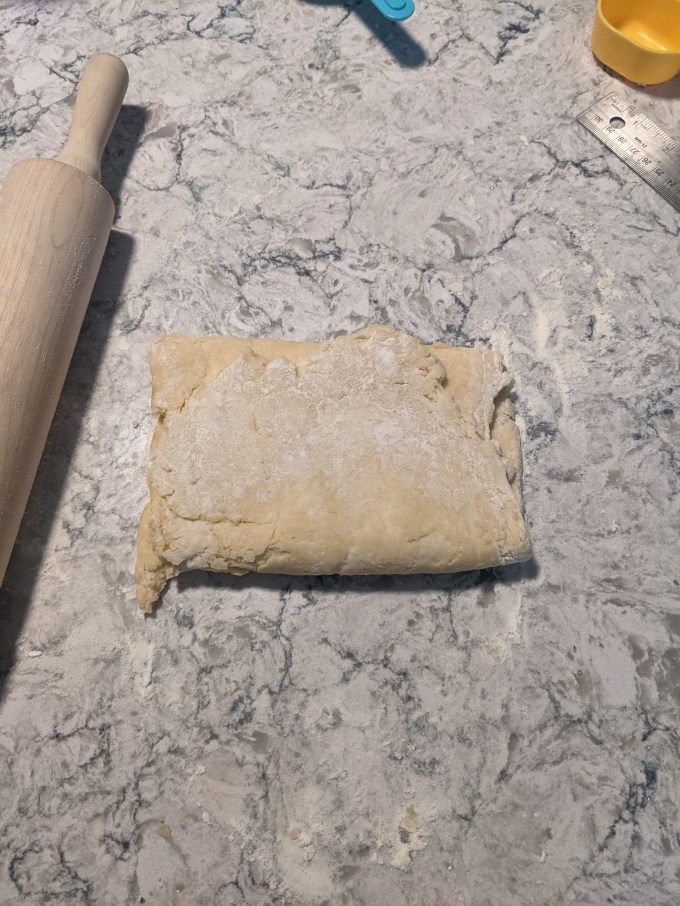
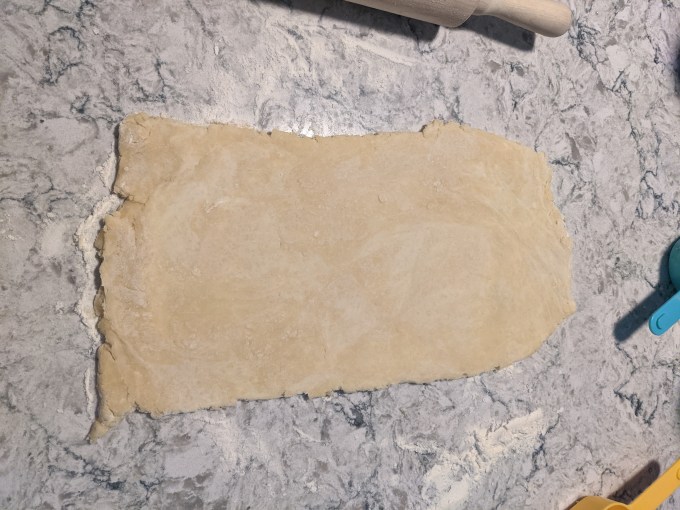

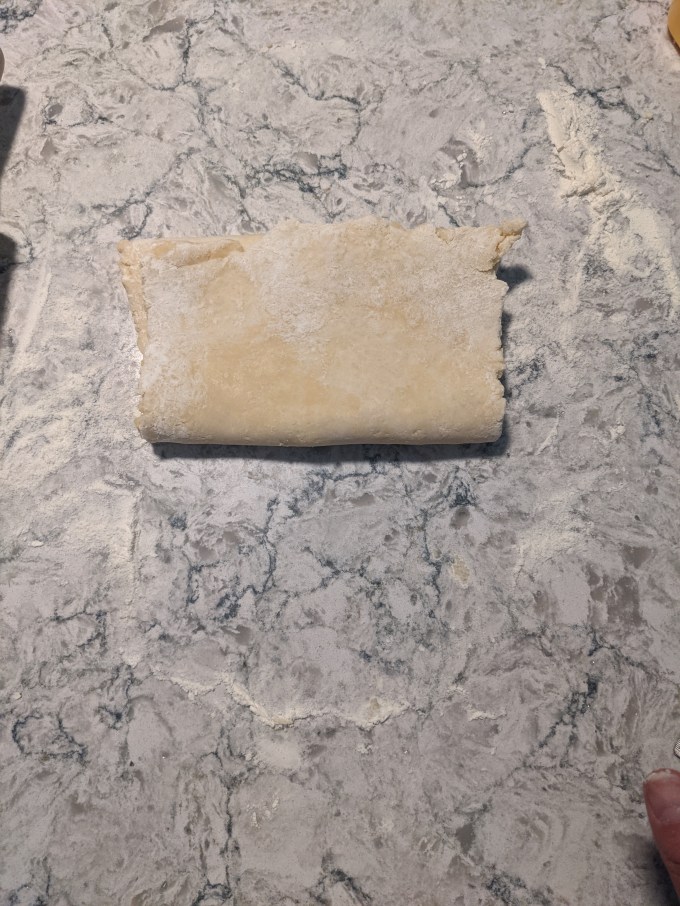
Step 3: Assembly
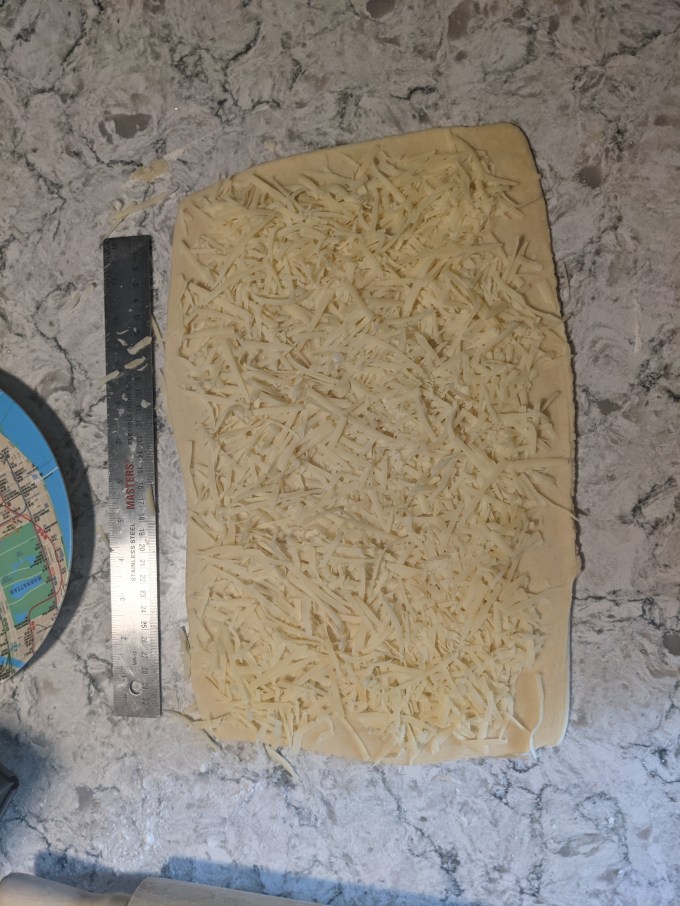
Once the rough puff has had its final rest, it gets rolled out for assembly. Half of the dough gets rolled out over a layer of white sugar then has a generous layer of sugar sprinkled on top. I was seriously resisting the urge to put cinnamon on as well. I left it as written in the recipe, but I will DEFINITELY add cinnamon next time, that will be FANTASTIC.
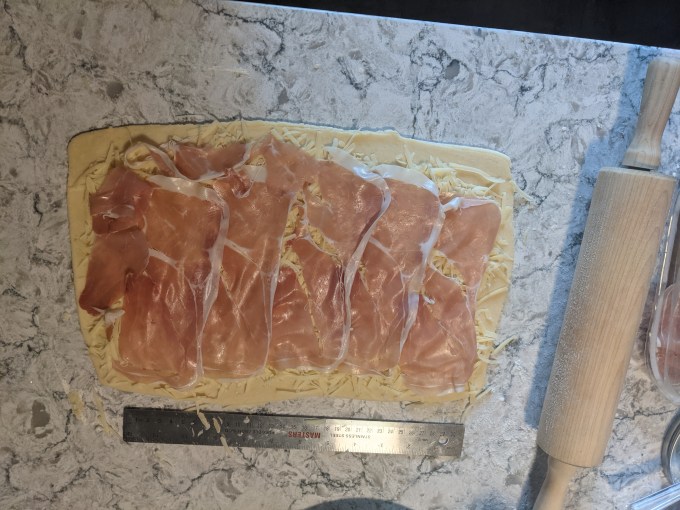
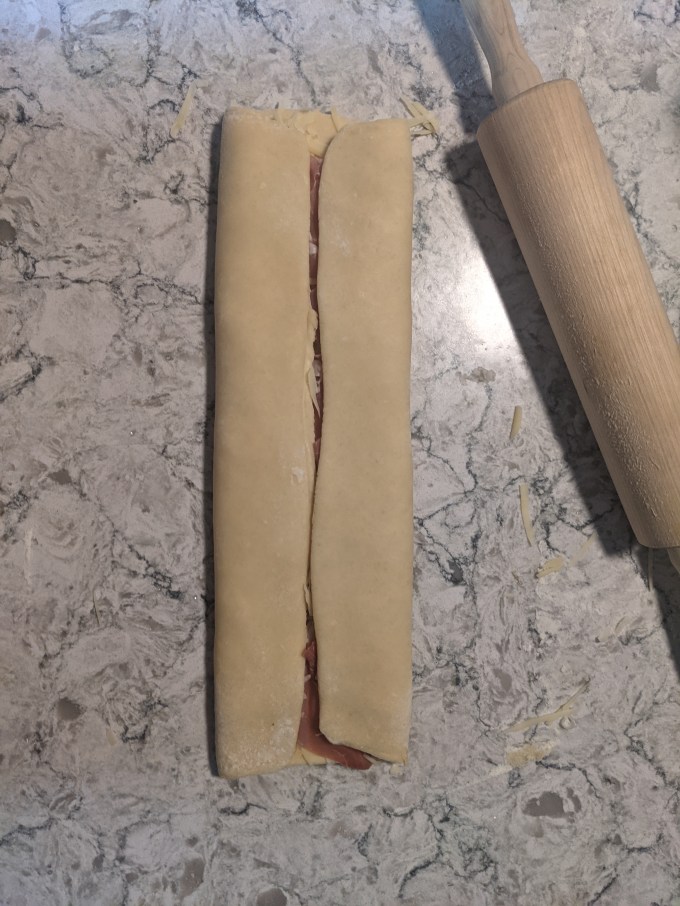
The dough for the savoury version gets sprinkled with cheese (I used Gruyere as called for, but the possibilities here are endless) then a single layer of prosciutto is placed on top.
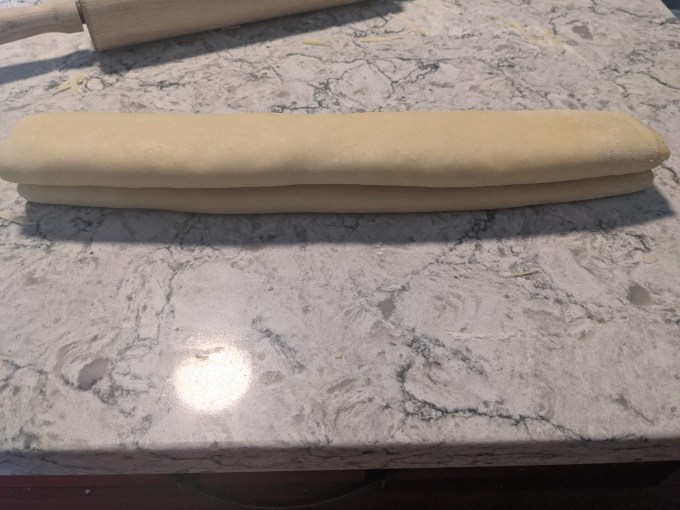
In both versions, the important thing is the final folds to create the signature Palmier shape. Once again I was unable to create the same level of difficulty for myself as they did on the show, since only one baker (Andrei) knew how to fold the palmier properly. Everyone else rolled their dough up which still works, but it won’t produce the classic shape the judges were looking for. Obviously I had seen the episode before my attempt so I had the insider info the other contestants were lacking.
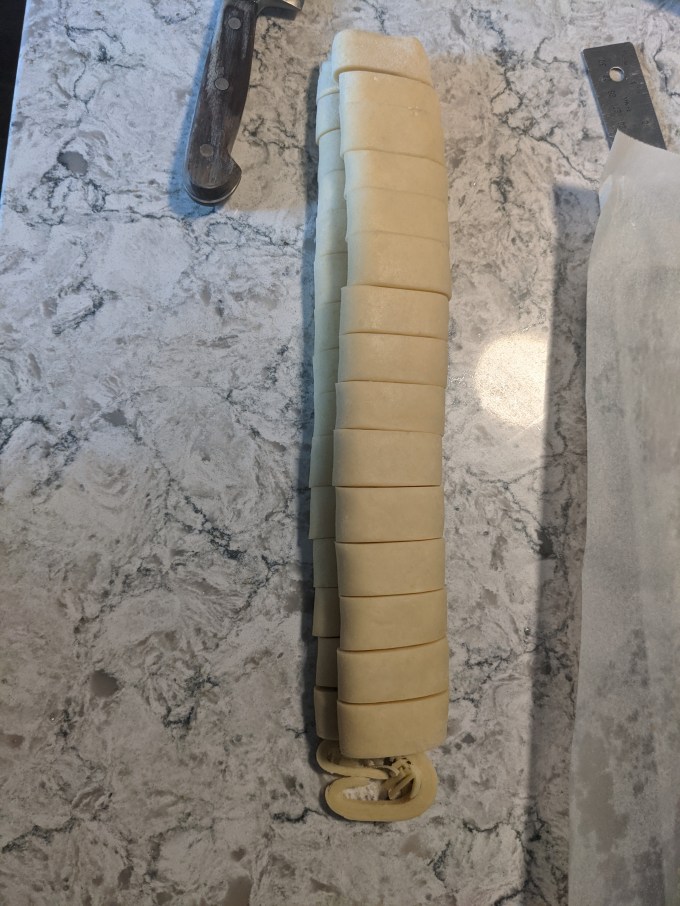
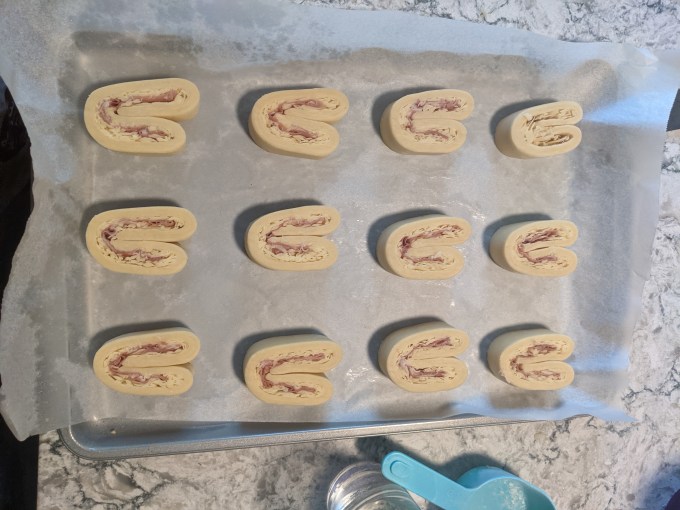
The point is this: the dough gets folded, not rolled, in towards the centre and gently pressed together before slicing crosswise to make the palmiers. I cut my savoury ones a little too thick… I was supposed to have 18 in the end and I only got 15. I did get 18 of the sugar ones though, so I have a better idea of the correct thickness now. Egg wash on the savoury batch and into the oven we go!


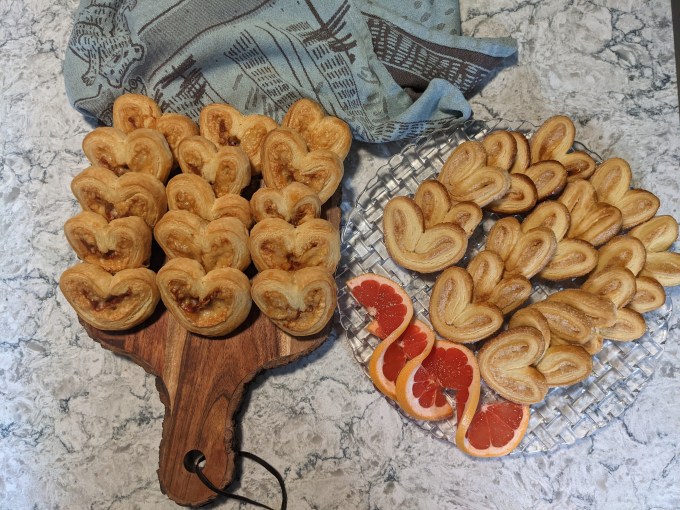
So there you have it. My second rough puff and my third successful laminated dough. I am really happy with how much more comfortable I am feeling with this method. I am also happy I don’t have to do any more for this challenge, because I am running out of things to say about laminated dough. And I am self aware enough to know that less existential agony, however good that may be for my mental health, makes for a less entertaining post. But don’t you worry, Friends and Fellow Bakers, I am sure my next orbit around the vortex of my own madness is only 350 degrees away 😉
.Gallery
Hey, bakers! Check out my BAKER’S PANTRY index if you want to deep dive on specific ingredients when attempting this bake for yourself
 Baking Summit