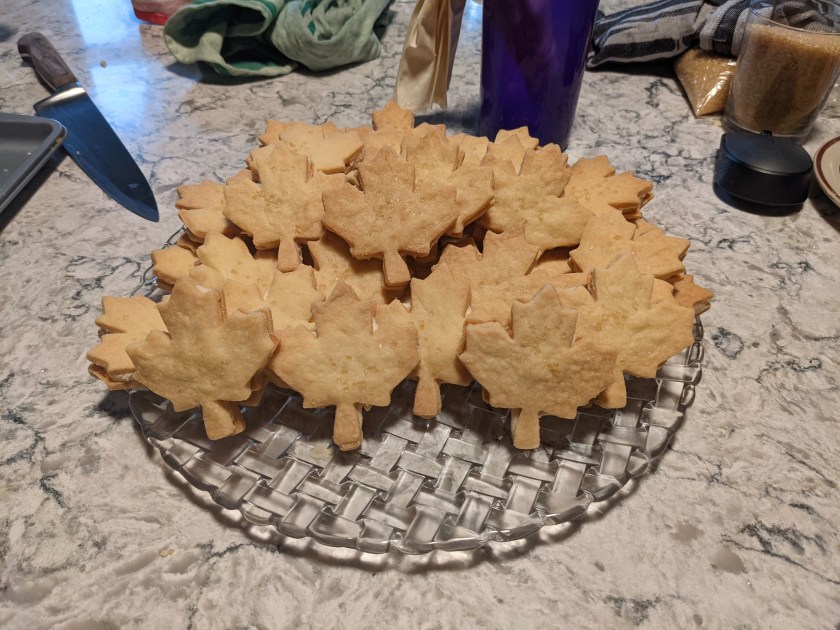
Hello Friends and Fellow Bakers! Welcome to technical bake the fourth, or “the one where I almost lose my mind with rage”. A surprising plot twist courtesy of the humble sandwich cookie, but that is the fascinating thing about this project. Who knows what shenanigans I can get myself into with nothing but the CBC and my hatred of making cookies irrationally high standards to guide me. Time will tell, I guess.
This was another bake from Season 1 of GCBS (recipe here) and was featured on Episode 4: Canada Week. I am nothing if not a stereotypical Canadian so I was pretty stoked about making these one of a kind Canadian cookies (even though as a rule I REBUKE cookies, but that is something I should be dealing with in therapy, not here. Just kidding! I will ***definitely*** be dealing with it here. Repeatedly). To be perfectly honest, I also spent the days leading up to this bake repeatedly telling Dave I didn’t understand why this was even on the list because it looked too easy, so that was a fun lesson in humility that I will get into shortly.
Which brings me to a side note. Before we talk about my extreme suffering and rage what I learned from this bake, the ultimate take away is a renewed understanding of the way my project diverges from what we see on GCBS. When the technical challenges are performed on the show, the bakers usually have certain critical elements of the recipe removed to test their knowledge, experience, and intuition. Since I am using the CBC recipes that get posted after the show has aired, I am not working under such conditions. This is why some of the bakes which appear super easy on paper after the fact are actually very challenging on the show. Also sometimes (although not in this case) the bakers don’t even recognise the name of the bake or know how it is supposed to look in the end. Obviously in my case I have the advantage of researching these bakes as much as I like before I make them which takes away from the degree of difficulty.
With that being said, this bake also illustrates what is uniquely challenging about my project. What I am doing is so fundamentally centred around the events of the show. I am trying to nail down as much methodological information from the episodes before I start as I can. I watch the bakers very carefully and listen to all of the comments they make about the bakes. I also listen to the judges and what they are looking for when judging the challenge. I always read the recipes before watching the show to gather all of my notes and questions and then I try to find the answers in the footage. Since the show is made for a broad audience and primarily for entertainment (or so I assume), I find the episodes helpful, but often focused on entirely different images and content than what I need to see for this project.
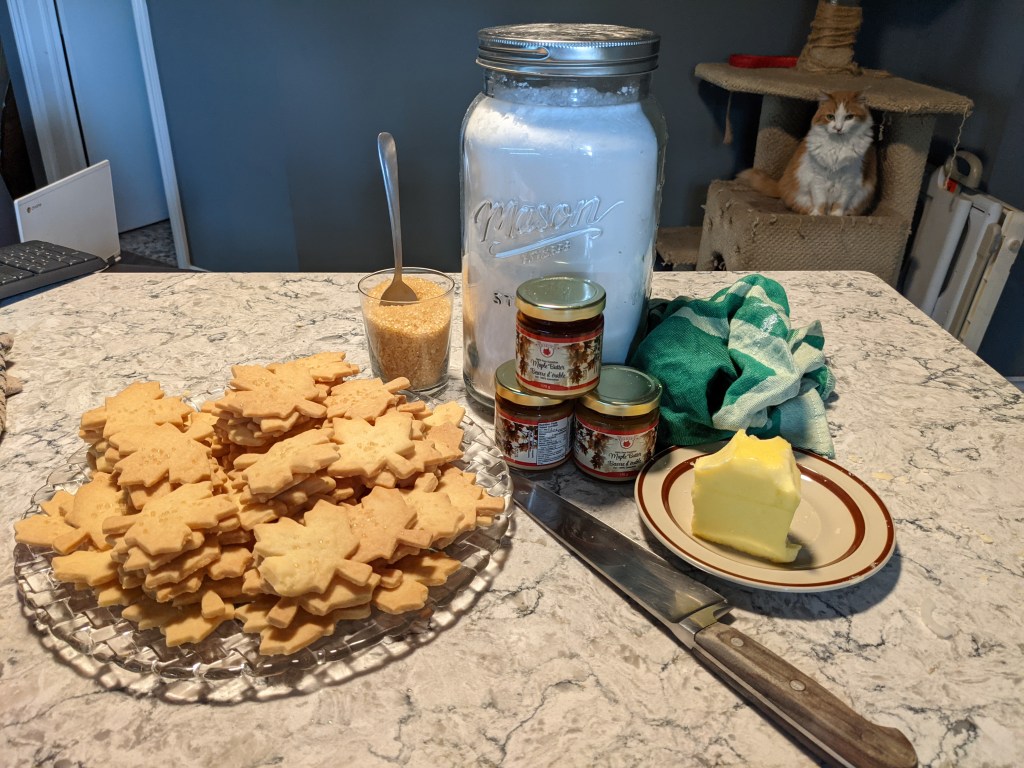
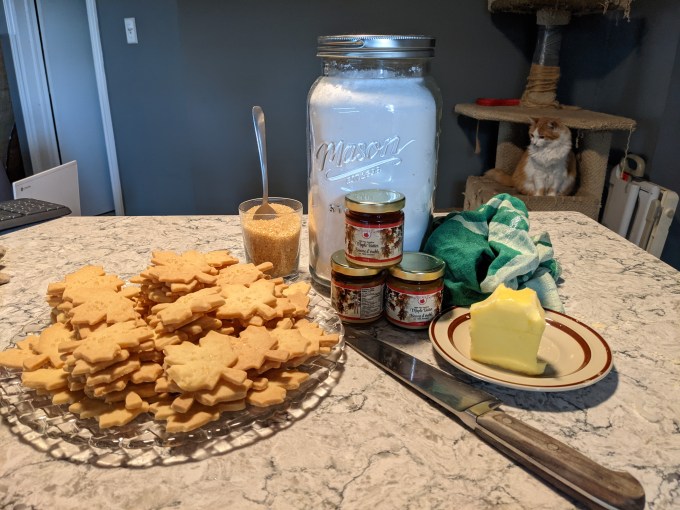
On to this post. Maple Sandwich cookies are one of the most iconic Canadian cookies and I have been known to send a box of store-bought out to international friends from time to time. They really do stand out to people who aren’t quite as enthusiastic about maple syrup as we are here in the great white north. This home baked version is made of maple flavoured shortbread and simple maple buttercream, finished with a little bit of turbinado sugar for a bit of flare.
Step 1: Shortbread
Ugh. What more is there to say? If you haven’t noticed, I am not a fan of making cookies in general, but shortbread is king of the shit pile in terms of my general irritation with the concept. I think part of my problem is I have never really learned how to make it properly and since I don’t like making cookies anyway, I have made no effort to do so. Until now! NOW I CAN DO IT BUT I STILL DON’T WANT TO
Traditional shortbread contains just four ingredients: sugar, butter, flour, and salt. No liquid and no leavening. Like so many other classic bakes, achieving shortbread is a matter of knowledge and technique to bring this humble list of ingredients together. There is nowhere to hide with a shortbread, no way to cover over an error. No forgiveness to be found in chemistry or physics the way there is with more complex bakes. The most vulnerable of pedestals a baker may find themselves standing on. This version is no exception.
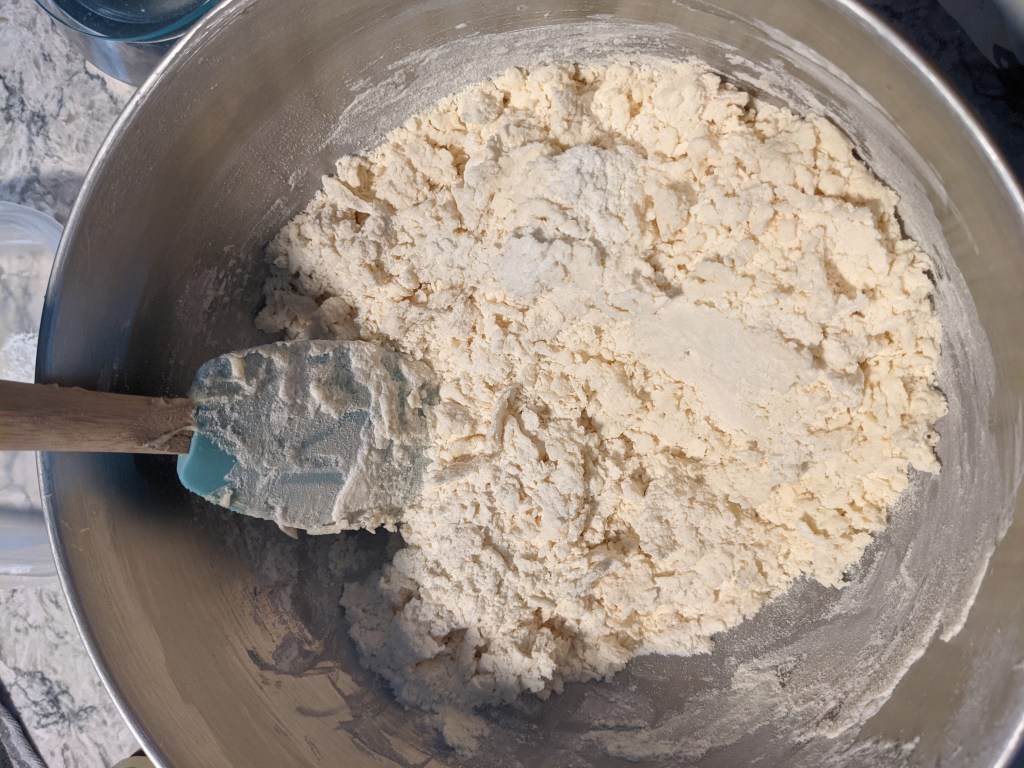
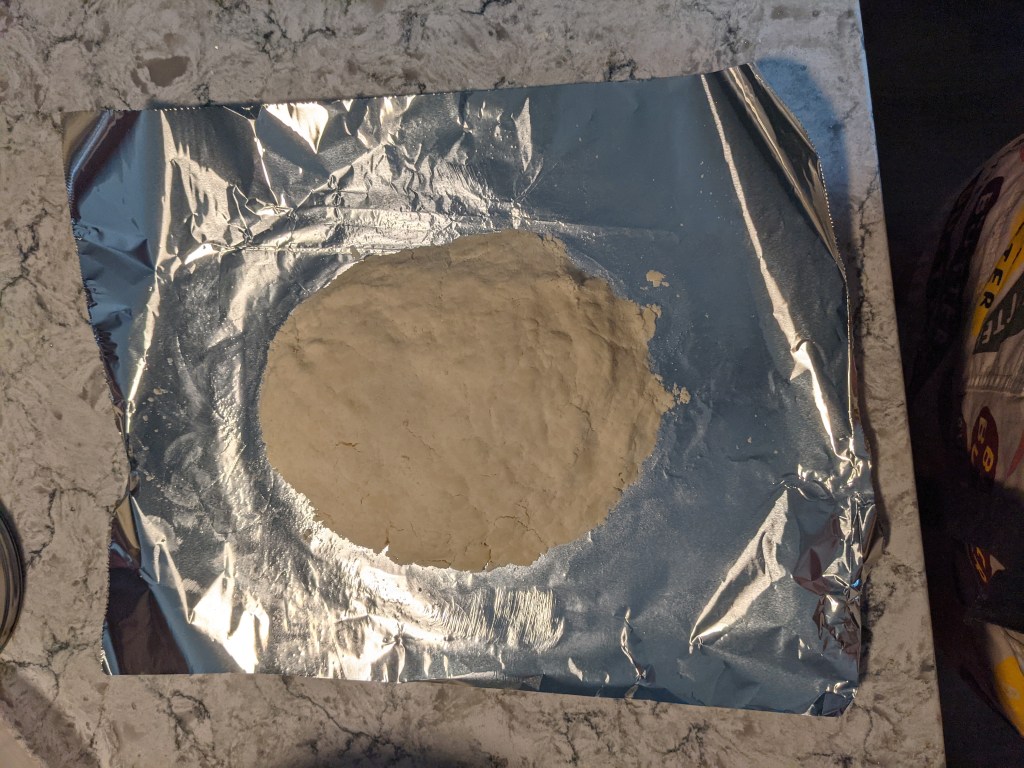
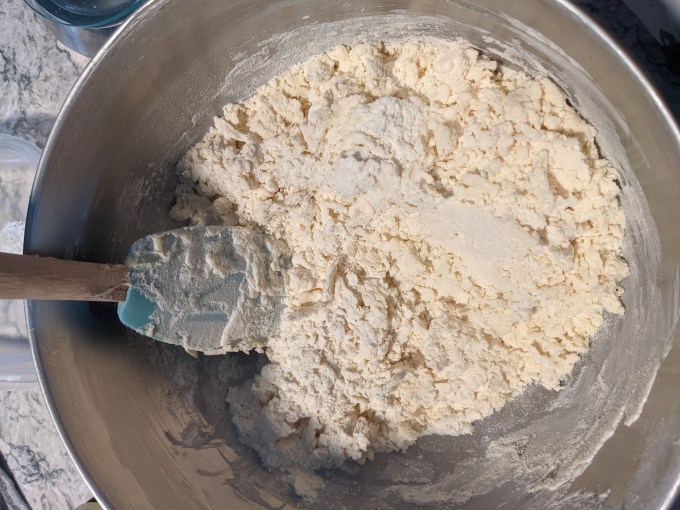
The 4 ingredients and maple extract are combined to make the dough. That is about where my adherence to the recipe began and ended because I had to go way off book to finally get these in the oven. I found the CBC recipe was too dry (although I was happy they finally posted a recipe in mass units instead of volume for once) and I couldn’t get it to hold together enough to roll out. I tried all sorts of troubleshooting without changing the recipe: I kneaded it over and over, I kept re-chilling it and re-working it, nothing was working and I was ready to L O S E I T. So I took a deep breath and a short break and did some research. I learned that I probably needed to add some more fat to the dough until I could get it to hold. So I started taking small pinches off the block of butter and kneading them into the dough gradually. I added just enough that I could get the dough to hold and stopped.
Step 2: Roll out
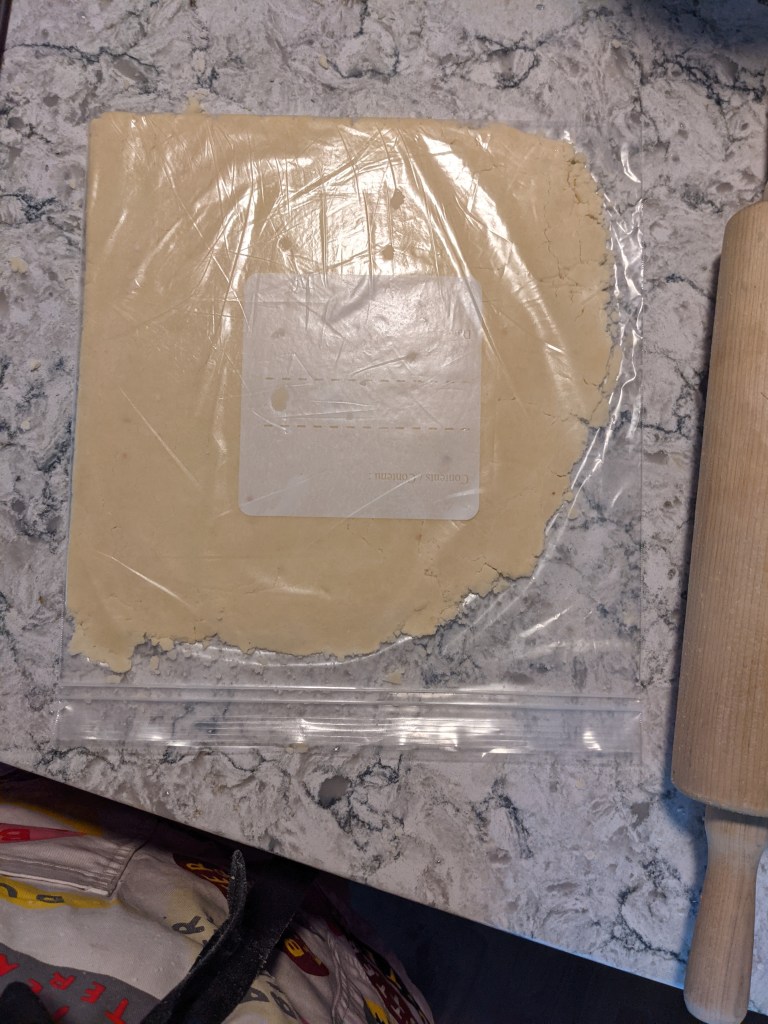
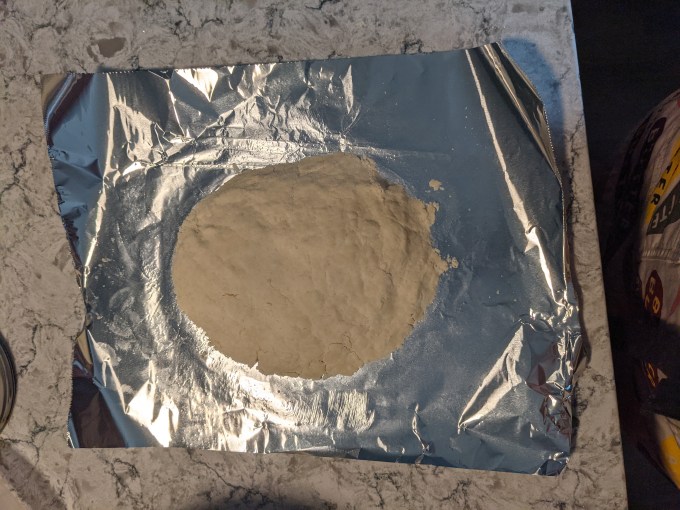
By this point I had been working on what was supposed to be a two-hour (give or take) bake for most of the afternoon. Since I am a big believer in keeping my dosage of massive rage attacks limited to <1 per day, I was completely disinterested in the bizarre roll out methods outlined in the recipe. I might dislike making cookies but I still know a thing or two about a thing or two, and I knew the resting of this dough was only called for to keep it at a workable temperature. It’s not really a concern of the chemistry in this instance because well, there isn’t any chemistry here to worry about.
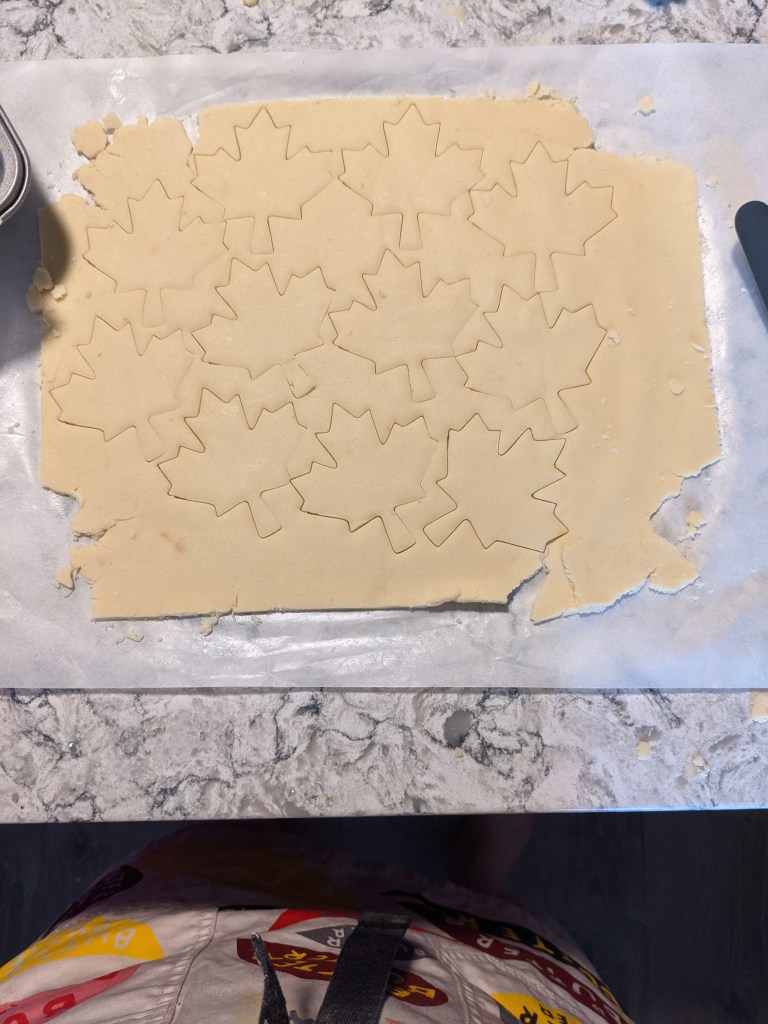
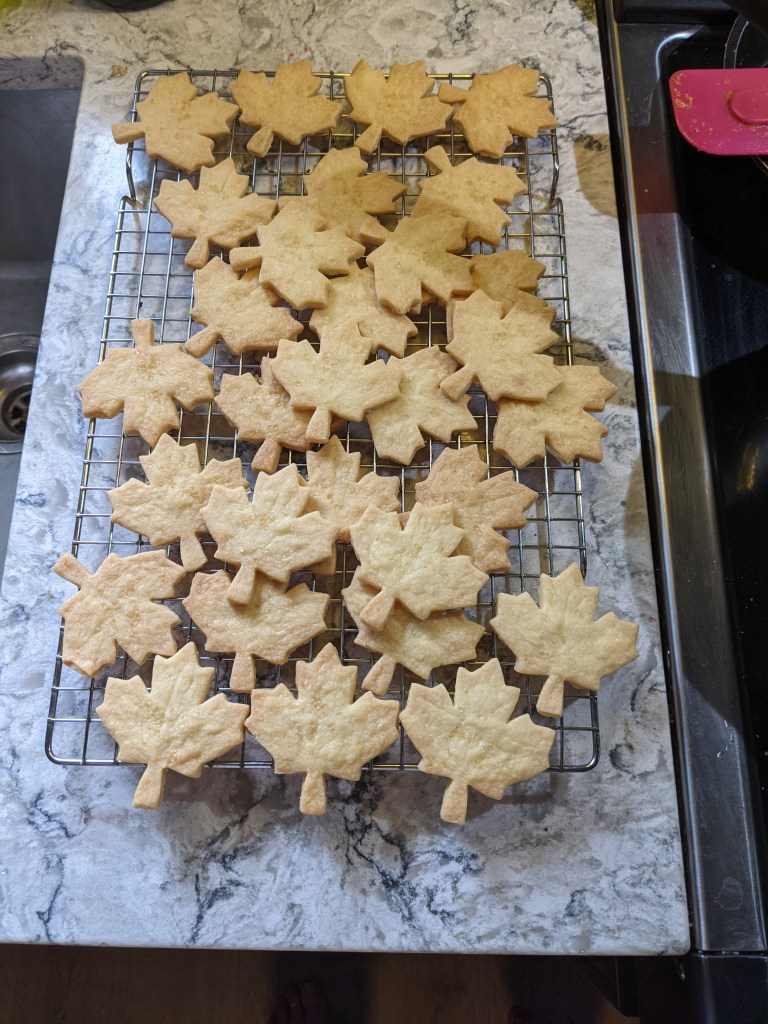
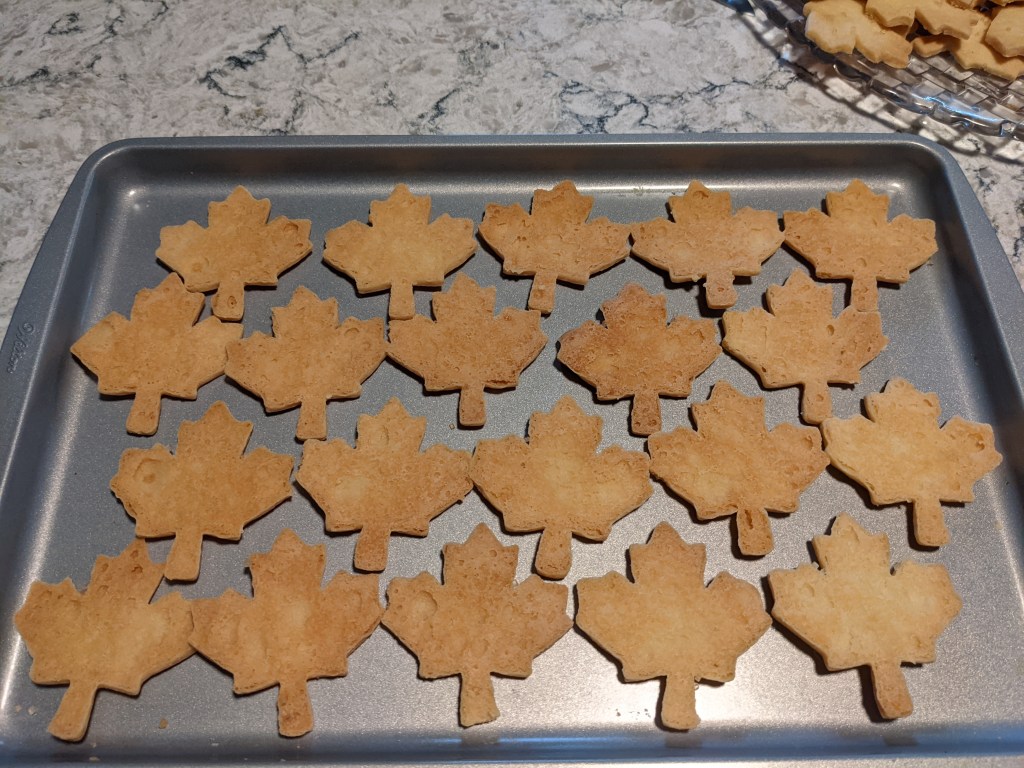
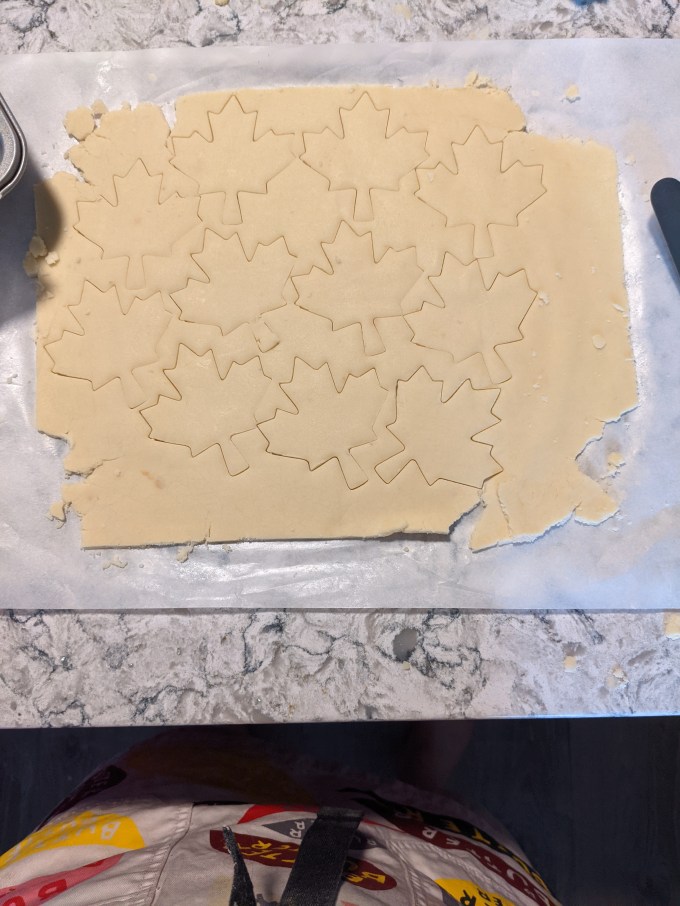
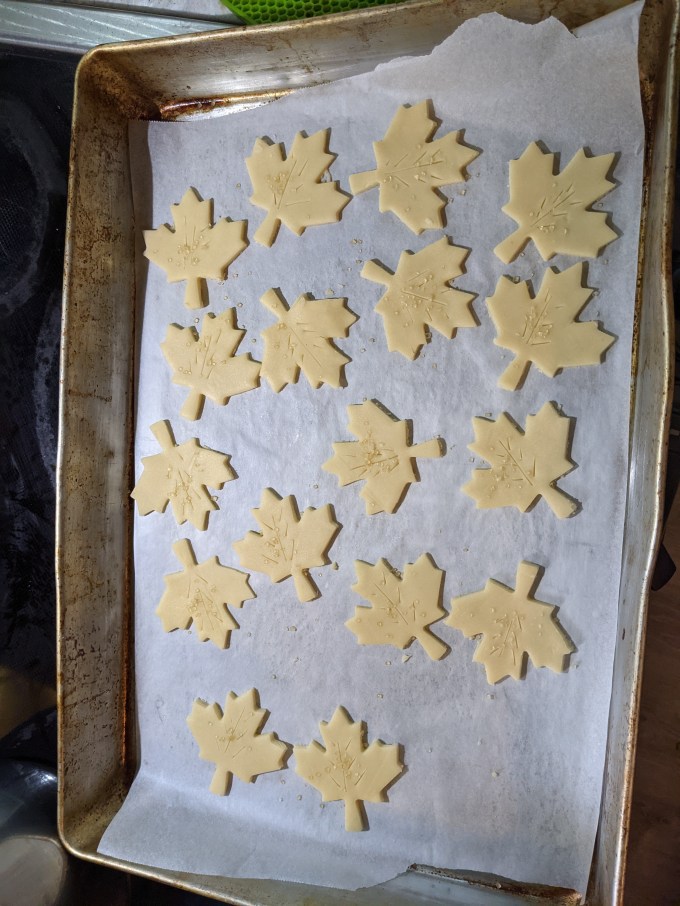
The recipe called for a chill before rolling, then rolling out, then chilling, then cutting, then more chilling; it was a whole thing. I remember a few years ago I made a batch of cookies that had the dough rolled out at room temp then chilled in sheets, then cut, and I thought to myself, this is the only way to roll out cookies. So I kind of did that here but I was very fast and loose about it. It was all very chaotic (a plastic freezer bag ended up getting involved), but I was just concerned with keeping the cut outs intact and putting them in the oven all at the same starting temperature. Sorry, I know that isn’t the best description if you are trying this for yourself. I am sure you will figure it out and probably with less agony than I. Do keep in mind that every sandwich cookie has TWO wafers, and that can turn into a LOT of cookie for one person, so you need to roll these out very thin.
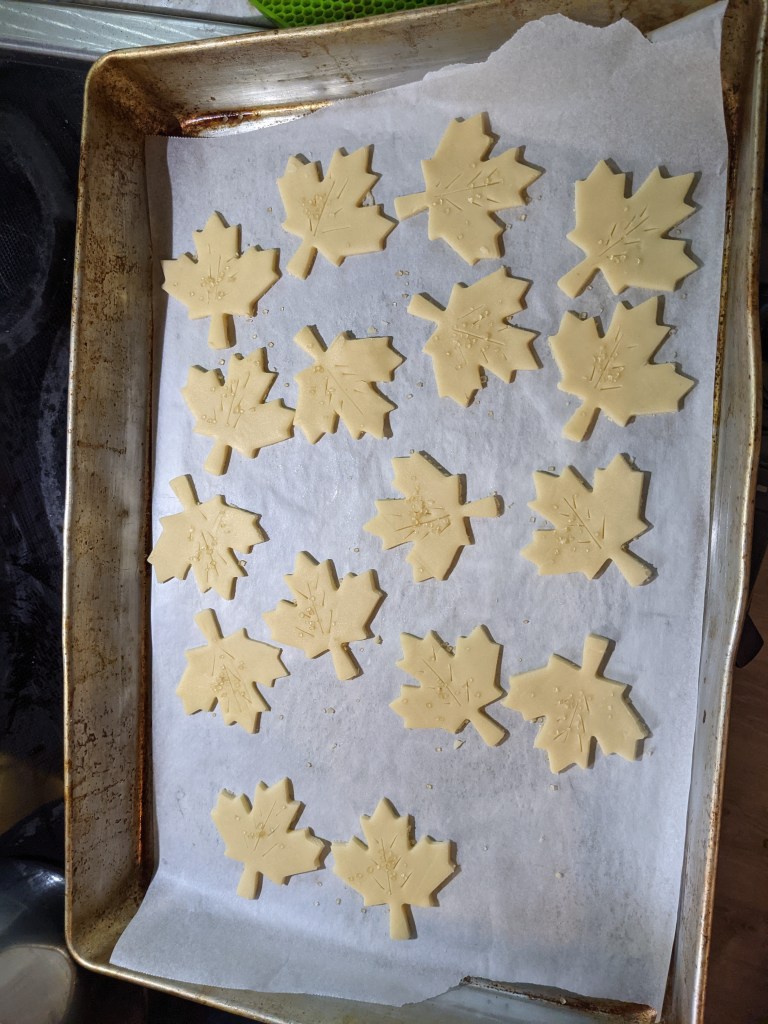
My last note on this step is the recipe called to score vein lines on the leaves with a paring knife. I did so, but very few of my score lines came out visible after baking so I should have made them a bit wider and deeper.

Step 3: Maple Buttercream
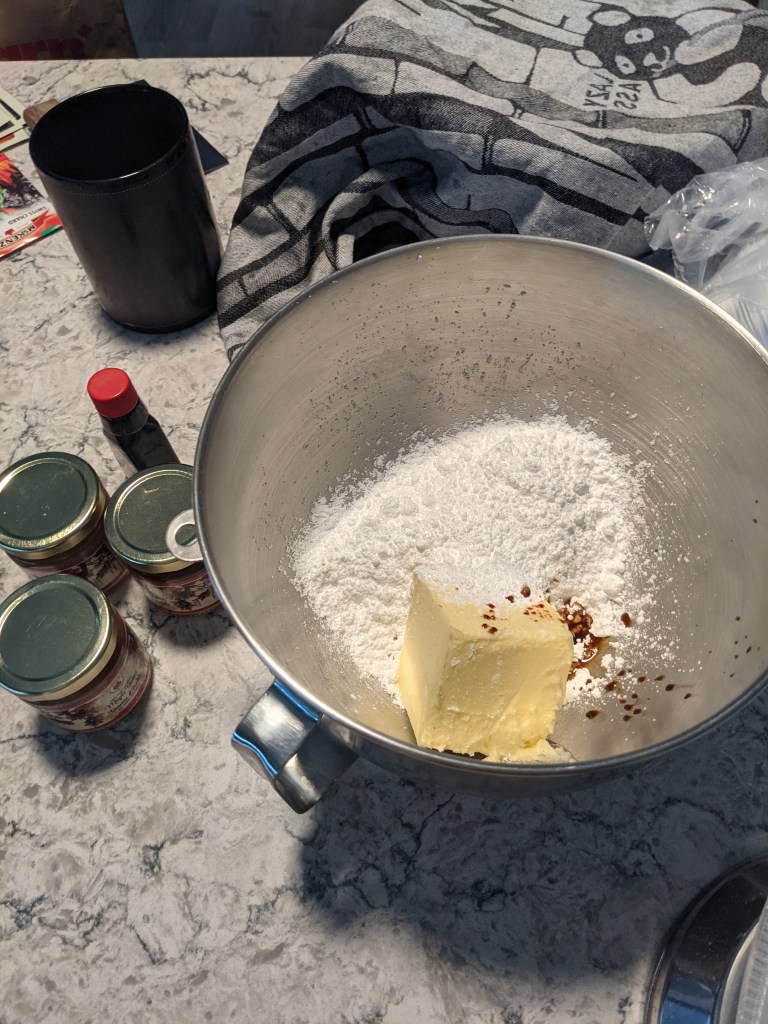
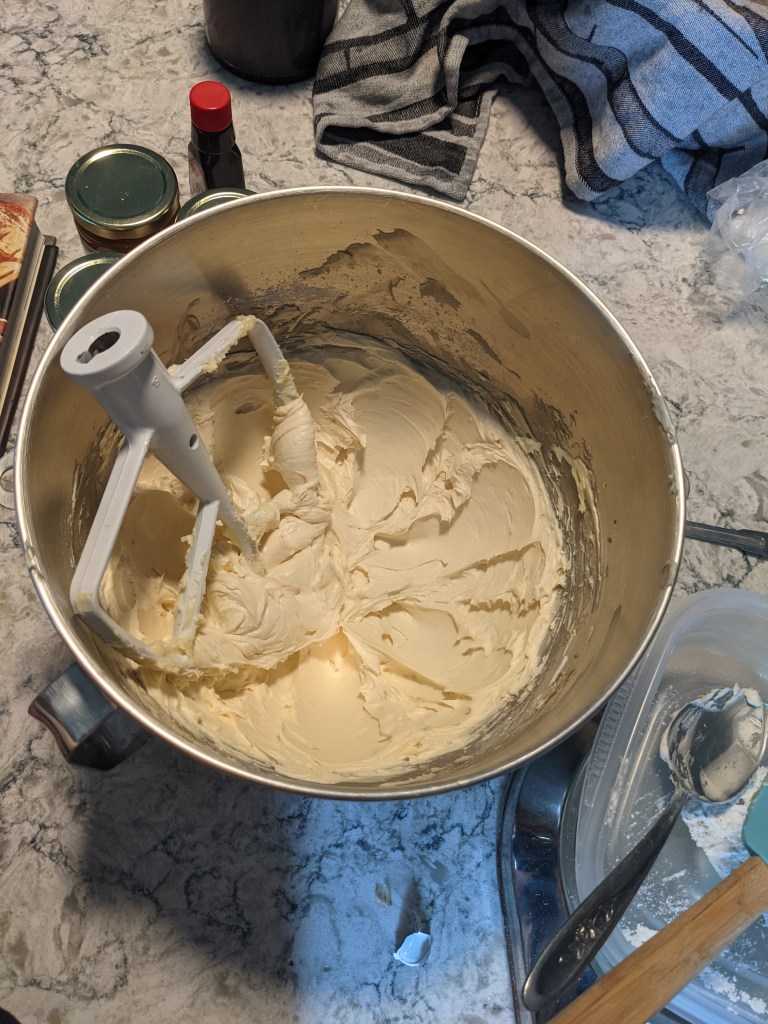
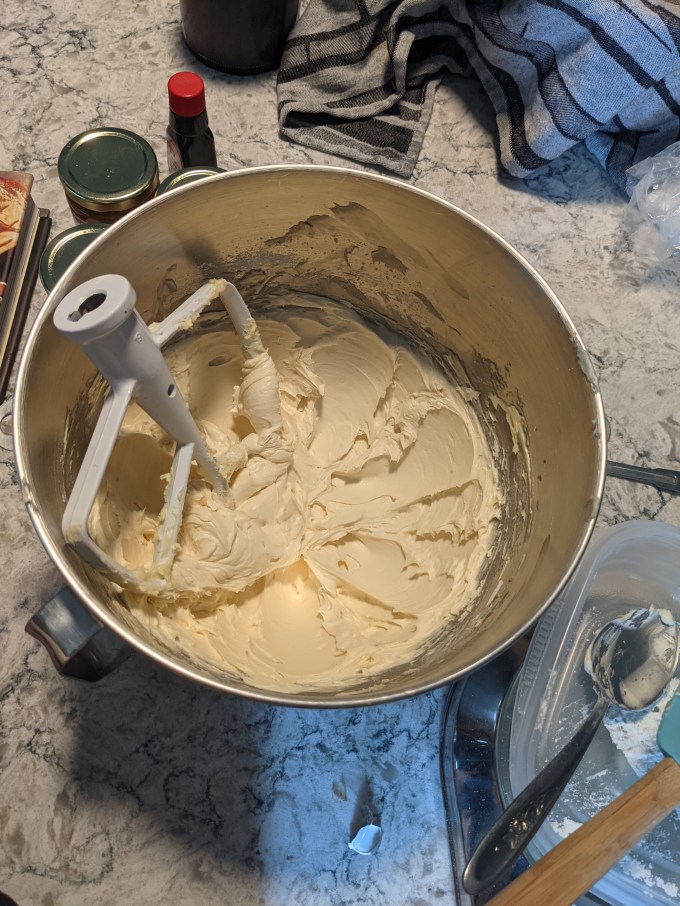
This step was very straightforward. Maple butter, butter, and icing sugar are combined to a stiff spread. One of the challenges on the show that I was not able to recreate here is the contestants didn’t have a recipe for the buttercream. They just had the ingredients and they had to figure out the appropriate proportions themselves. Admittedly this isn’t a huge feat of baking prowess, but it is something they needed to pull off that I didn’t.
Step 4: Assembly
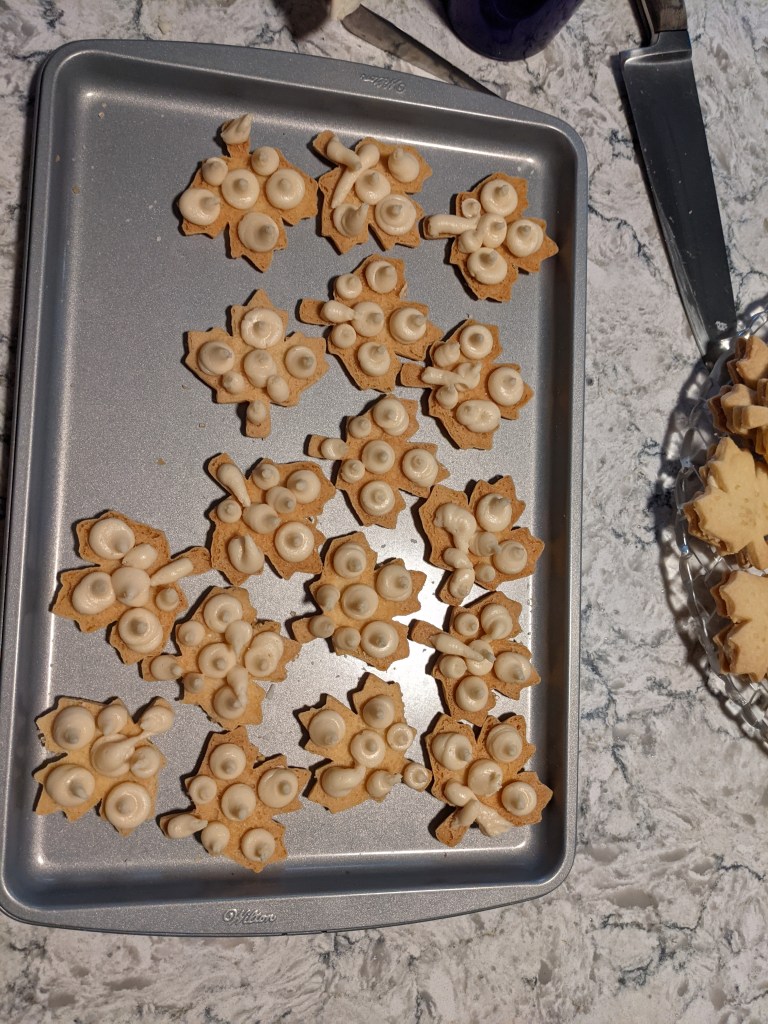
There isn’t a whole lot to say here. The filling gets piped onto the cookies and they get made into sandwiches. It is important to make the buttercream very stiff so it doesn’t leak out and if you leave the cookies out overnight they will harden a little bit, much like the store bought ones. This does make it difficult to pipe though, so it isn’t really possible to do a perfect outline of the cookie shape and fill. I found it easiest to just pipe in 3 large circles and a small line for the stem. For what it’s worth, the judges on the show said they wanted the icing to be the same thickness as one cookie, so that is what I tried to do.

All of my bellyaching aside, I have to admit this is a freakishly delicious cookie, much like Canadian society itself most of the time. These hold up well at room temperature for days and can be frozen long term. So I suggest you go ahead and suffer through making a double or triple batch of these and enjoy them for weeks or months to come.
Gallery



Hey. bakers! Check out my BAKER’S PANTRY index if you want to deep dive on specific ingredients when attempting this bake for yourself
 Baking Summit